
How Local Farmers Keep Fresh Food Flowing Through Michigan Winters
As Michigan experiences the coldest months of the year, some farmers close up shop and prepare for the next growing season. However, other Michiganders work through the winter and adapt with different farming techniques.
Many local farms provide a Community Supported Agriculture, or CSA, program that gives residents access to fresh and nutritious produce that is locally grown. Consumers purchase a subscription from their local farm, and pick up a box of fresh produce often on a weekly basis. Only some farmers choose to provide this program year-round.
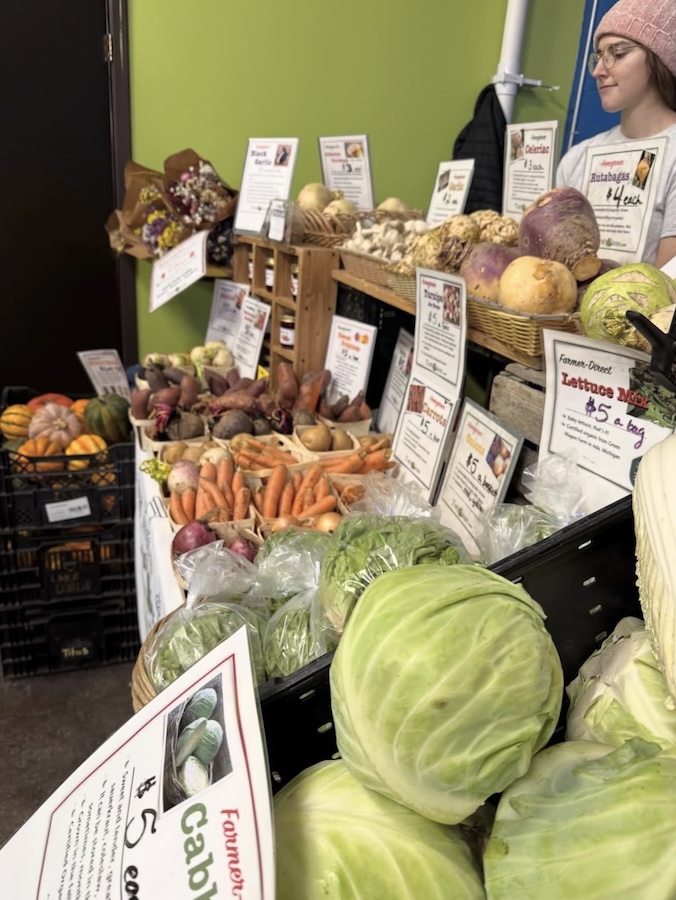
“We’re one of the only farms that attends the Meridian Township Farmers’ Market, and has seasonal storage produce, besides things like microgreens and small greens,” said Rebecca Titus, owner of Titus Farms.
Titus Farms has been around since 1982, when Titus’ parents tried their hand at organic farming on a 20-acre plot of land. They have expanded the farm, with Titus starting a CSA program when she was attending Michigan State University over 15 years ago.
Titus’ CSA program reaches Lansing, East Lansing and surrounding areas. Despite the success of the year-round veggie box program, winter farming comes with challenges
“Education for consumers is a little bit harder to figure out,” Titus said. “If someone comes to me in December or January and asks for a tomato or a cucumber, I have to very sadly tell them that I can’t really afford to grow those things in my current structures that I have at the size and scale that I am at.”
During the winter, crops are often grown in hoop houses or kept in storage from previous growing periods. In the winter, Titus Farms tends to keep most crops in storage, removing produce when it’s time to be distributed.
“We’ve invested a lot in root cellars. They’re fancy root cellars to store vegetables – mostly uncleaned, because they store better if they’re in their more natural state,” Titus said.
Hoop houses are plastic-covered arched structures that protect crops from the winter weather and use passive solar energy to extend the growing season. They are used by many local farmers to grow crops like spinach, radishes, bok choy and more.
“They’re unheated greenhouses,” said Mark Kastner, owner and principal grower of Hillcrest Farms. “They’re steel structures that are covered with six mil plastic, that’s normally good for a four-year or five-year lifespan before it has to be replaced.”
Hillcrest Farms is a four-season and chemical-free farm that provides produce to Eaton Rapids, East Lansing and other mid-Michigan cities.
Although Hillcrest Farms stores crops like Titus Farms, they specialize in fresh produce by utilizing six hoop houses.
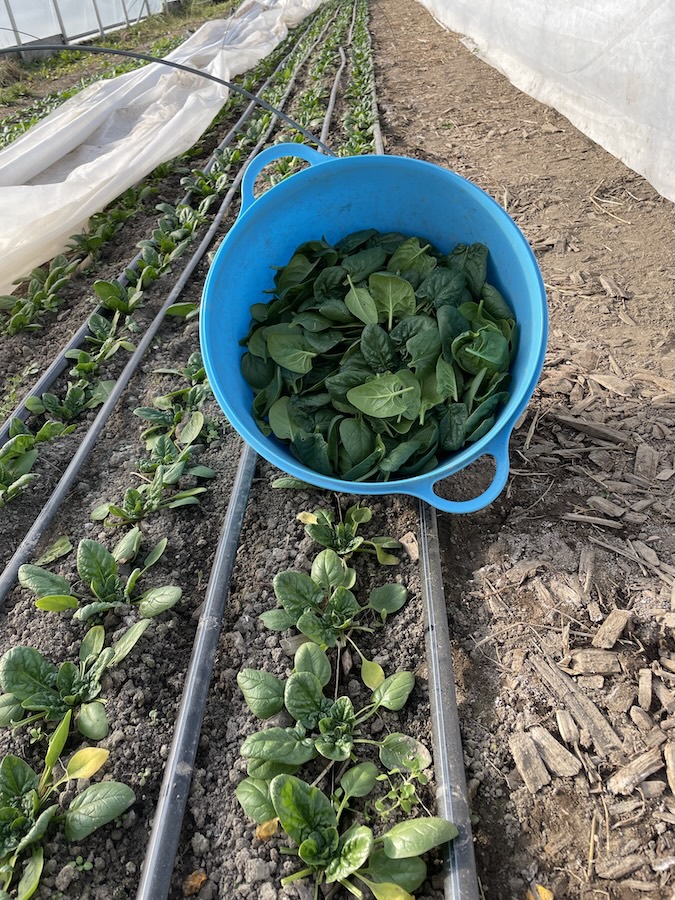
“You’re just delivering more nutrition during the time when there really isn’t anything out there,” Kastner said.
Kastner appreciates the customer loyalty provided by year-round farming, and likes to see community members shopping locally.
“You don’t have to support me; support your local farmer. They depend on the community who pay their bills,” Kastner said. “They’re contributing in their own way, and I think community support seems to be the movement that we’re growing.”
Local produce prices tend to stay more consistent than the market as a whole. During the COVID-19 pandemic, many residents turned to local farms, drawn in by consistent pricing.
“An individual farm or the farmers’ market is going to give you really consistent produce offerings, so you’re less having to depend on the greater market,” said Darby Anderson, manager of the MSU Student Organic Farm. “I think you can really rely on those local farmers providing produce each week, you’re keeping the funds within the community.”
During the winter, Anderson and student workers spend much of their time on farm maintenance. They fix equipment, organize tools and prepare for the next season.
Additionally, the student organic farm has six hoop houses, and the farm focuses on planting lettuce, spinach and kale in the winter. Anderson said crops taste different depending on what kind of weather they are grown in.
Although the student organic farm doesn’t have a winter CSA program, they provide produce to the MSU Food Bank and Brody dining hall year-round.
Despite the struggles that come with a Michigan winter, local farmers see a light at the end of the tunnel.
“It provides you experience and the availability of locally grown vegetables, and I wish that more farmers would embrace the winter season,” Titus said.
Anderson boils the importance of farming during the winter down to the desirability of eating good food year-round.
“It’s really easy to do when you’re also picking up your produce around the person who grew it, not just from the grocery store,” Anderson said.