
Recent Fatal, Serious Crashes Renew Calls for Safer East Lansing Roads
Recent vehicle crashes that have caused serious injuries and death in East Lansing have reinvigorated longstanding calls for traffic safety solutions in the city.
Members of the East Lansing’s Transportation Commission unanimously supported a motion during their July 15 meeting to request representatives from the state transportation department, state police and other transportation and public safety stakeholders to participate in a work session with the city to identify issues with local roadways where concerns of future collisions are high.
“It’s on a regular basis that we’re having these very serious accidents … something needs to be done … It’s unacceptable,” Transportation Commissioner Adan Quan said, presenting the motion.
Vehicle crashes are not a new issue for East Lansing, but Quan told fellow commissioners the “horrendous” July 9 incident where the East Lansing Police Department, or ELPD, said a cement truck collided with a pedestrian, demands a response from the city.
The pedestrian sustained critical injuries from the collision that occurred as they were crossing the intersection at Abbot Road and Saginaw Street, according to ELPD.
Just two days prior on July 7, also on Saginaw Street nearby, East Lansing Police say a car headed east attempted to turn left at Sabron Drive and collided with a motorcycle traveling west.
The motorcyclist sustained critical injuries and the driver of the car sustained minor injuries.
These crashes came one month after another collision at Saginaw Street and Harrison Road that resulted in the death of 26-year-old, Gabrielle Knoespel, of East Lansing who was a passenger in one of the cars. The driver of her car and the driver of the other and its passenger all sustained injuries according to East Lansing Police.
These vehicle collisions and the injury and death of East Lansing residents is an unconscionable occurrence in the city and the root causes of such incidents needs to be identified, members of the city’s Transportation Commission said during their July meeting.
The commission’s request for state stakeholders points at two key roadways in East Lansing, Saginaw Street and Grand River Avenue, which are state owned and operated roadways known as trunklines, for which the city does not have the authority to set speed limits.
Michigan state law outlines the Michigan Department of Transportation, or MDOT, and Michigan State Police, or MSP, jointly set speed limits for trunklines, but municipalities can request a modified speed limit, Michigan State University Civil and Environmental Engineering Professor Timothy Gates said.
One strip of roadway some residents are interested in lowering the speed limit on is the stretch of Grand River Avenue set at 35 miles per hour where traffic comes in from US-127 towards a pedestrian heavy area with East Lansing’s downtown and MSU’s campus on either side.
However, requesting a lower speed limit from the state is a gamble if a municipality is hoping to significantly lower a speed limit, Gates said.
The process, by state law, requires a speed study which measures what the 85th percentile speed is, which is the speed at which 85% of drivers are at or below.
“Be careful what you wish for, because what might happen is you might go out and do a speed study and the 85th percentile speed might be higher than the posted speed limit. In which case, then the state may be compelled, they probably wouldn’t make any change and wouldn’t increase it, but there’s no guarantee,” Gates said.
But a 2024 law change allowed for more wiggle room for local governments to request lower speed limits on state trunklines, Gates pointed out. The change allows for speed limits to be set below the 85th percentile if there is evidence of a public safety risk.
A significant reduction in speed is unlikely, Gates said the 2024 change states that the speed can’t be set lower than the 50th percentile of motorists’ speed which is typically about 5 miles per hour lower than the 85th percentile and the law outlines that reductions must be done in increments of 5 mph.
“It’s kind of boxed in a little bit,” Gates said. “There really isn’t a tremendous amount of flexibility and things didn’t change necessarily. The needle didn’t change a lot with that new 2024 revision.”
The 85th percentile rule is “defective” and designed with the driving motivation to keep traffic flowing, Transportation Commissioner Brianna Egan told East Lansing Info.
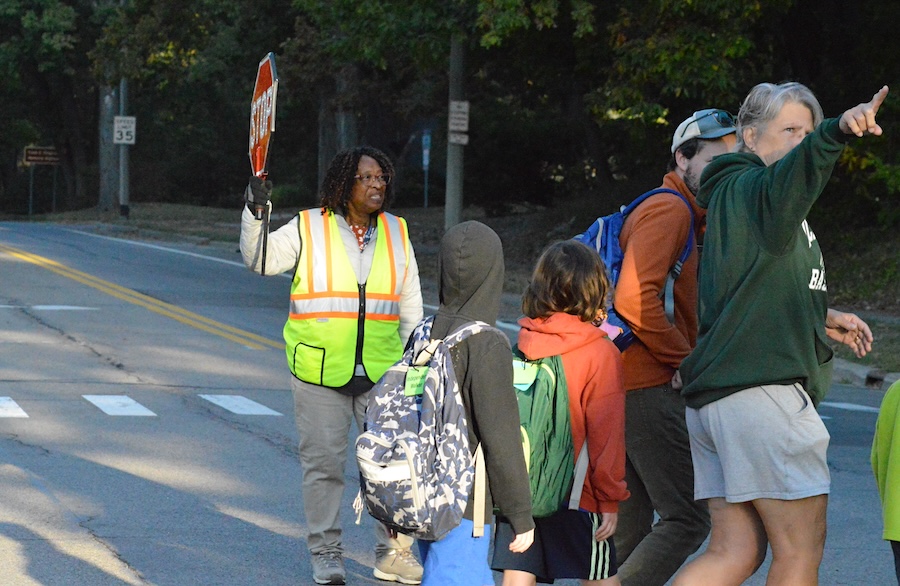
As a Chesterfield Hills Neighborhood resident, Egan has long challenged the 35 mile per hour speed limit that separates her neighborhood and its children from Glencairn Elementary School on the other side of Grand River.
“We in East Lansing are particularly kind of enlightened, because when we hear [the 85th percentile rule] and immediately we’re like, ‘well, that won’t work’ … we live in a city that has trunklines and a speeding problem and chronically low speeding enforcement,” Egan said. “If you don’t enforce speed, you’re just going to have increasing speed in perpetuity.”
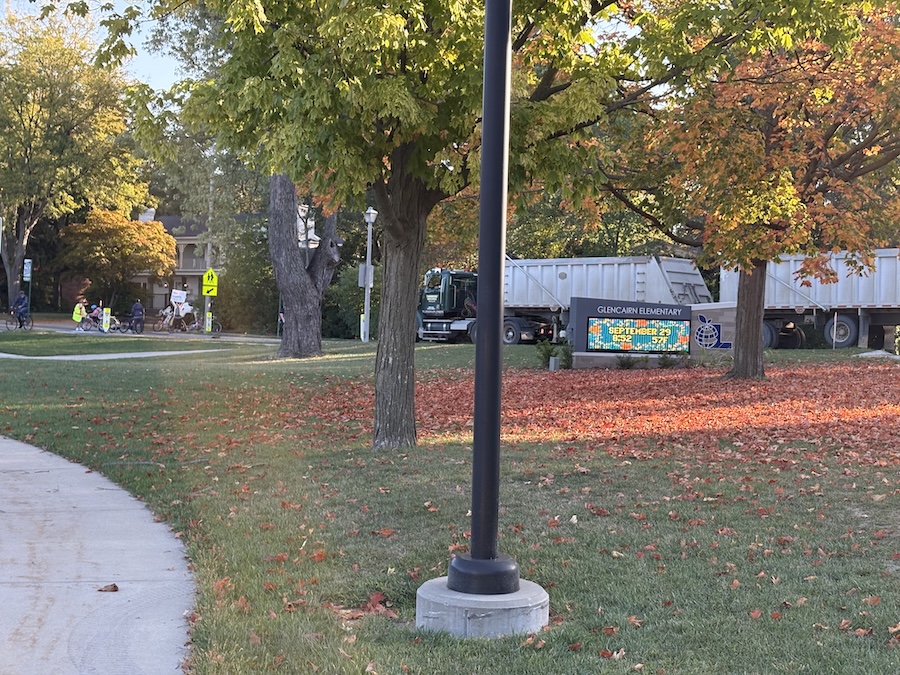
The 35 mile per hour speed limit on that section of Grand River Avenue was set by MDOT and MSP in 2004, raising the limit up from 25 miles per hour to the ire of local leaders, while the speed limit on Saginaw Street was increased as well. The City of East Lansing challenged the change, continued to enforce the 25 mile per hour speed limit and asserted in a legal challenge that the state constitution gives the city “‘the right ‘to the reasonable control’ of the roads within its boundaries” especially given the proximity to schools.
Ultimately, East Lansing was not able to revert the speed limit on that stretch of Grand River back to 25 miles per hour.
As a kid growing up in East Lansing, Glencairn Neighborhood resident Paul Troutman said the city’s turmoil over increased speed limits on state trunklines wasn’t on his radar. But now, he is very aware of the speeding cars as a parent of a child in a neighborhood sandwiched between Grand River Avenue and Saginaw Street where the speed is now 45 miles per hour, up from the previous 35 miles per hour limit when he was younger.
Saginaw is a major roadway in East Lansing, but it can’ be overlooked that on either side, throughout, there are neighborhoods and apartment buildings that line the road, Troutman said. The recent incident where a pedestrian was struck by a cement truck has triggered a lot of anger and frustration amongst his neighbors.
“It got raised to 45 [miles per hour] and I feel like ever since then it’s just been a constant issue … so that’s one of the fights some of East Lansing residents are trying to take on is lowering that back down to 35,” Troutman said. “It would be nicer to have it a little bit slower as it’s going through a major residential corridor here and some crossings, especially the Saginaw Abbott crossing.”
And when traffic gets diverted after these major crashes, motorists cut through Glencairn Neighborhood and other residential streets, Troutman said, often going 10 miles per hour over the speed limit of residential roads.
Adjusting speed limits is not the end all be all solution, Gates said, concurring that adjusting speed limits doesn’t do much if there isn’t any enforcement efforts. He said alternatives to dedicating officer resources to traffic enforcement could include automated speed camera technology that issues tickets in school zone areas.
There is a lot that can and has been done to make East Lansing roadways safer, much at the insistence of area parents that have gone to bat for safer routes to school, Egan said. And while the city should consider solutions that are within its authority, the reality is that the trunklines currently pose unsafe conditions to East Lansing residents, as seen from the string of summer crashes.
The city and other stakeholders have to challenge those in authority like MDOT on the status quo systems that aren’t keeping East Lansing safe, Egan said. A closer look at traffic safety doesn’t have to be solely from the lens of speed limits, but speed has to be considered when looking at what is creating the unsafe conditions and determining solutions that reduce them.