
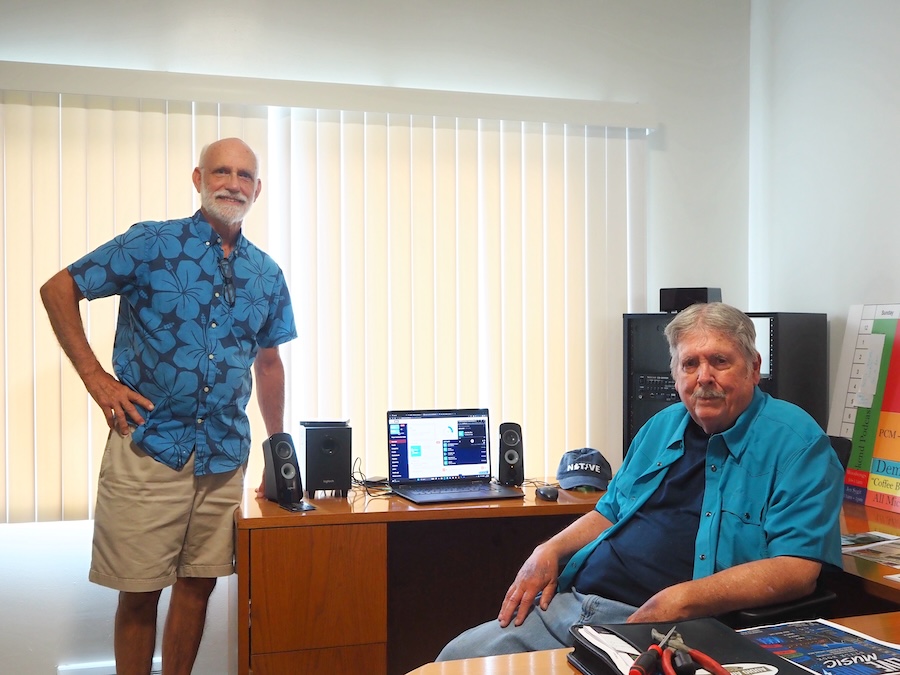
Creating Connections, New Radio Station in Lansing Aims to Amplify New Voices
A confluence of local nonprofit organizations have teamed up to create a new Greater Lansing radio station which could be hitting the airwaves by the end of the year, leaders at the station say.
The hope for Peace Community Media at 105.3 FM is to take all the richness of diversity that exists locally and showcase it on air to magnify stories that connect the Capital Region to the larger world, Terry Link, who’s helping to start the station, told East Lansing Info during a tour of the station.
Lansing has long been a refugee resettlement hub and Michigan State University boasts a robust community of international students and educators, but the stories of those populations often go untold in the local area, Link said.
“We don’t tap into that like we could. It’s almost like we don’t interact with that population,” Link said. “We want to hear the voices of those people and bring them to the table … I’m convinced that this is a place for us to do something special because of who we are. … We’re the state capital, so you also have here all these lobbying organizations. So if you want to deal with any particular issue, you can probably find people on both sides lobbying some way against it or for it.”
Greater Lansing organizations such as the Refugee Development Center, Clean Water Action, Edgewood United Church and the Peace Education Center are among those represented on the station’s board.
Even in Lansing’s substantial media market, there’s real value in a new radio station operated by local community members and aired for the benefit of a local audience, said Dave Downing, who sits on Peace Community Media’s board.
A lifelong Lansing native, Downing was formerly the station manager for Lansing Community College’s 89.7 FM, WLNZ radio station before Michigan Public took it over in 2021.
One of the things that made WLNZ such an impactful part of the community didn’t come from the recording booth, Downing said. It was when members of different organizations who were to be interviewed met in the lobby and got to talking before the station’s daily talk show.
“They interacted and said, “Well, we’ve been thinking about doing something with our organization’ and the other person would say, “Well, we’ve been thinking about something very similar to that’ and then those two people get together, and all of a sudden you’ve got something out in the community that didn’t exist before. That’s really something kind of magical to watch,” Downing said.
Producers at WLNZ started noticing the community impact of those meetings before the show and started actively introducing guests to spark these talks, Downing said. Those connections within the community are what Peace Community Media is all about.
The call is out to local artists in music and poetry and beyond to join, to connect with Peace Community Media or join the station’s volunteer base, Downing and Link said. The hope is that programming will include live music and storytelling, as well as local news coverage and shows that promote education and social justice.
The dream for Peace Community Media largely began when Common Frequency, a nonprofit organization connecting community groups to radio opportunities, contacted the Peace Education Center in 2024, said Link, who sits on the center’s board. With Common Frequency’s guidance, the Peace Education Center navigated the process of securing the 105.3 radio frequency that became available, narrowly beating out another bid for the channel.
The station is now in a small white house at 1212 N Washington Ave in Old Town Lansing with a sign at the door that says “All are welcome.”
Peace Community Media is still mapping out programming and seeking volunteers, but there’s been excitement from locals about the arrival of a community station, Downing and Link said.
The next step is to fundraise to build a radio tower at the house, which Link says will likely cost in the neighborhood of $50,000. Once funds are raised for the tower and other basic equipment the station will need such as microphones, computers and other technology, the bare bones operating cost for the station will be about $5,000 monthly.
“Our thing is to amplify all the local voices and still connect it with the bigger world that we’re part of, and so that’s kind of the orientation with this, local control, giving voices that often are not heard,” Link said. “[Spotlighting] viewpoints and stories from people who are connected to this community and show how it connects to the rest of the world.”