

After Major Storms, East Lansing’s Tree Pruning Program Shows Its Value
While looking at the aftermath of a large 2025 storm, East Lansing Environmental Sustainability and Resiliency Manager Cliff Walls saw something different than other residents: early signs of success from the city’s street tree pruning program.
The tree pruning program, which began in 2024, seeks to care for roughly 1,200 public trees in the rights-of-way and parks each year. The program uses a proactive approach to tree care, like encouraging healthy growth in young trees and pruning dead wood. City officials say the preventative strategy helps keep trees from splintering during storms and saves taxpayers money over time.
The tree pruning program will be done in seven-year intervals, with the city evaluating about 15% of its trees each year. While driving after the 2025 storm, Walls noticed pruned trees were essentially unscathed, while non-pruned trees suffered fallen and split branches.
“As staff, we can really see the value in terms of how the urban forest is responding in these high wind events and the level of avoided cleanup costs and damage to trees after some of these storms,” Walls said. “[It’s] definitely, from [a] staff perspective, a very worthy investment. [It] saves us money on reactive maintenance down the road.”
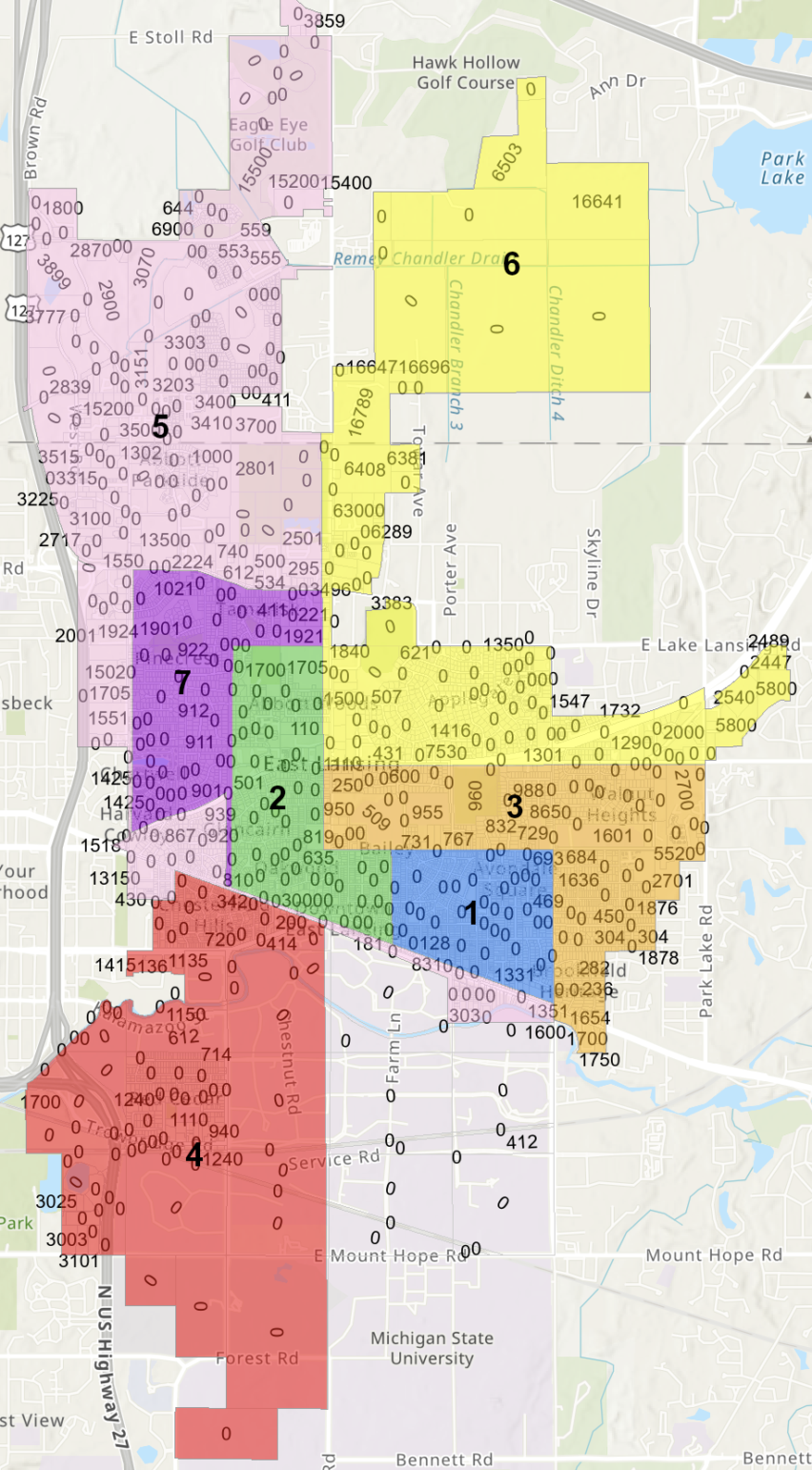
To carry out the program, the city was divided into seven zones and one zone is pruned each year. With two zones already completed, crews are currently pruning trees in zone three. Once all seven zones are complete, the cycle restarts at zone one. Walls said the timeline is a sweet spot for tree maintenance as it provides enough time for trees to respond to previous pruning and for staff to spot new issues.
The program can carry a significant cost – the city signed contracts worth about $250,000 with companies to do pruning each of the last two years – but Walls said preventing storm damage can save the city money.
Tending to a large number of trees at once is highly cost-effective, compared to making single trips for emergency repairs, Walls said. When storms damage unpruned trees, the city faces increased overtime costs for the responding Department of Public Works employees and high arborist fees.
“If you can get dead wood out of a tree before a storm hits … you’re doing it in a way that’s most efficient and cheapest,” Walls said.
Sustaining East Lansing’s urban forest has been difficult historically. An Emerald Ash Borer infestation destroyed nearly 11% of the city’s trees in the early 2000s, Walls said, adding that it forced officials to defer routine maintenance for years to fund the cleanup.
Today, a different vulnerability looms: maple trees make up nearly half of the city’s canopy. Walls noted that Norway and Silver Maple trees are weak-wooded and cause the majority of storm damage. As a result, the city has stopped planting them to prevent future pests or diseases from wiping out the canopy again.
Walls emphasized that the city’s program is a block pruning program, which is not the same as utility pruning, which focuses strictly on clearing overhead power lines. He said this program will extend trees’ lifespans and preserve public benefits like shade.
“Based on the success of it and how we’re seeing the urban forest respond and the savings we’re seeing from it, we’re hopeful that this program can continue to be prioritized,” Walls said.
This story was corrected to state what species of maple trees the city stopped planting.