
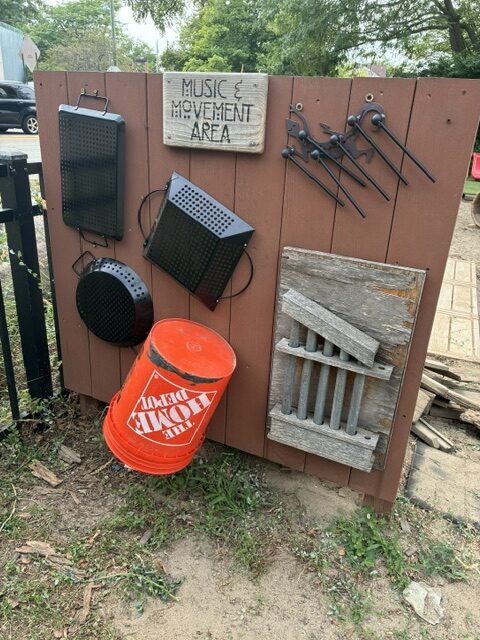
In the Age of Screens, Local Preschools are Embracing the Outdoors
“Follow the person in front of you,” a Peoples Church preschool teacher tells her students as a line of children shuffle through a doorway and head for an outdoor classroom.
Once outside, the line dissolves. Some children race toward the mud kitchen, while others make a beeline for a miniature waterfall and stream. The scene reflects a growing movement in early childhood education, as programs create more opportunities for children to learn and play outdoors at a time when many spend increasing amounts of their childhood in front of screens.
Approaches vary across the field. While some preschools choose to go completely tech-free, others utilize digital tools intentionally. However, many educators are pushing to bring nature-based curriculum back to the forefront.
“We were noticing, I think as a whole field, that the lack of outside time … has really taken away from their ability to learn fully with their whole bodies,” said Taurie Konkel, director of The Peoples Church Preschool, one of the many programs embracing this philosophy. “When we can encourage them to play, they’re learning things that we don’t even expect them to learn, just by natural curiosity and exploration of materials.”
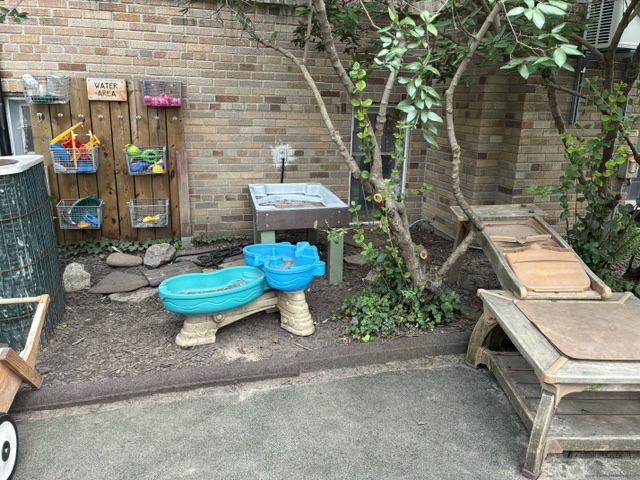
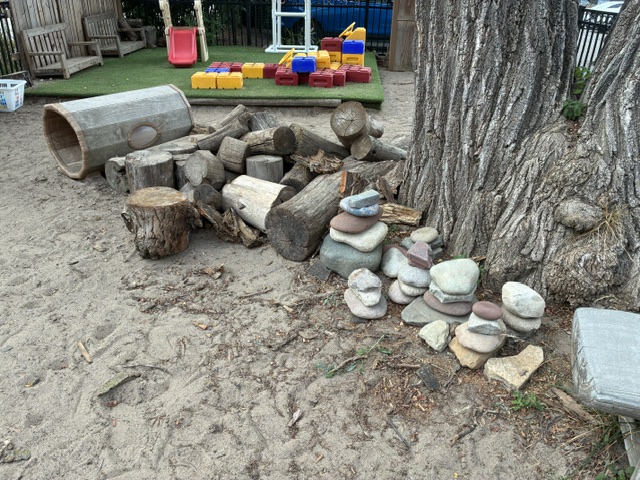
The Peoples Church Preschool uses a combination of a nature-based and play-based curriculum. The school worked with national nonprofit Nature Explore to ensure its two outdoor classrooms are set up in a way that encourages learning outside, giving children access to natural resources rather than plastic toys.
Konkel explained that this model works in conjunction with play-based learning, where children lead their own experiences using provided materials. Rather than following a controlled, step-by-step activity, this curiosity-driven structure has proven highly effective in supporting holistic child development.
This includes providing children with a water table where they practice fine motor skills by dumping water, while observing concepts that expand understanding of volume and spatial awareness. As children lead, teachers remain responsive, engaging students further by asking questions about their observations and building lesson plans around their interests.
This structure also develops two additional senses — vestibular and proprioceptive— alongside sight, taste, touch, sound and smell. Konkel explained that these two hidden senses demonstrate cause-and-effect, helping children learn how their bodies work in relation to the world around them.
“If they don’t have their sense of where their body is … how they interact with forces around them and things like that, they’re not going to be as able to do everything else as they grow up, because their bodies are not developed the way they were meant to develop,” Konkel said.
Inspired by this resurgence, Michelle Shilakes, founder and preschool director of Magic of Play Preschool, utilizes a similar approach that allows children to drive learning through play and curiosity.
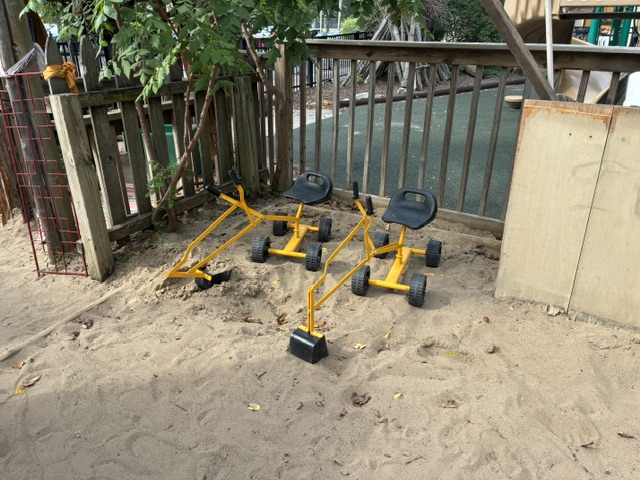
During play, she notices children developing motor skills like climbing and running. She also witnesses their creativity when interacting with natural resources like mud and water, which they transform into mud cakes and soups. A main benefit of this curriculum is that a single activity can target multiple developmental domains, Shilakes said.
Both preschools keep technology and media usage extremely limited, reserving devices primarily to connect with parents.
Magic of Play utilizes the Brightwheel app, which allows teachers to share videos, pictures and messages with parents, while logging activities, including meal times and diaper changes. Shilakes added that teachers occasionally use apps to identify plants or insects, or to show the children pictures of themselves.
Children, however, do not use devices themselves, despite requests from those allowed screen time at home. In those moments, teachers reiterate that school is a tech-free space and attempt to redirect them, or ask the children what they enjoy on screens to engage them in discussion without providing a device.
“I would say typically once kids are here for a period of time and they get used to being outside a lot and all the creative play, they really enjoy things,” Shilakes said, adding that eliminating screentime is just one part of a bigger adjustment children face when starting preschool.
Fashina Alade, a children’s media researcher and associate professor at Michigan State University, studies the intersection of media effects, developmental psychology and early childhood education to examine how children comprehend educational media.
Alade believes high-quality educational media relies on two foundational aspects: having a learning framework or curriculum, and being developmentally appropriate.
“Even something that’s got a great educational curriculum, if it’s targeted for the wrong age, or … if the viewer is not in that sweet spot of who that curriculum is developed for, then we’re not going to see good educational outcomes,” Alade said.
She explained that while media has negative effects on young children, it can also offer positives when used effectively. Alade described current research that shows watching a lesson that introduces a topic, followed by a hands-on practice, can be extremely effective.
“The media beforehand to introduce the lesson can boost the effects of the real-life lesson, [this] is the idea of preparation for future learning,” Alade said.
This model is sometimes followed by instructors at The Peoples Church Preschool.
Technology at Peoples Church is primarily used by the staff to communicate with one another and with parents. In specific instances, it supports a lesson plan and is almost always paired with a hands-on activity. For example, if the students watch a short video about birds, they then go outside to locate birds or search for a nest.
If children ask for a screen, Konkel explained that they are reminded that they do not get their own devices at school. Teachers may offer a compromise instead, such as taking a selfie with the child or snapping a picture of an activity they did to send to their parents.
Konkel said that one of the unique challenges that media consumption presents is it exposes young children to scary and sensitive topics that they do not understand.
“Recently, I feel we’ve had to have some conversations relating to war and things like that, helping children understand other things that are happening,” Konkel said.
These situations are handled through private conversations with parents first to establish what they want their child to know, before the school addresses the topic with the child.
“We do what we can to alleviate any anxiety involved with any of that type of thing,” Konkel said, adding that the children tend to bring it up because they are anxious and need help processing the information.
Beyond managing real-world information, The Peoples Church Preschool is also navigating how to protect students’ digital footprints. With the rapid rise of Artificial Intelligence and online identify theft, preschools must balance showcasing what they offer to young learners, while protecting students’ information.
“You want to show people the learning that [is] happening without harming children in the future … how do we keep our children safe while still promoting us and sharing us to the world?” Konkel said.