

East Lansing Police Oversight Commission Questions Police Horses, Crowd Control Tactics
Members of the East Lansing Independent Police Oversight Commission questioned crowd control tactics police used during Michigan State University’s welcome weekend at the body’s Sept. 2 meeting.
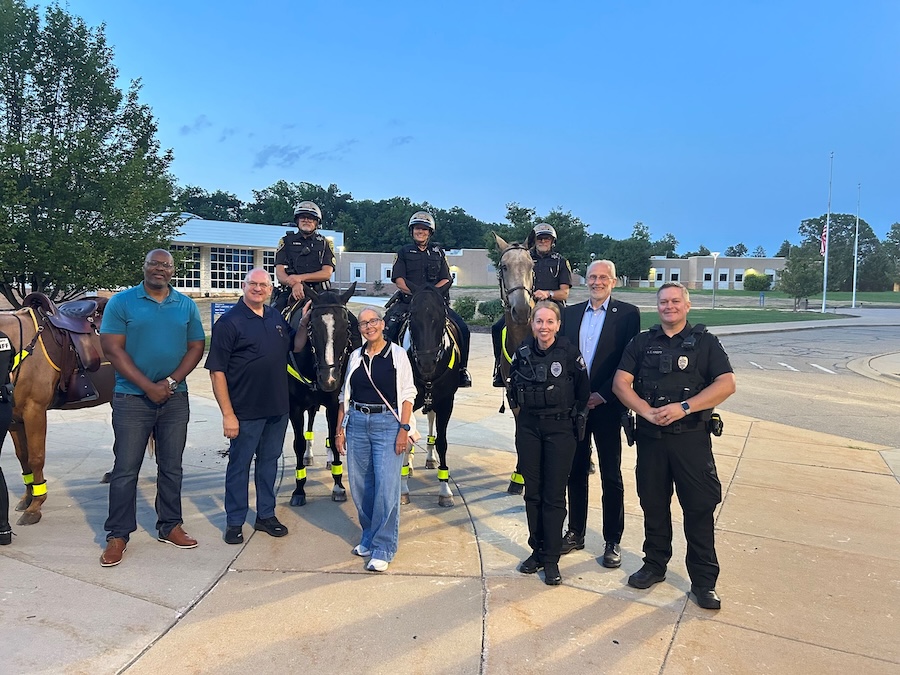
There was an increased police presence downtown for welcome weekend this year, as more than 100 officers from seven agencies, drones, a helicopter and police horses were deployed, with many resources dedicated to the downtown area. During MSU’s welcome weekend from Friday, Aug. 28 through Sunday, Aug. 30, the ELPD and partners made 35 arrests and issued 134 citations while responding to 348 calls for service, according to a preliminary summary the department published.
Members of the Police Oversight Commission questioned the decision to deploy police horses downtown. Commissioners said historically law enforcement has used horses for slave patrols and the deploying mounted officers can be traumatic for some people to see.
“What are we going to do, firehoses and German shepherd dogs next? Let’s move into the ‘40s, ‘50s, and ‘60s with our mindset about policing? It’s horrifying,” Oversight Commission Vice Chair Kath Edsall said.
She asked if the Diversity, Equity and Inclusion Department was consulted about the decision to put horses downtown. Interim City Manager Annette Irwin said that historically, police horses have been used often in East Lansing.
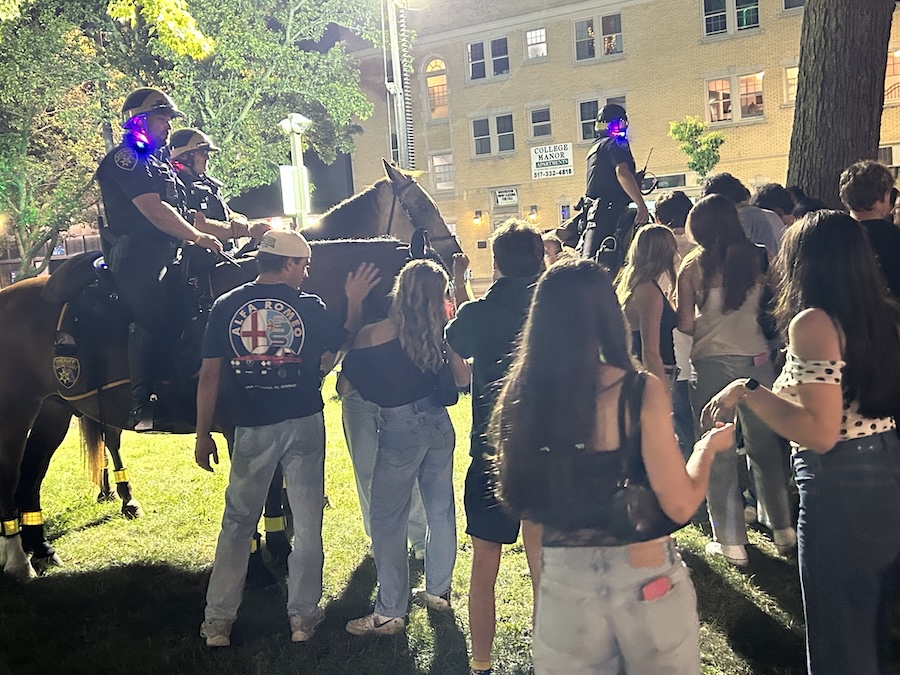
Edsall, along with other members of a community watch group, canvassed the downtown area during welcome weekend. She said she saw police officers outside of Harper’s Bar use a horse to push students spilled on the road back onto the curb.
Commission Chair Ernest Conerly said horses have been used to “ram” through crowds at protests in the South to disperse people, noting that the practice can lead to injuries. He added that at a previous policy subcommittee meeting, he had recommended utilizing the Stanford model of de-escalation and crowd control management to City Attorney Carlito Young.
“You [Young] said … there was good things in there,” Conerly said. “Everything that I heard they did downtown, none of that goes to the Stanford model of de-escalation or crowd management.”
Young said there were plans to integrate elements from the model, but timing was an issue. Young did not expand on what those plans were. He added he is not aware of a time horses were used improperly locally in the past 20 years. He said that while he understands using horses during a protest can pose a risk, they were not used for that purpose during welcome weekend.
Conerly pushed back, stating that regardless of whether horses have caused harm in the last 20 years, the deployment goes against everything they discussed previously. At the subcommittee meeting, Conerly had suggested posting signs around the downtown area to welcome newcomers and set expectations.
“Where was the signage that they said at the last meeting that they made?” Conerly asked. “I asked people and nobody saw any signage. What they saw was a show of force, because that’s what you use horses for … that goes against the whole purpose of crowd management strategy.”
“We needed signs that were appropriate to address the concern that we did raise. That wasn’t able to be done … time was the issue with that,” Young replied.
Commissioners say ELPD’s video-viewing policy is a hurdle.
The oversight commission is still struggling to watch body camera footage of police interactions after the ELPD changed the rules regulating how footage can be viewed in 2024.
Previously, commissioners were sent footage that they could download and view at home. Commissioners signed privacy agreements stating they would not share footage, and acknowledged that they could be removed from their post on the commission if they violated this rule. However, the ELPD changed its policy and commissioners are now required to watch footage at City Hall or the police station during limited viewing times.
This makes it challenging for commissioners to watch videos, as members of the commission are volunteers with jobs and other responsibilities, and it often takes hours to review the different angles of body camera footage. Commissioners have said not being able to watch footage at home has been a significant burden to carrying out their work.
The policy has hampered discussions at recent commission meetings, as the body has discussed incidents captured by cameras, but only some of the commissioners had actually viewed the footage.
Commissioner Kathy Swedlow said the city and oversight commission were somewhat close to negotiating an agreement before the previous City Manager Robert Belleman resigned in June, but progress stalled with leadership changes.
“I think I speak for everyone here when I say that we would like to go back to something that allows us to view [footage] individually,” Swedlow said.
Young said he is aware the commission has tried to make the new process work and called their concerns reasonable.
“We’re in the process of advising the City Council, addressing these concerns, and formulating a plan that maybe can address some of these issues directly. I will say this, I believe the privacy promise speaks for itself,” Young said, adding that the matter will soon be discussed at a special City Council meeting.
Correction: This story was updated to identify the commission’s chair.