
East Lansing Resident Offers Workshops on Building Better Conversations
With the holidays lying just around the corner from a contentious election cycle, conversations can get… charged.
An East Lansing resident is offering workshops that teach dialogue tools that encourage meaningful conversations with calmness and curiosity, instead of confrontation.
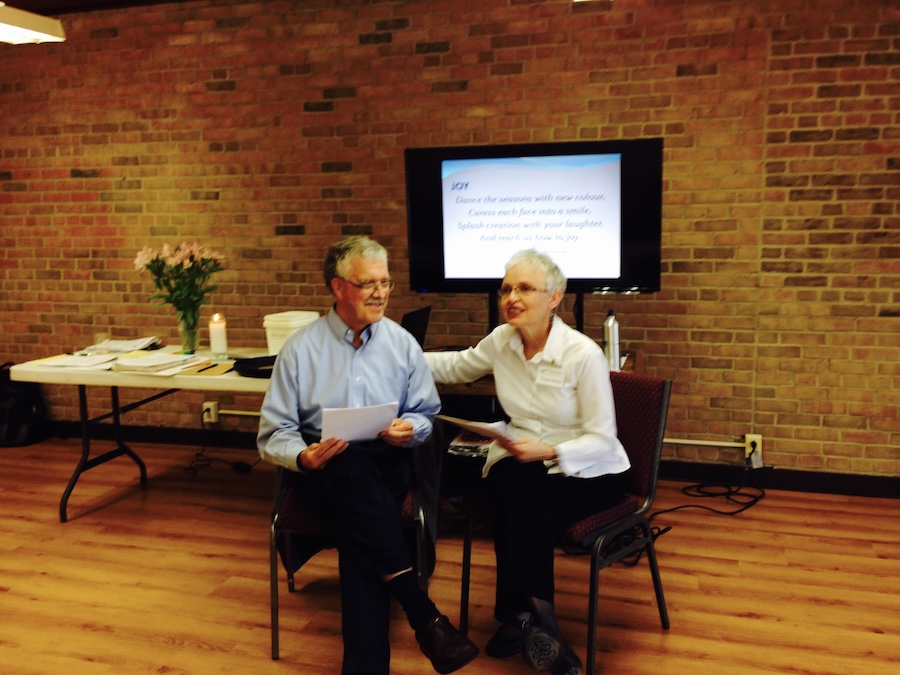
Connie Detjen is a certified educator in Safe Conversations, a methodology developed by acclaimed relationship therapists Helen LaKelly Hunt and Harville Hendrix. Safe Conversations training equips individuals with the skills needed to engage in true dialogue rather than monologue. To help people put these ideas into practice, Detjen will offer two workshops where participants will learn three components of dialogue: mirroring, validating and empathizing.
The tools teach people how to have more productive conversations with family members, colleagues, romantic partners and others.
“First the person needs to feel safe, that’s why it’s called Safe Conversations,” Detjen said. “There needs to be safety in this conversation before we can get into anything at all difficult.”
Mirroring is a powerful tool, Detjen said. This is where an individual acknowledges what the speaker said by using their same language, followed by asking “Is there more?”
“That can really get people to open up,” Detjen said, referring specifically to the follow-up question.
In addition, validating where somebody is coming from emotionally is important. This allows participants to feel heard and can be as simple as saying, “I can see how you would be affected that way.”
Moreover, empathizing includes two main parts: restating the speaker’s expressed emotions and then asking if that interpretation is correct. An example of this includes, “Sounds to me like you might be feeling…”
“None of this … is necessarily groundbreaking new stuff,” Detjen said. “This is stuff we’ve known about people … it’s just a chance to focus on what we really want to be doing: dialoguing in our communication rather than monologuing.”
Detjen explained that when people only monologue, no true connection happens. As one person is speaking, the other begins to mentally pre-plan their response, failing to actively listen. She noted that she repeatedly sees this power struggle in the workplace.
“There’s a lot of ‘who’s going to be the alpha dog in the room?’ That’s not dialogue. This is [about] honoring the relationships,” Detjen said.
Safety is key when having difficult conversations. Detjen shared an example of how this can play out, highlighting an encounter that a recurring workshop participant had with someone wearing a hat that opposes their political values.
“She was able to have a conversation with this person by listening to him,” Detjen said. “That created the trust for them to be able to continue on with their conversation, rather than it ending right away if she had some sort of reactive way of approaching it … Maybe some persuasion can happen [later], but first the trust needs to be established.”
She added that once enough trust is built, someone can share where they are coming from if the other person is willing to hear them out. However, Detjen emphasized that some people simply may not want to.
“But at least you’ve created this sort of safe space and modeled how to slow things down, be calm, be curious and be empathetic even when there are differences,” Detjen said.
These tools can also heal family dynamics. Detjen shared a story of a mother utilizing these components in a conversation with her teenage daughter, who stated she felt like no one in the family loved her. Instead of arguing, the mother mirrored her daughter’s language, repeating back that she felt unloved and validating her feelings. The teenager finally felt heard during the conversation and eventually came around on her own, acknowledging that she is loved by her family.
Detjen has always been interested in relationships and how couples can thrive. In the 1980s, she and her husband attended a retreat called World Wide Marriage Encounter. The two spent the weekend learning tools of dialogue that they continue to use in their marriage.
They later launched United in Love, a one-day retreat for couples offered through Edgewood United Church. Detjen became certified to teach Safe Conversations later on because she wanted to teach these tools to everyone, not just couples.
“The … tools have really become part of how I relate to people,” Detjen said.
Backed by a grant from the Michigan Conference of the United Church of Christ, Detjen is putting on two upcoming Zoom workshops.
The first will be a one-hour introductory session on Saturday, Nov. 14 starting at 10 a.m. Detjen said participants “will get a taste of what it’s like to participate in a safe conversation that involves really listening to each other.” The registration deadline is Nov. 7, and there is a $5 fee. Those interested can sign up here.
The second workshop is a deeper, four-hour-long dive on Saturday, Jan. 23 starting at 10 a.m. Participants will focus heavily on the validating and empathizing parts of the dialogue. Detjen noted that attendees will walk away with practical tools they can use in their most difficult conversations. The registration deadline is Jan. 16 and the fee is $20. Interested participants can sign up here.