
Fighting For Confidence: Teenager Runs East Lansing Karate Studio
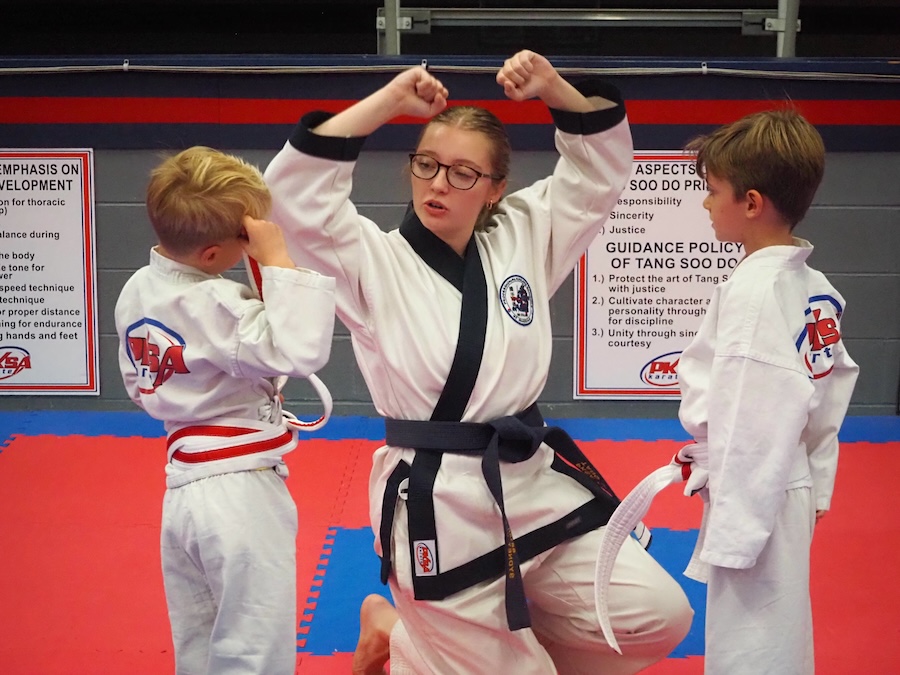
For Sydney Jarvis, owner and head instructor of PKSA Karate East Lansing, karate is about more than building strength on the mat. Having taken over ownership of the martial arts school three years ago when she was 15 years old, Jarvis said the confidence and discipline she and other students build practicing karate helps foster the skills needed to accomplish other goals in life.
A longtime lover of martial arts, Jarvis said as a child she dreamed of becoming a spy and dedicated years to refining her training and achieving new ranks at PKSA East Lansing, helping to teach classes at the school since she was 11 years old.
Years later, while balancing AP credits at Lansing Christian School and teaching karate classes, Jarvis was presented with the opportunity to take over leadership of PKSA East Lansing where she had trained for about 8 years.
“I don’t think I joined with the intention of like ‘I’m gonna keep going and be a school owner and do all this crazy stuff,’ but I just really loved it,” Jarvis said. “Like we like to say to our students ‘a black belt is a white belt who never quit’, I just kept doing it and then eventually one thing led to another and now I have a school.”
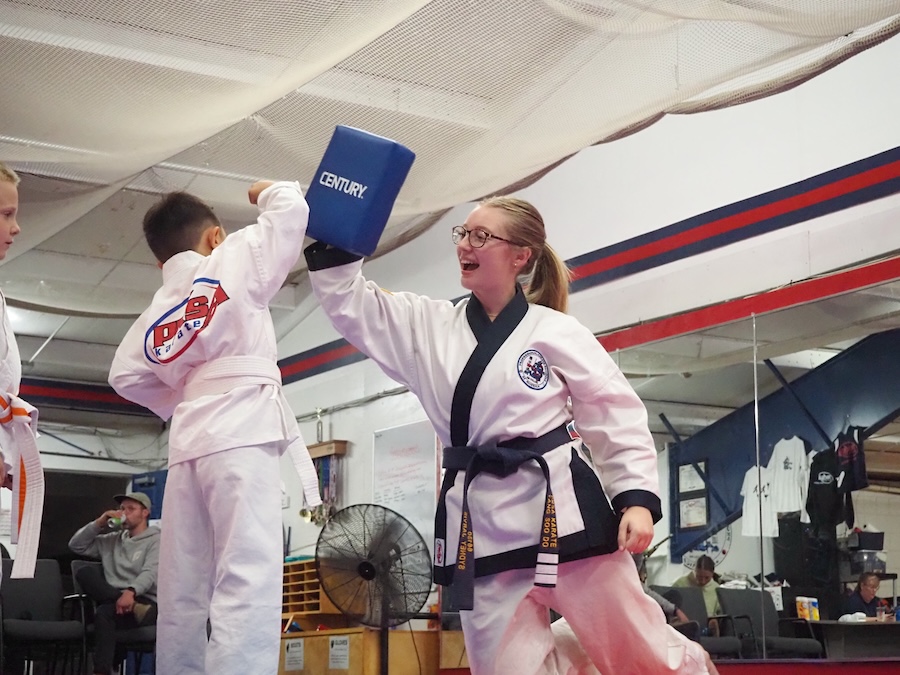
For three years now, Jarvis and her parents have co-owned and operated the martial arts school, located inside the Court One Training Center in East Lansing, offering classes to students across ages and skill levels. And while it was a challenge for her whole family, who Jarvis said had no experience in business ownership, her parents showed a lot of faith in her abilities to rise up to the task of leadership.
Martial arts and studio ownership are both male-dominated arenas, Jarvis said, but age and gender don’t confine what a person is capable of, especially with the sense of community that exists at her studio.
“The main thing that makes our business stick out is just that I was so young, and I think it really showcases the biggest thing about karate is the community,” Jarvis said. “Our type of karate and our company specifically, we’re more focused on the person that you become through your karate journey than anything else, and we’re more than happy and willing to work with anybody at any experience level, any age, to work on those skills because the important part is the community around you and who you become as a person.”
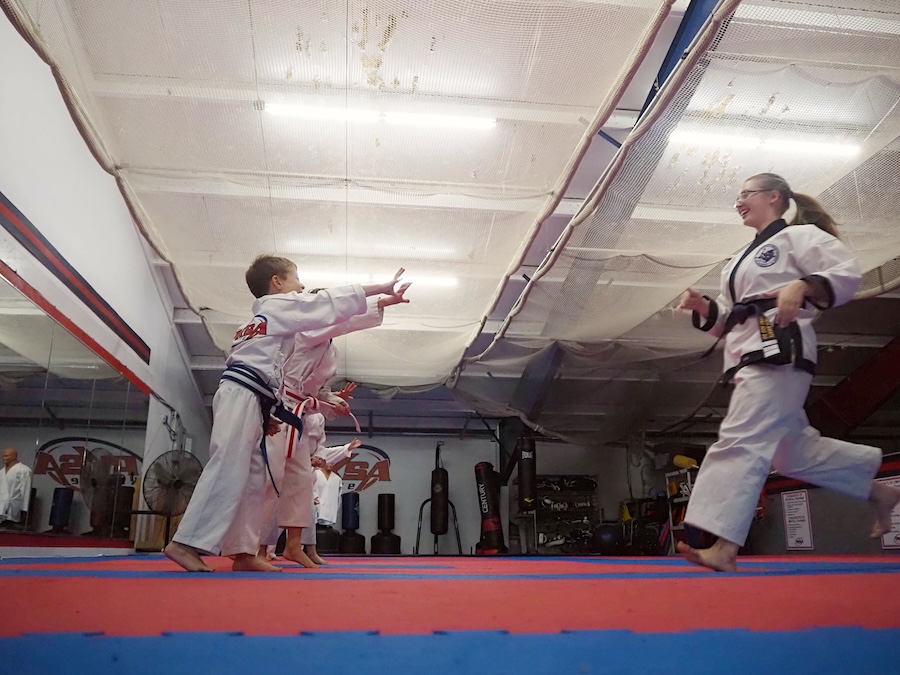
Jarvis teaches classes for about 40 students, which includes a Little Ninjas program for ages 4 through 6 that teaches coordination, communication skills and personal safety. The school’s Family Program, which are karate classes for ages 7 to adults, allows students to progress through the belt ranks, learning martial arts forms, sparring and weapons.
As she’s traversed operating a business while keeping up with her education to become a physical therapist at Michigan State University, Jarvis said she’s had the support of family friends who operate their own women-owned businesses, as well as other martial arts studio owners like PKSA Ann Arbor’s Lynda Gronlund to help her navigate the industry as a young woman.
Though there weren’t always a lot of girls in karate classes with her growing up, Jarvis said things have been shifting in recent years. Especially at PKSA studios, which stands for Professional Karate Schools of America, Jarvis said there’s been a clear increase in female representation.
Reflecting on a recent tournament her school participated in, Jarvis said she looked at the t-shirt participants received for attending and the design featured a girl.
But it’s the moments where students achieve more than they thought possible, no matter how long it took to get to that moment, that make this work so meaningful, Jarvis said.
One empowering element of her work, she said, is seeing her students on the autism spectrum find a home in karate where they can learn a new skill without judgement, in an environment that encourages them to express themselves.
“I have a student who was nonverbal for most of their life, and they started speaking a year before they came to karate, and now they have a huge friend group, and they’re able to pronounce all the form names, and they do super well and they placed super well at our last tournament and it’s just really cool to see the development of confidence and just having a good community around them to support them,” Jarvis said.
It’s not uncommon for people to approach the start of their martial arts journey with doubts that they’ll be able to learn the skills necessary to go up to the next belt rank, Jarvis said. Whether it’s a student saying they might be too old or a parent expressing concerns that their child may have difficulty focusing in class, Jarvis said she works to meet her studio community where they’re at, going at their pace to help support them.
“I think every single person in PKSA has some sort of story, some obstacle that they had to overcome,” Jarvis said.