
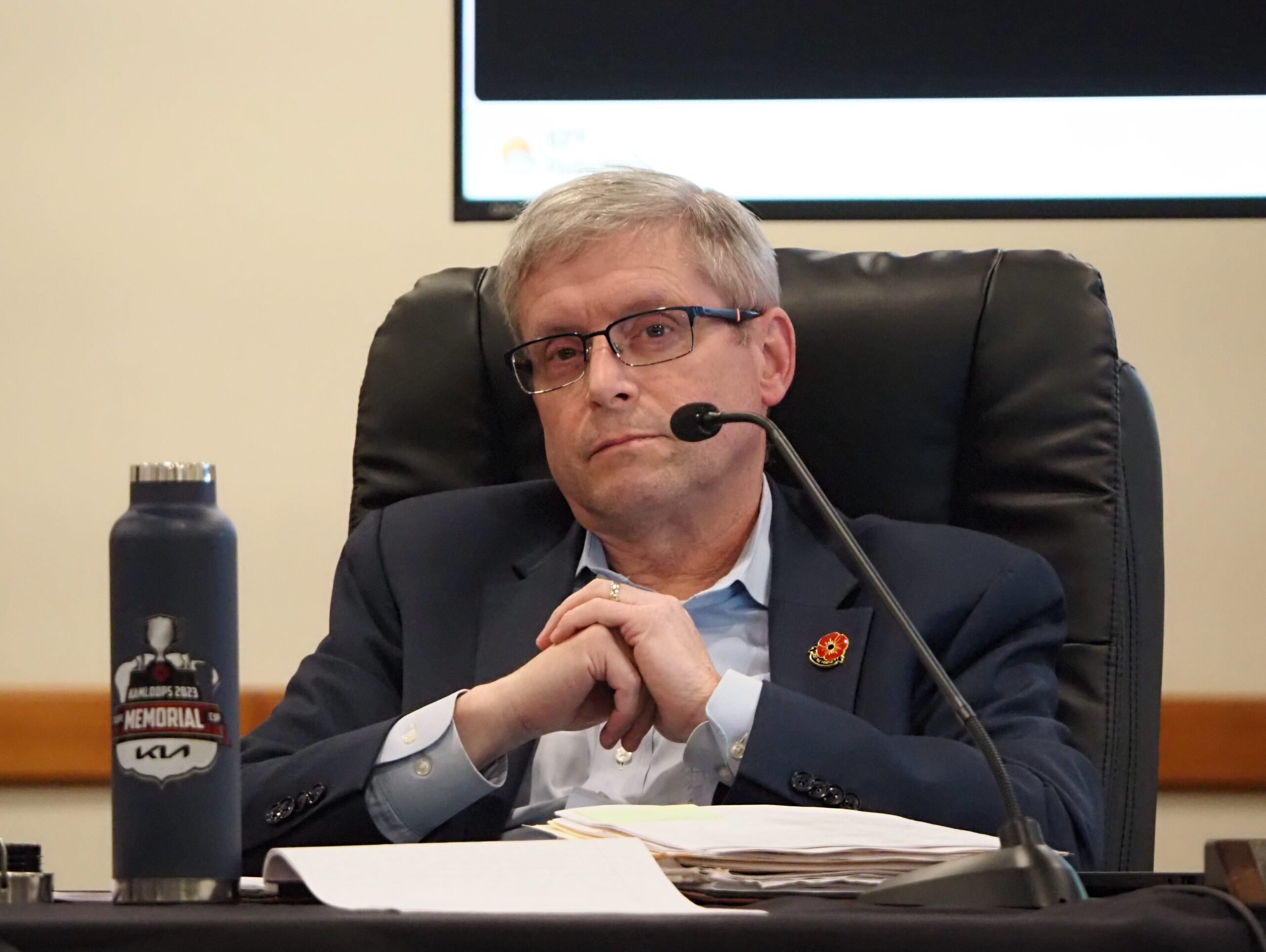
Advocates Troubled by East Lansing’s Response to Sexual Harassment Complaint
An East Lansing city employee accused City Manager Robert Belleman of sexual harassment during a City Council meeting several months after filing a complaint, saying she felt there had been no consequences. Now, some community members are voicing concerns that the city lacks the transparency and integrity to protect and govern its residents.
Recent months in East Lansing have been marred by a slew of public controversies where community members have raged during local government meetings and public gatherings largely due to unease over police brutality and accountability for government officials.
The latest rupture in public trust comes after East Lansing Grants Coordinator Erica Dziedzic-Hernandez addressed East Lansing City Council members during a council meeting on May 19, saying that last year she went through the city’s process to report sexual harassment, only for Belleman to never be held accountable.
Dziedzic-Hernandez filed her complaint in September, Mayor Erik Altmann said during the May 21 City Council meeting. The complaint alleged, among other behavior, that Belleman nicknamed her “too easy.”
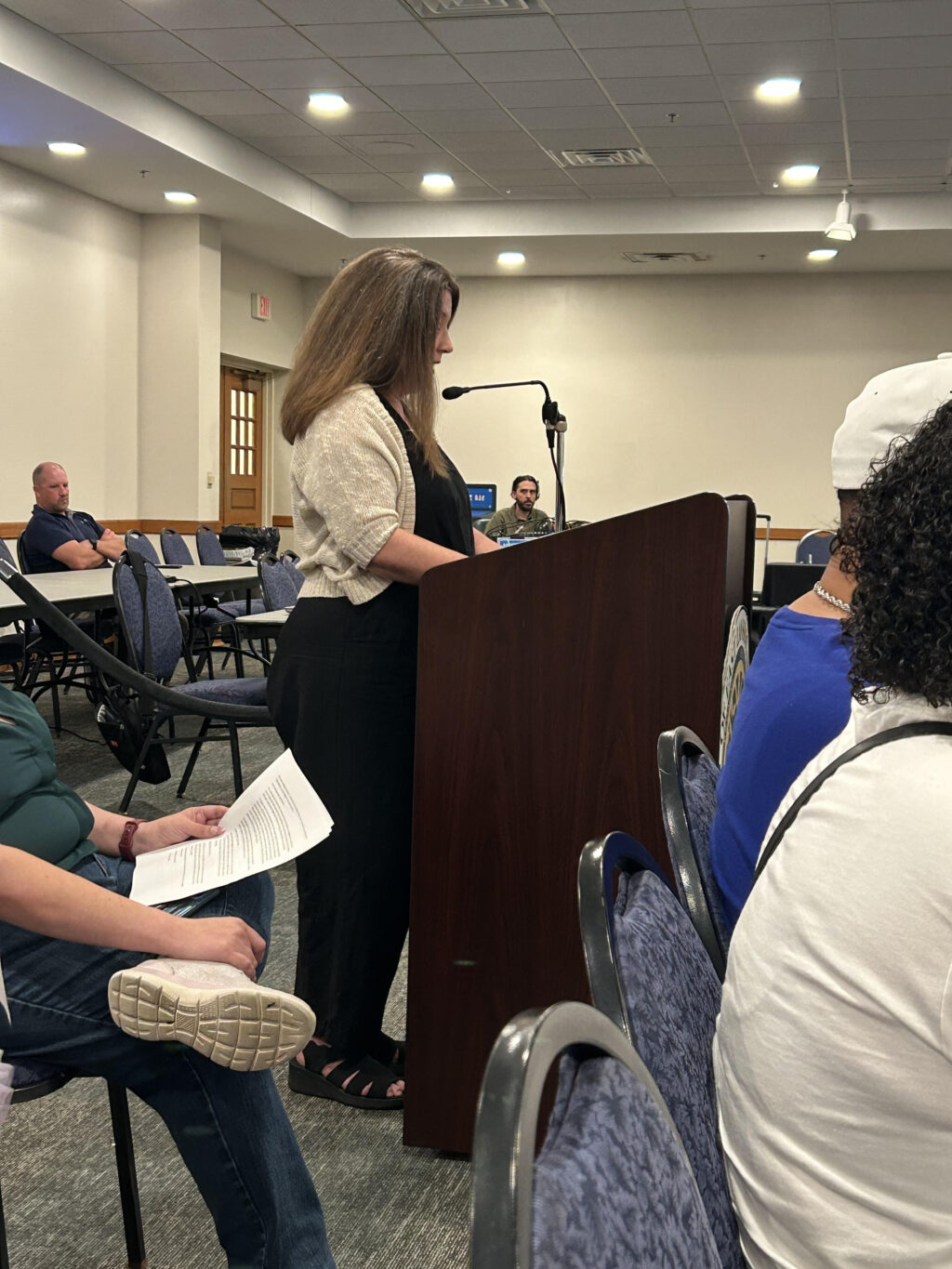
Some City Council members at that meeting articulated that they had reviewed the outcomes of the investigation that followed the complaint late last year, but it wasn’t until Dziedzic-Hernandez took her accusations to a public audience that the City Council placed Belleman on paid leave a week later on May 26.
Forcing Dziedzic-Hernandez to share her account of what Belleman did, events Dziedzic-Hernandez expressed a great deal of discomfort over, in order for change to occur shows the East Lansing City Council does not have a strong grasp of how to handle sexual violence complaints, local sexual violence survivor advocate Tashmica Torok told East Lansing Info.
“If a city employee has to come to a public session and disclose that they’ve been harassed at work and are feeling unprotected, I think that’s a clear indication that we have some workplace harassment policies that we need to be taking a look at,” Torok said. “Disappointing is not even the word … I’m so f***ing glad I don’t understand these people.”
As he announced during a special City Council meeting on May 21 that the investigation report from Dziedzic-Hernandez’s complaint would be released, Altmann said that the city took the allegations seriously and acted swiftly in the investigation. He then offered his support to Belleman.
“Everybody deserves process. Everybody has rights,” Altmann said. “That applies to complainants and it applies to respondents, and it’s a relief for me to finally be able to make this statement to the public, that these claims were unfounded.”
“I look forward to continuing to work with City Manager Belleman in his position and I offer my support to him,” he continued.
The room at the May 21 meeting erupted into booing and condemnations of “shame” for Altmann’s rendering of what the investigation found.
The investigation, performed by the Miller Canfield law firm, found no evidence or witnesses of the sexual harassment Dziedzic-Hernandez described. The firm did outline interviews with other city employees where they told investigators that Belleman talks down to female employees, communicating to them in a more stern manner, and chooses favorites in the office.
This is not the first time Belleman has been accused of creating a hostile work environment. He was selected to become East Lansing’s city manager after being fired from his role as Saginaw County controller amid complaints from city staff.
Altmann’s comments do not reflect the sentiments of the entire City Council and calling Dziedzic-Hernandez’s complaints “unfounded” is not representative of the findings of the investigation, Councilmember Kerry Ebersole Singh wrote in a statement to ELi following the May 21 city council meeting.
After reviewing the findings of the investigation in December, Ebersole Singh said she believed corrective action was needed for the concerns raised about Belleman’s leadership. Council then asked Belleman to attend leadership training in order to promote a healthier workplace culture.
“What the independent investigation concluded is that the complaints did not rise to the level of a legal or policy violation. That is one threshold — it is not a verdict on whether the conduct occurred or whether it was acceptable,” Ebersole Singh wrote in the statement to ELi. “To any city employee who has experienced a difficult or hostile work environment, there is a formal process through the City of East Lansing Human Resources — please know that I am paying close attention. Coming forward takes courage, and you deserve to be heard.”
During the May 26 City Council meeting Belleman was placed on leave during, he made a statement offering an apology to the East Lansing city workforce.
“I’m sorry if any of you have felt that I have not been the leader that you needed me to be,” he said. “Each day I strive for the city to deliver services at the highest level possible, but I can do better and I will do better. I have taken your feedback to heart, your comments and concerns have not fallen on deaf ears, and I will make positive changes going forward. I care about you, the residents we serve and our community.”
Coming forward with a story of sexual violence of any kind is no small thing, the devastating impact of such abuse can be compounded by systems and individuals in power who mishandle survivors’ bravery, Abbie Tykocki, volunteer advocate at Michigan State University Center for Survivors said to ELi in a written statement.
Tykocki has addressed the City Council multiple times about the importance of trauma-informed processes to reduce sexual harassment and assault in the workplace during public comment after Dziedzic-Hernandez made her complaint public.
The city only vocalized in May, several months after the investigation ended, that corrective action towards Belleman in the form of leadership training was taken and Belleman was not suspended until after Dziedzic-Hernandez took her claims to the public. Tykocki said in her statement that trust in governance behind closed doors is non-existent.
“Trust in local government and law enforcement depends heavily on the belief that the City leaders are fair, accountable, and capable of protecting employees, residents, and visitors alike. When allegations occur without visible corrective action, people lose confidence not only in city council, but in the city’s culture and oversight mechanisms as a whole,” Tykocki said in her statement. “That creates cultural and reputational consequences that can have long-term economic impacts … The city will have to show, not just say, that the culture has changed.
The city limiting its Human Rights Commission and Independent Police Oversight Commission over the last year also contribute to diminishing public trust, Tykocki said.
Dismissive responses by East Lansing leaders are discouraging to others who face harassment in the city, Tykocki said in her statement. Even more concerning is the idea that East Lansing leadership fully comprehends the consequences of harassment and still chooses to “wield their power in ways that prioritize political maneuvering and institutional self-protection over human dignity.”
It’s a bleak reality to face that the City of East Lansing, the backdrop to the Larry Nassar sex abuse scandal, wouldn’t have a dogged priority in creating robust and trauma-informed systems to protect survivors of all forms of sexual violence, Valerie von Frank, a parent of one of the hundreds of women and girls whose testimony helped put the ex-olympic and Michigan State University doctor in prison said.
In order to prevent a tragedy like what happened to athletes and patients at Michigan State University and several other locations for decades from ever happening again, von Frank and others impacted by the sexual abuse scandal have gone on to advocate for systems that offer protection from abuse.
“Of all of the cities in the country, East Lansing should be the one that is modeling trauma-informed policing and awareness of sexual harassment and sexual violence, given the long history at MSU and the cases that have come forward in East Lansing,” von Frank said.
It shouldn’t have to be that East Lansing has to be invested in getting sexual violence prevention right due to its history, it should be by virtue of leadership and community values, former East Lansing Mayor Aaron Stephens told ELi.
Stephens served on the East Lansing City Council from 2017 to 2021, amidst the bulk of public outcry from the MSU community over the university’s handling of Nassar.
Just because the investigation report didn’t substantiate Dziedzic-Hernandez’s account of sexual harassment, doesn’t mean the mayor has clearance to express vindication for Belleman, Stephens said.
“I think that what this woman went through is f***ing awful,” Stephens said. “You have a city manager being accused of doing something that is just bad … there’s a pattern of it, like just address the damn thing.”
It’s the small things institutions ignore and allow that build into “boogeymen” like Nassar, Torok, who was involved with advocating and supporting the children impacted by Nassar’s abuse, said.
East Lansing has to take a look at itself and ask on a micro day-to-day basis, how it is participating in a culture that allows sexual violence to occur, Torok said.
“I think East Lansing, like many other cities, has decided that looking to the boogeyman in the closet, that is this Nassar-sized figure is how we resolve the issue of sexual harassment. If we can just prevent something like this from ever happening again, if we can just prevent ourselves from not believing the one survivor that later we deemed was telling the truth, our problems are solved,” Torok said. “But the issue with that is that sexual harassment, like all forms of violence, starts with smaller things, like saying to someone they’re ‘too easy,’ and people around them allowing that to go on and go on.”