

City Panel Discusses Cuts, Fees and MSU Analysis Amid Financial Turbulence
During its first two months of work, a city committee assembled to provide recommendations on how to balance East Lansing’s budget has received a rundown on department budgets, contemplated Michigan State University’s role in city finances and discussed the factor vacancies play in the city’s budget projections.
The team of seven community volunteers has spent much of its first four meetings gathering information about the city’s pension funding, general fund expenses and more. The full review is expected to last at least four more months.
While much of the committee’s time has been spent collecting information so far, meetings have shed light on where East Lansing sits financially and changes that could come in the future.
East Lansing’s financial troubles are real.
The city has about $13.4 million in reserve funds currently. A financial forecast presented to City Council on Feb. 17 showed the city is projected to finish with about a $360,000 surplus in its general fund this fiscal year – but lose money each of the next five fiscal years and be bankrupt by fiscal year 2031.

It’s hard to project finances years in advance, Chief Financial Officer Audrey Kincade said at the Feb. 17 council meeting, but the city is expected to spend more money than it makes if it doesn’t make adjustments.
“If nothing changes, that could be what we’re facing,” Kincade said. “Certainly, that’s why we’re having discussions about other funding sources for things like parks and rec, or for capital improvements.”
“We can’t maintain operations the way that it’s… laying out,” Kincade continued.
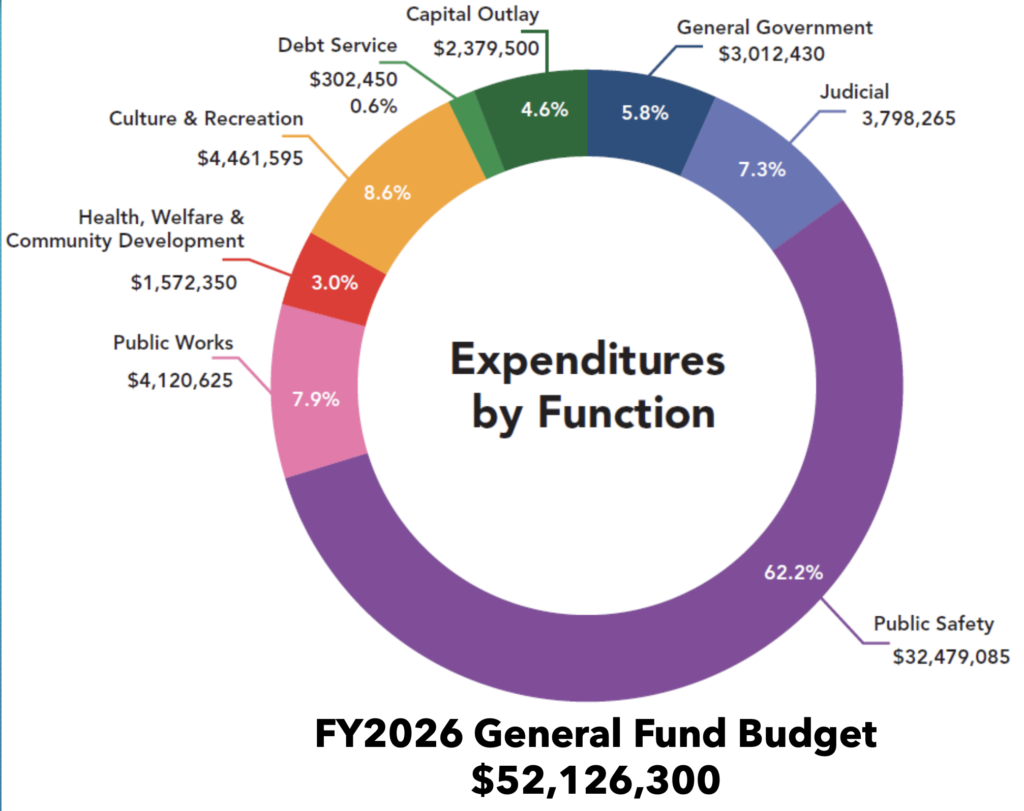
But the extent of the deficit may be overstated in city budgets.
At its Feb. 12 meeting, the Financial Health Review Committee unanimously voted to recommend the city start including a vacancy factor in its budget process.
To this point, the city has been budgeting as if every position will be staffed and need full family benefits. This means the city has been budgeting more than it has spent because many positions have remained unfilled in recent years.
Committee Chair Jill Rhode explained to budget for a vacancy factor, the city will still create a budget as if every position is filled. However, it will then estimate savings created by vacancies, which will be subtracted from the budget.
“Their current budgeting method over budgets,” Rhode said. “Especially if you project it out for five years, let’s say you’re over [by] several hundred [thousand], by the end of five years you put a lot of extra money in there.”
Vacancies have played a key role in projected budget deficits not coming to fruition in recent years, especially in the police department. Committee member Roberta Jameson pointed out the police department alone budgeted for 12 more positions than it filled in fiscal year 2024.

While budgeting for a vacancy factor can make projections look better, at the Jan. 29 committee meeting Police Chief Jennifer Brown said she is optimistic her department will soon fill open roles. City Manager Robert Belleman does not see vacant positions as a lifeline to East Lansing’s finances long term because the city plans to fill these roles.
“We [are] still looking at a roughly $2 million nut to crack and you can’t do it with bodies,” Belleman said. “We’re a very lean, but robust organization. But I think we’re lean to a fault, that there are some things that we ought to be doing that we can’t get to, and there are some things that we’re starting to hear from our residents that they want us to respond to much… quicker than we are doing.
“There’s certain expectations when you live in East Lansing for what you pay to live in East Lansing,” Belleman continued. “So it’s matching those expectations with our ability to finance it.”
The committee recommended the city include a vacancy factor in its budgets each year, but did not indicate what that amount should be.
The committee would like to examine MSU’s impact on the city budget.
The committee is interested in having an analysis done to explore the impact Michigan State University has on city finances.
East Lansing provides fire services to the university and large university events can increase the need for police. But MSU does not pay property taxes on its land, and some city officials have previously indicated they believe the university should pay more for the services the city provides.
East Lansing previously had a volunteer team review its finances to recommend changes in 2016. That team hired Mitch Bean of Great Lakes Economic Consulting to analyze MSU’s impact on the city budget. The analysis found MSU had a net impact of about $3.75 million on the city’s budget each year, mostly because of increased public safety costs.
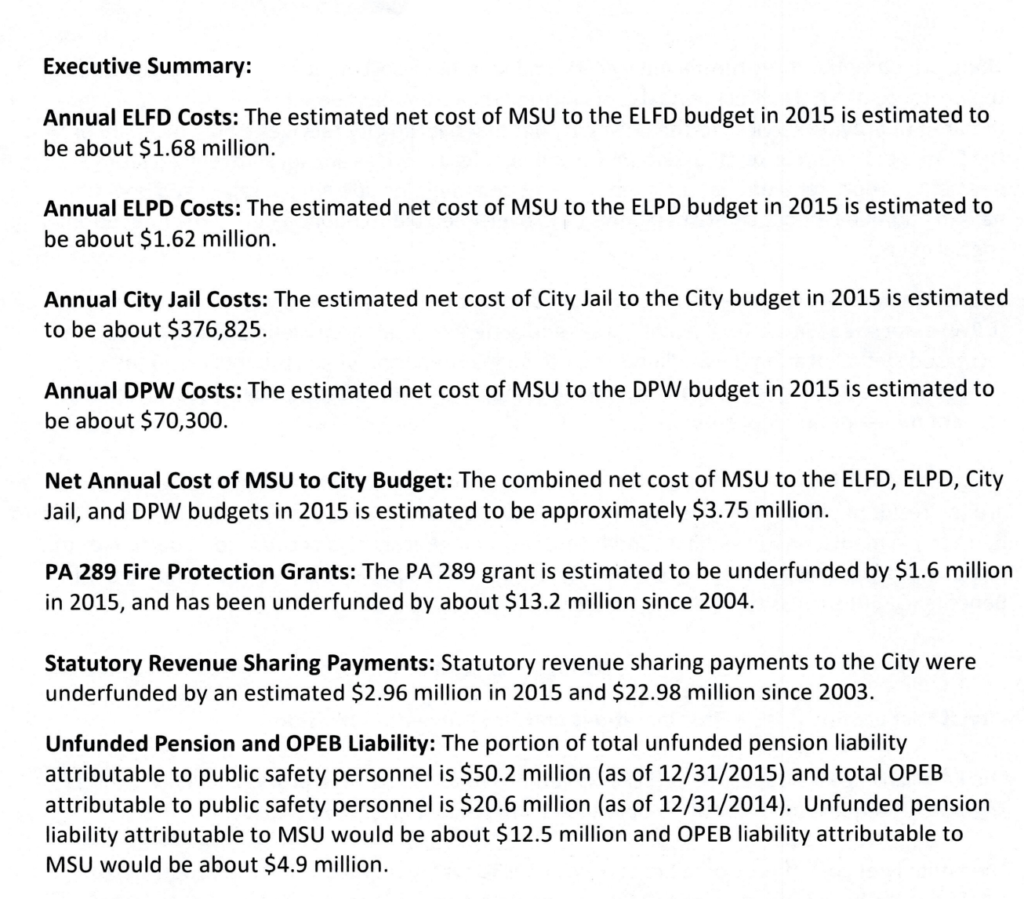
Importantly, since the last study was conducted, East Lansing passed an income tax that places a .5% tax on nonresidents who work in the city. The nonresident tax raises about $4 million annually for the city, largely by taxing MSU employees.
At its Feb. 19 meeting, the committee unanimously voted to seek proposals to analyze the impact MSU has on city finances.
Residents could be issued a new fee to cover the cost of street lights.
Last budget season, Belleman floated the idea of assessing a fee to property owners to cover the cost of maintaining street lights near their homes. The fee was presented to the financial review team at its Feb. 19 meeting. The committee did not issue any recommendation on the topic.
Currently, the city’s general fund spends about $1.3 million annually to pay for street lights and the Downtown Development Authority spends about $118,000 to pay for lighting downtown, Department of Public Works Director Ron Lacasse said at the Feb. 19 committee meeting.
At the meeting, Lacasse explained other cities pass the cost of street lights on to residents. Some cities charge residents based on how much it costs to light their neighborhood and others split the citywide cost among property owners. Lacasse said if the cost is split citywide, each of East Lansing’s roughly 8,300 parcels of land would carry a new $159 fee.
Lacasse said there are concerns about the street light fee facing legal challenges if it is put in place without an opt-out option. Last year, the city lost a lengthy legal battle over a “franchise fee” installed in Lansing Board of Water and Light electric bills that the city unsuccessfully argued covered the cost of maintaining right-of-ways where electric utilities are placed. Money collected through the fee went to the city’s general fund and could be used for other purposes.
To address legal concerns, the city could put a millage on the ballot to seek resident consent. If the city goes this route, property taxes would be raised about .7 mills, or 70 cents for every $1,000 of taxable value, Lacasse said.