
City Prosecutors Could Charge Woman Punched By ELPD Officer After County Prosecutor Declines to Pursue Case
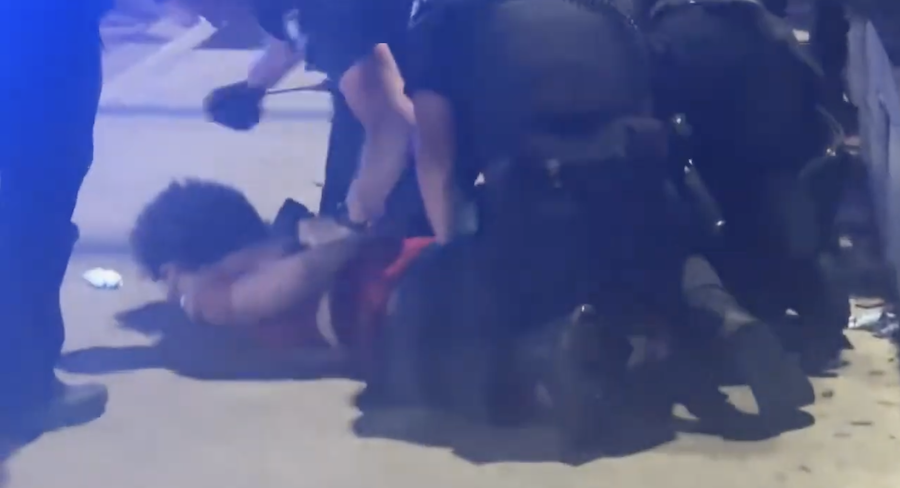
The Ingham County Prosecutor’s Office will not pursue felony charges against Myanna Collins, a 20-year-old Black woman whose arrest drew widespread attention last month after video circulated showing an East Lansing police officer striking her multiple times while she was restrained. The matter will now be reviewed by city prosecutors.
The Aug. 2 incident drew condemnation from residents and the Lansing NAACP branch, who called for all available footage of the arrest to be made public. Some city officials agreed that video should be released, but said they would wait for prosecutors to make a decision about whether or not Collins is charged with a crime before footage is published.
Friday afternoon, Scott Hughes, the community outreach coordinator for the county prosecutor’s office, said county prosecutors will not pursue charges. In a short email, Hughes said Chief Assistant Prosecutor Sarah Pulda decided to not pursue charges because prosecutors are “unable to sustain our burden of proof for the requested charges.”
However, shortly after East Lansing Info emailed Interim City Manager Annette Irwin seeking comment on the county prosecutor’s decision, the city published a statement from ELPD Chief Jennifer Brown that says city prosecutors will now consider charges.
“The Ingham County Prosecutor’s Office completed its review of the incident that occurred outside Harper’s on Aug. 2 and declined to authorize felony charges,” Brown’s statement says. “Under standard procedure, the matter was returned to the East Lansing City Attorney’s Office for further review and possible charges.”
Brown’s statement goes on to say that city officials have not forgotten residents’ requests for body camera footage of the incident and footage will be released “when doing so does not undermine the ongoing legal process or an individual’s rights.”
City officials did not say during previous public discussions about the incident that city prosecutors may weigh charges.
The city has released little information about the incident, other than saying in an Aug. 3 press release that the cell phone footage circulating online does not show the entire incident and an officer involved was placed on paid leave.
The cell phone video of Collins’ arrest shows an ELPD officer striking Collins several times in the back, while she is face down on the sidewalk outside of Harper’s Restaurant and Brew Pub, with her arms restrained behind her back and multiple officers kneeling beside her. Throughout the roughly 14-minute long video, Collins can be heard screaming for help, exclaiming “they’re being racist.”
The woman who recorded the arrest told ELi police also deployed a taser on Collins.
The incident is the latest in a series of controversies involving the city’s police department over the past year. In August 2025, an ELPD officer pepper-sprayed two young Black men in downtown East Lansing. The city later highlighted the incident in a press release about violence downtown, naming both men and saying they had been charged with crimes related to fighting. But security footage released later showed that one of the men — whose mother is a local activist who had publicly criticized ELPD — had acted to deescalate an altercation. Charges against both men were dropped after the footage was released and they are now suing the city.
In April, four ELPD officers were placed on leave after the fatal shooting of Isaiah Kirby, a 21-year-old Black Michigan State University student suspected of stabbing a local attorney moments earlier. On an annual basis, ELPD used force far more often in 2025 compared to the three prior years data was collected.
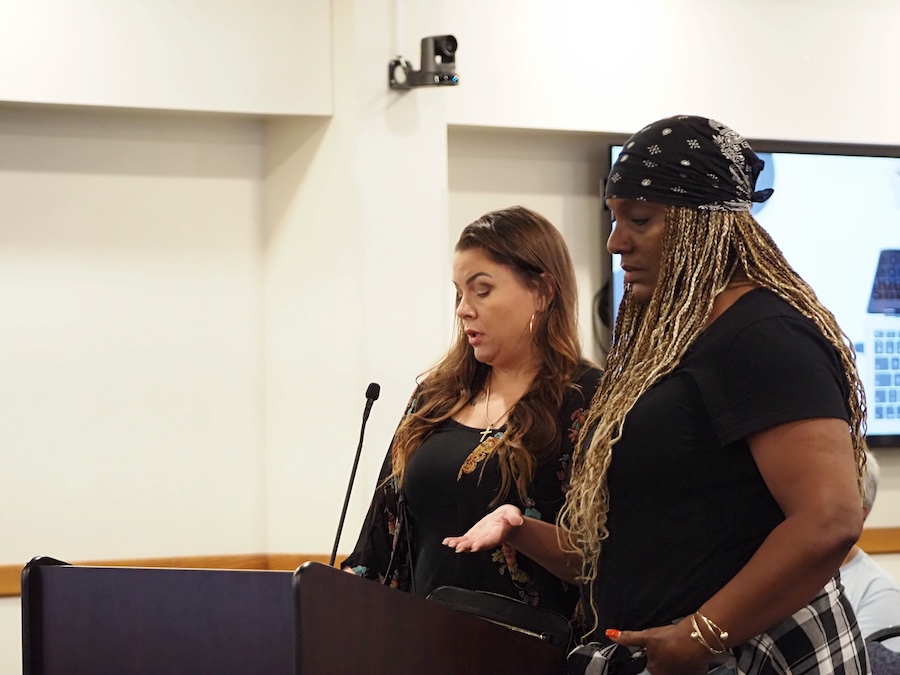
Residents and the members of the Lansing NAACP branch have repeatedly called for Brown, who was selected as chief last year, to be fired at city meetings.
“We understand that being a police officer is not an easy job,” Lansing NAACP branch President James McCurtis Jr. told ELi in a September interview. “What we want to see is a cultural change. You can still police with humanity and that’s what we’re seeing missing when it comes to Black and brown people. They’re not policing with humanity.”