
East Lansing City Council Approves Usage of Automated Cameras to Boost Parking Enforcement
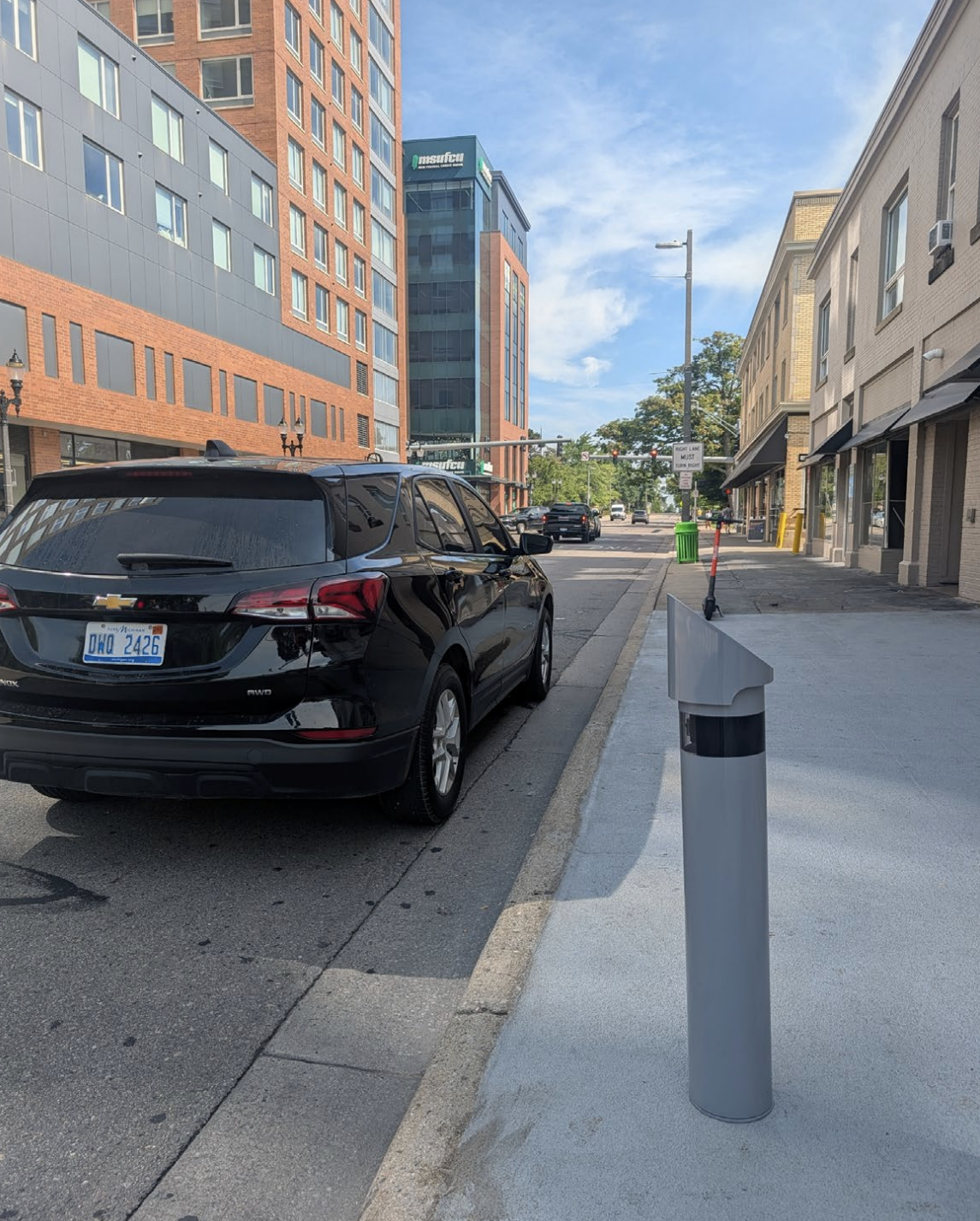
East Lansing plans to use automated cameras to enforce parking rules, after the City Council approved a contract to install “SafetySticks” at its meeting Tuesday night.
SafetySticks, which will be provided through the company Municipal Parking Services, or MPS, use radar technology to identify parking violations and take photos of offenders’ vehicles and license plates. The sticks operate automatically, so an officer will not need to monitor them live.
Recommended by ELPD and presented by the department’s public information officer, Capt. Adrian Ojerio, the sticks will be a notable boost to the department’s ability to enforce parking violations, Ojerio said.
The SafetySticks will be installed along sidewalks downtown. If a car is illegally parked near a SafetyStick, the device will take a picture of the offending car and record data like the date and time of the offense, information that is then sent to MPS and the city’s Parking and Code Enforcement, or PACE, division.
Ojerio said the SafetySticks will be placed near no parking zones, and won’t take photos of every car that passes by, only vehicles that are stationary longer than an amount of time set by ELPD. Evidence will be reviewed by both MPS and PACE to verify parking violations.
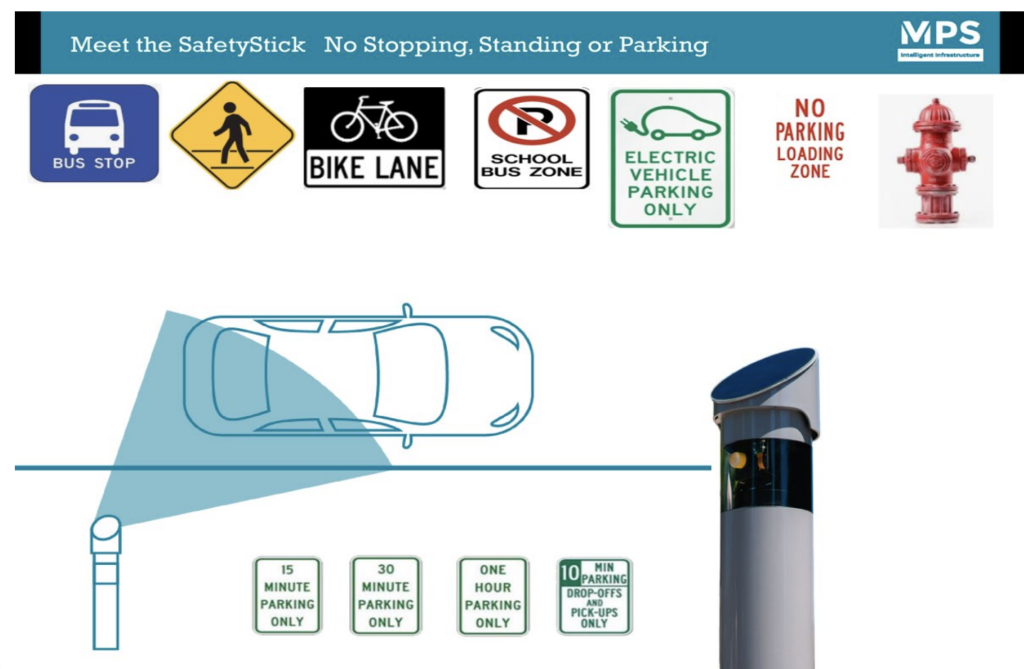
The cameras will come at no cost to the City. Ojerio told council members that MPS receives 50% of the revenue from tickets and a $7 handling fee from each ticket. The cost of the handling fee is passed on to the violator. In total, violators would pay a $42 fee.
In an April 2026 pilot program that featured seven of the sticks placed in downtown East Lansing, MPS identified 1,347 violations, Ojerio said.
The five-year contract the city entered into with MPS allows for up to 30 SafetyStick cameras to be placed, Ojerio said, though he does not envision the city deploying that many.
Before the sticks can be deployed, the state needs to approve integration between SafetyStick’s technology with the 54-B court system’s. This is expected to take at least 60 days and if approval doesn’t come at all, the program will be dead, Ojerio said.
Council members unanimously approved the contract with MPS, but not without questions. Councilmember Steve Whelan, who is a retired ELPD officer, requested quarterly reviews, after Councilmember Mark Meadows initially asked for them.
“Is there a plan that… the police department will be making a similar presentation to us, to show what has happened over the past year and how it’s been utilized?” Meadows asked.
Ojerio assured him that metrics would be available at all times to the police department, and that they could share them in periodic reports.
With some delivery drivers illegally parking frequently while picking up orders and there being a delay between when violations occur and when offenders are notified, Interim City Manager Annette Irwin asked about people who rack up several tickets before they are aware of the new system.
“If I’m the DoorDash driver… they’re gonna get this ticket, but they’re gonna keep parking there until they finally get the ticket. That’s one of the things we’ll have to be sure we take a look at,” Irwin said.
This may be an issue for the court to sort out, Irwin said.
Whelan also expressed that proper signage will be necessary to avoid unintended consequences. He cited an experience while visiting Chicago, where he was unaware that the area he parked in was a restricted zone.
“I just think there is a bit of a cost, unintended consequence of people visiting our community, and they weren’t aware that this was happening,” Whelan said.
Ojerio framed the installation as a money-saver and public safety resource. According to him, it will ensure consistent enforcement for every violation, avoiding any perception of uneven enforcement. It also has the potential to expand PACE’s capabilities, with fewer officers required to cover the downtown.
“We’re pulling somebody off the road to review all of these violations, but on the flip side, there isn’t travel, we don’t have to pay a person, that person isn’t taking breaks,” Ojerio said. “It’s just a system that’s working all the time.”
The department promoted it as an important safety step, saying it would improve the experience of elderly or disabled residents downtown, whose accessibility features might be blocked by illegally parked vehicles. It could also prevent cars from obstructing bike lanes, something transit advocates frequently point to as a danger to cyclists and drivers.
“It’s not about revenue. It’s about changing the behavior pattern to increase safety in the city,” Ojerio said.