
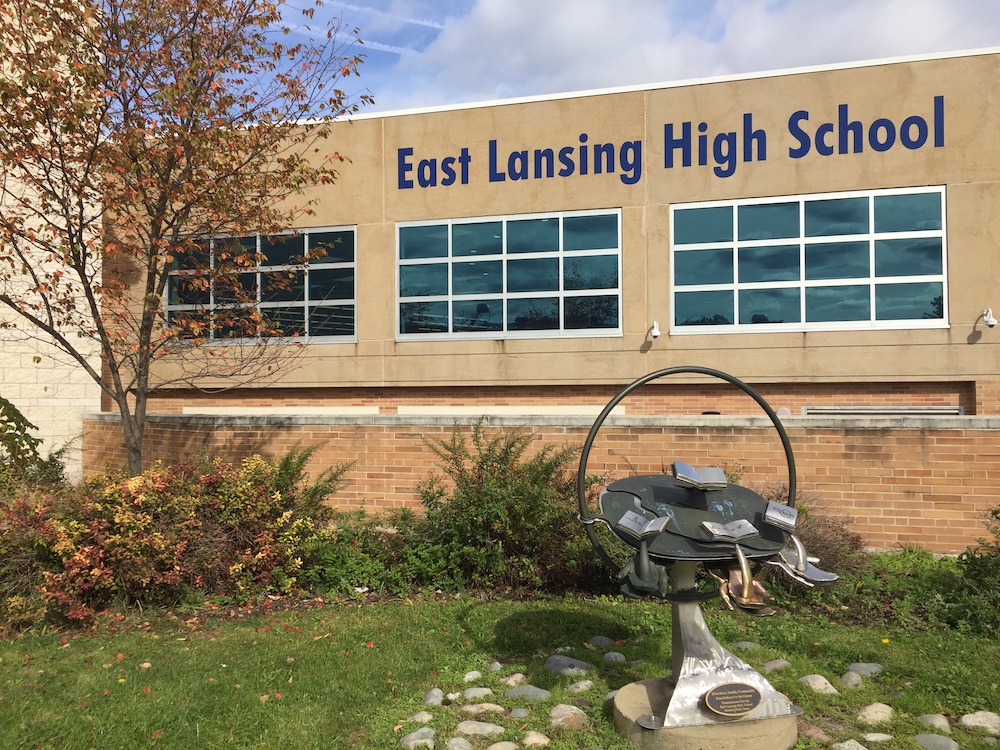
East Lansing Schools Rethink Sex Education With New Curriculum
Following a successful pilot program, the East Lansing Public School District has launched a new high school sex education curriculum called Rights, Respect and Responsibility.
The updated curriculum shifts focus toward reproductive health, identity, healthy relationships and consent. Early student feedback was positive because the content covered is more relevant to their lives, and includes real-world scenarios, ELPS Sex Education Supervisor Anne Scott said. The curriculum emphasizes modern nuances like online dating safety, LGBTQIA+ inclusivity and bodily autonomy.
Prior to the change, the district utilized the Michigan Model for Health, which focuses on social-emotional health, nutrition, physical activity, drug and alcohol use, and basic HIV/STI information. The new curriculum marks another shift in the school district’s approach to sex education.
In 2015, the district banned outside vendors from teaching sex education classes following pushback over an outdated, abstinence-only demonstration. Taryn Gal, executive director of the Michigan Organization on Adolescent Sexual Health, or MOASH, noted that state guidelines leave plenty of room for local control over curriculum.
“Michigan law is really interesting because you can do no sex education or you can do kind of what we would think of as not-great sex ed, but you also have the opportunity to do really incredible sex education within the law as well,” said Gal. “Districts like East Lansing are taking advantage of that – it’s amazing.”
Michigan held the same baseline recommendations for sexual education from 2007 until last November, when the Michigan State Board of Education revised its health education guidelines to include topics like sexual orientation and identity and digital safety.
While these revisions serve as recommendations rather than mandatory changes, local districts continue to determine what sex education looks like in their communities.
In East Lansing schools, sex education begins in fourth and fifth grade, with lessons primarily focused on puberty and changes to the body. Scott said the curriculum extends beyond sexual activity. Lessons in later grades on pregnancy prevention, HIV/STI prevention and sexual violence prevention build on concepts introduced earlier, including bodily autonomy and understanding one’s own body.
“We’re building a lot of foundations in fourth and fifth grade,” Scott said. “We’re not necessarily talking about sexual behaviors in detailed ways, but … people are menstruating, body changes are already happening, so it’s important we are delivering that education at that age because young people need to understand what’s happening in their body.”
While districts make decisions about curriculum, Michigan law sets some strict parameters: districts teaching sex education must maintain a sexual education advisory board made up of parents, students, teachers and even local clergy. Additionally, families must be notified and provided an opportunity to review materials and parents retain the right to opt their child out of these lessons.
Further, regardless of whether a district chooses to teach sex education at all, state law requires that all public school districts must teach HIV/AIDS education at least once a year.
“What has been sort of on the books for a long time in most Michigan schools is quite outdated, even though it might be accurate,” said Megan Maas, a member of the East Lansing Sex Education Advisory Board and professor at Michigan State University, whose work focuses on sexual violence prevention and sexual health promotion.
Maas, who has served on the board for seven years now, said the Rights, Respect and Responsibility curriculum provides a data-driven, evidence-based framework that aligns with local community preferences outlined in family surveys.
Gal added that MOASH frequently hears from numerous educators that the state’s model, Michigan Model for Health, needs an update. Because there are no plans to do so, schools must look elsewhere. MOASH has reviewed countless curricula and frequently recommends the Rights, Respect and Responsibility framework.
The term “comprehensive sex education” is often misunderstood, Gal said, but district-wide family surveys revealed that “what families want is comprehensive sex ed, even if they are not defining it like that.”
According to Gal, those surveys showed parents want lessons to cover puberty, reproduction, healthy relationships, contraception and abstinence. She added that true comprehensive sex education is developmentally appropriate, medically accurate, non-shaming and inclusive.
On a global scale, the World Health Organization defines sexual health as a positive, respectful approach to sexuality and relationships, not just as disease prevention.
“Usually in the U.S. we don’t come close to hitting any of those categories,” Maas said. “But because there is power within the districts … each district gets to decide for themselves how inclusive they may want to be or how many indicators they want to add to their curriculum.”