

East Lansing Weighs Data Center Rules Ahead of Moratorium Deadline
As conversations about data centers increase nationwide, East Lansing is forming an internal staff workgroup to draft recommendations for the City Council to consider if data centers are proposed in the city.
In March, The East Lansing City Council placed a six month moratorium because the city’s current zoning ordinance does not address data center inquiries. Starting in a few weeks, the workgroup will meet bi-weekly. The group will include representatives from the Planning Department, Department of Public Works, Commission on the Environment and Planning Commission.
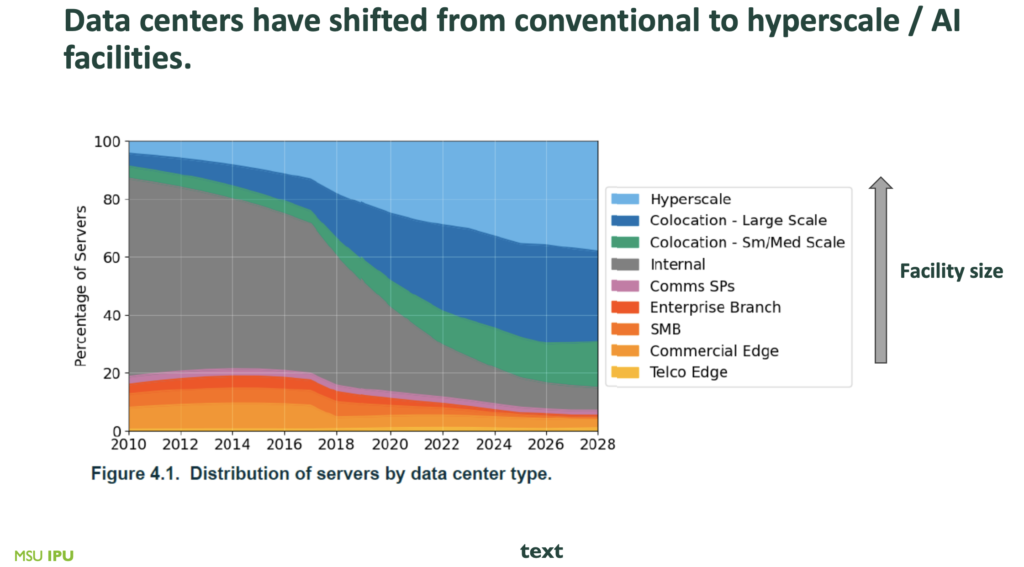
There are three main types of data centers: privately owned enterprise centers, leased colocation centers and enormous hyperscale centers, Principal Planner Landon Bartley said at the May 13 Planning Commission meeting. Residents have expressed concerns mainly related to hyperscale data centers, which are becoming more common.
The city has two industrial zones. The Manufacturing zone allows light industrial uses like food production and motor vehicle repair. The Office Industrial Park zone allows research and development labs, mass timber production and recreation facilities, but does not allow most manufacturing, assembling, or processing. These districts cover very little land in the city – Bartley said only about eight parcels.
“We did a little bit of an analysis about where could these [data centers] actually be established in East Lansing and right now, there’s essentially nowhere,” Bartley said.
“So we’d certainly need to consider, if we were to allow these uses, where would they be?” Bartley added. “If it was an industrial zone district, where would we want to rezone to industrial? There are a lot of questions to be answered.”
Planning staff prepared a document breaking down the different factors the city should consider when thinking about data centers. Included are policy considerations, including incorporating quality of life impacts in industrial zoning regulations, requiring property tax guarantees from developers and exploring ways to integrate data centers with other industrial infrastructure.
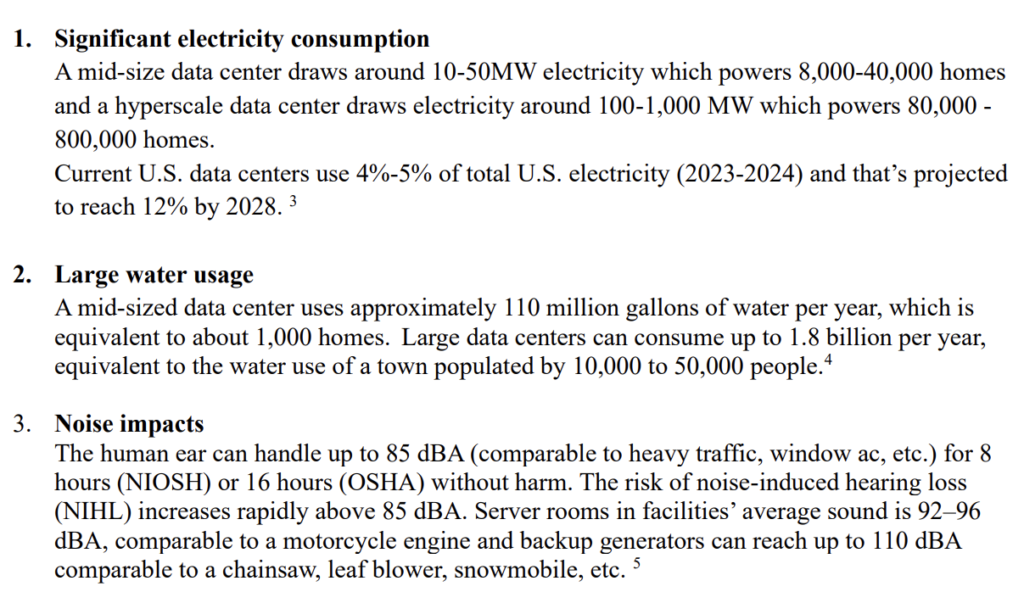
Major concerns about impacts on the environment and utility bills remain. The Planning Commission’s document highlights significant electricity and water usage, worries about air pollution, risks to natural features and noise impacts of data centers. Additionally, Bartley said that data centers have contributed to rising utility bills in some cities.
Bartley highlighted that utility costs are generally increasing in the U.S., and in some cases data centers contribute to those increases. The staff document shows nearly half of Michigan census tracts already spend 10% of their total income on energy. The U.S. Department of Energy considers households to be energy burdened when utility costs hit 6% of income.
Data center developers are attracted to Michigan because of the abundant water supply, infrastructure, and a tax incentive that waives the state’s 6% sale and use tax on eligible data center construction and equipment purchases, according to the Planning Commission’s document.
The document says that data centers have been attractive to some communities because they create positive economic opportunities in underutilized spaces. The centers can bring a significant boost to the local tax base and create new job opportunities.
Bartley hopes the workgroup’s recommendations can be presented to the City Council at the body’s July 21 meeting, before the moratorium ends in September.