

Financial Health Review Team Charts Course for Remainder of Review Period
A committee appointed by the East Lansing City Council to review local finances is poised to make recommendations about the city’s income tax, facility sales and much more over the next three months.
During the first half of its six-month review period, the committee has spent hours hearing presentations on city department budgets, employee benefits and other components of the city budget. Next, the committee will discuss the information it has gathered and make recommendations for the City Council to consider.
At its meeting on Thursday, the committee created a list of topics it will discuss over the remainder of its review period. Many of the discussions were brief and did not indicate what recommendations the committee may make. Still, the conversations were helpful to understand the types of changes the city may make to address a structural budget deficit.
New recommendations for the income tax could be coming.
In 2018, East Lansing voters allowed the city to implement an income tax of 1% on residents and .5% on non-residents. The tax allowed the city to tax Michigan State University employees and was paired with a five-mill reduction to the city’s property tax cap.
After the income tax reimburses the general fund for revenue lost by the property tax reduction, 60% of the tax goes to paying down the city’s pension liability, 20% goes to police and fire and 20% goes towards infrastructure.
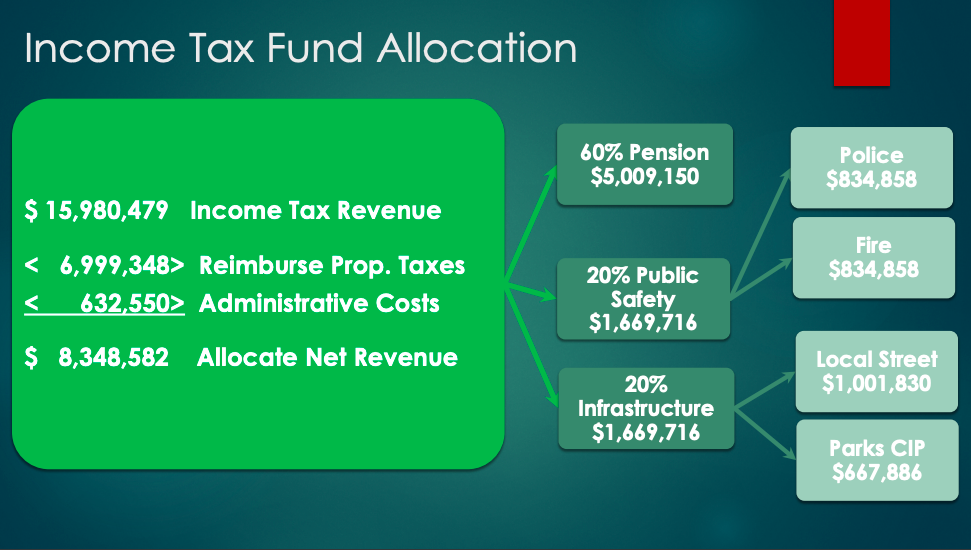
Since the tax was put in place, it has been a lifeline for city finances, generating millions of dollars in additional income each year. The tax is set to sunset at the end of 2030, unless it is renewed by voters.
The committee could make recommendations about whether or not to put the income tax on the ballot for renewal and if the revenue should be used in a different way than it is currently. The committee is set to discuss the income tax at its next meeting on April 16.
More regional collaboration on the horizon?
The committee was initially set to discuss creating authorities by working with other municipalities at Thursday’s meeting. However, East Lansing Chief Financial Officer Audrey Kincade said city attorneys did not respond to a request to come to the committee meeting, delaying the discussion.
Committee Chair Jill Rhode said the review team will later discuss if it would save the city money to work with other jurisdictions to create a parks or fire authority, and if local district courts should be combined.
The committee will look into revenue from MSU.
The impact Michigan State University has on the city’s finances has been widely discussed in city meetings, as the university is East Lansing’s top employer and contributes much of the income tax gains. MSU also relies on city services and land on its campus is not subject to property taxes.
Rhode said she wonders if there’s a way to put a surcharge on MSU event tickets. She clarified she is not sure if this is a possibility, but would like to ask city attorneys about it.
The committee will also discuss revenue sharing between the state and city. Previously, discussions at committee meetings and City Council have raised questions about if East Lansing receives enough money for the services it provides to MSU’s campus, including fire services.
Recommending changes to employee benefits will be considered.
The cost of benefits for city employees has long been central in discourse about the city’s financial challenges, as unfunded pension liability is one of the main reasons for East Lansing’s budget troubles.
Rhode said the city should also look at how it funds post-employment benefits, saying the city would save money by fully funding its plan. While the city doesn’t currently have money to fully fund the plan, it could look at making adjustments like redirecting funds from the income tax if voters renew it.
Rhode also suggested the committee examine the cost of other employee benefits, like health insurance.
“I was surprised that employees contribute nothing to health insurance, I think that is extremely rare,” she said. “I think we should address that and look at it and figure out why that is here.”
Committee member Ann Holmes also suggested the committee examine the city’s practices for reviewing new hires and major expenses from year-to-year. This could mean putting a hiring freeze or reassessing expenses at the start of a new fiscal year.
Mayor asks the committee to give recommendation on business fees.
Last budget season, the city installed a new business fee model that aimed to charge bars that saw more public safety issues than others. The Downtown Development Authority contributed $200,000 for police overtime on Thursday through Saturday nights and other busy days downtown. After the $200,000 is expended, businesses are to pay for ELPD overtime costs associated with calls to their business.
The fee applies to businesses with an entertainment license, which includes bars. However, these businesses can choose to pay a fee that is based on occupancy instead.
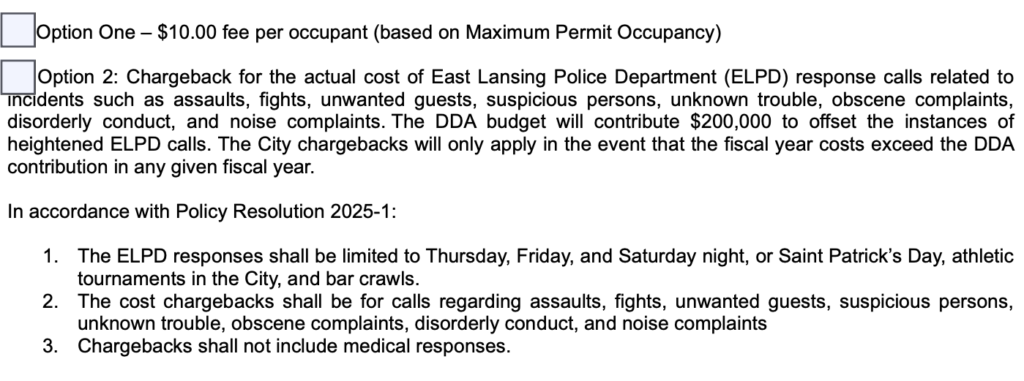
The fee structure was controversial, as some business owners said at city meetings that police calls to incidents near their bars were incorrectly attributed to them and they already pay high taxes. Some also worried the structure would be a disincentive to call the police.
At Thursday’s meeting, Mayor Erik Altmann requested the committee look into a business fee structure that would increase fees for businesses that need police services more often.
“I think there’s a question about whether fees for public safety are allocated appropriately to consumers of public safety services in our downtown,” Altmann said. “There are a couple of bars in particular that consume a lot of public safety services.”
Committee to review DEI department.
Committee member David Lancaster asked that the group discuss the city’s Diversity, Equity and Inclusion Department at a future meeting.
“I wonder why we have a DEI department,” he said. “I would think… since 2020 [when the department was added] that anything should be ingrained into personnel policies, and that would seem to be the responsibility of the personnel department and the city manager.”
The exchange was brief and it’s unclear what recommendations could be made to the DEI department, but Rhode did add it to the list of topics the committee will discuss.
Recommendations could be issued about taking on debt for facility improvements.
At a discussion-only City Council meeting last month, the body discussed potentially spending upwards of $30 million facility improvements to City Hall, the Hannah Community Center, the fire station, recreational facilities and parking garages.
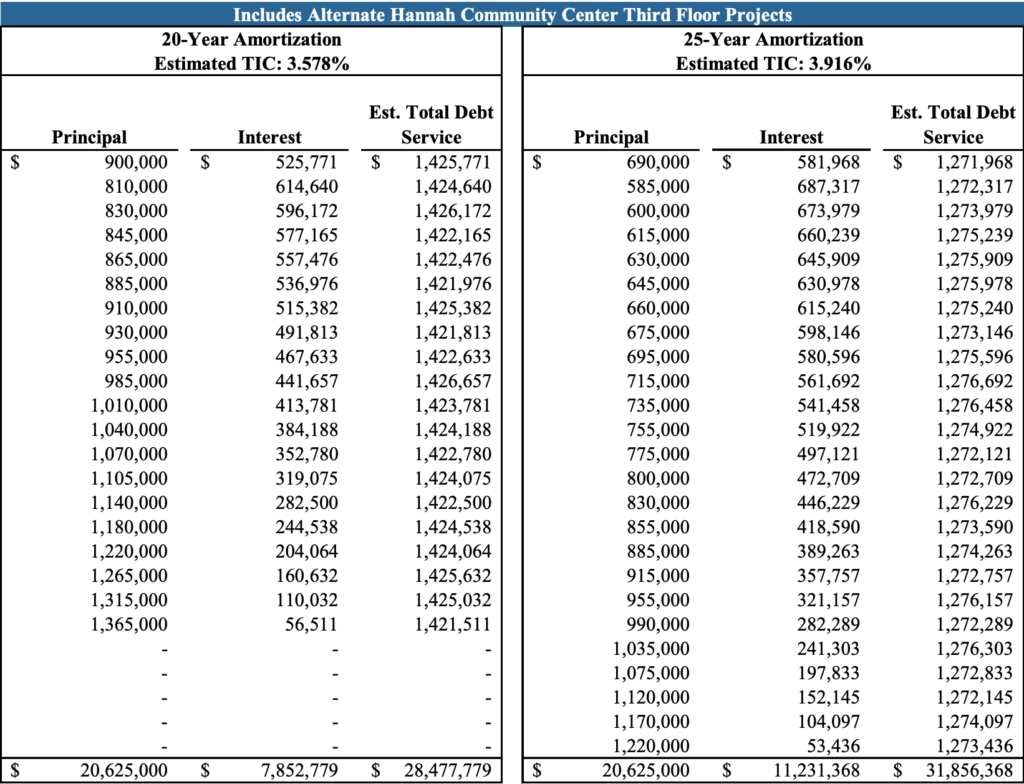
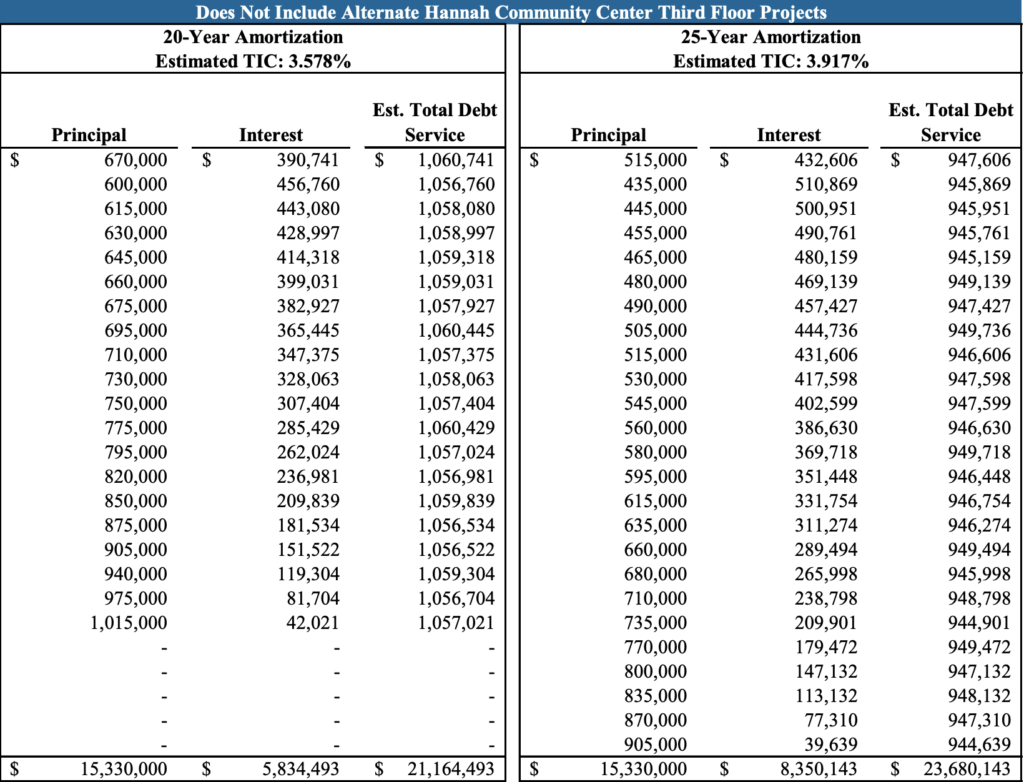
Prior to Thursday’s meeting, Belleman provided the committee with a memo that clarified the costs for the improvements would be absorbed by the city’s budget, not paid for by a property tax increase.
The facility improvements would be paid for using a 20 or 25-year bond. Paying for the improvements through a bond would spread the cost out over decades, but add millions in interest payments.
Should the city sell properties?
When the city previously discussed using a bond to pay for infrastructure improvements, Altmann floated the idea of selling properties like the Aquatic Center, Soccer Complex and even Hannah Community Center.
At Thursday’s meeting, Altmann said he thinks the sale of city assets must be discussed by the committee. It was explained that in order for the city to sell properties, voters must first approve the sale on a ballot.
Councilmember Mark Meadows said another option to reduce the cost of operating facilities could be contracting with a third-party company to manage them.
Committee to talk about severity of financial challenges, previous review.
Committee Vice Chair Roberta Jameson was not at Thursday’s meeting, but Rhode said Jameson has reviewed recent city budgets and sent questions to try to determine the extent of the city’s financial woes.
A financial forecast presented to the City Council earlier this year projected East Lansing will be bankrupt within five years if it does not make adjustments. However, in recent years budget projections showing large losses have not come to fruition.
City Manager Robert Belleman previously said the discrepancy between budget projections and year-end results has largely been due to vacant positions and delaying major projects.
Previously, the committee recommended the city start using a “vacancy factor” for budgeting. A vacancy factor would attempt to account for vacant positions during the budget process, and give the city a more accurate look at its finances at the start of the fiscal year.
In addition to Jameson’s coming report, the committee will review recommendations from a Financial Health Review Team that made recommendations about a decade ago. The committee will see what suggestions were made and if the city put these recommendations into place.