

Juan Marinez Helped Build a Home for Mexican-American Students at MSU
Juan Marinez remembers that when his family moved to East Lansing when he was just 10 years old, they would often be the only people of color in the room.
Marinez’s adolescence was marked by carefully observing the behavior of others, whether it was in church or school, in order to navigate the white environment. Later, he spent his undergraduate years at Michigan State University dismantling the assimilation mindset and building infrastructure to make the school more welcoming to Mexican-American students.
Having grown up during the Jim Crow era, Vietnam War, women’s rights movement, farmworker boycott and more, the current political climate is reminiscent of his days as an undergraduate advocating for causes he believes in. Still living in the area, at 79 years old he remains fiercely committed to fighting for causes he believes are important.
“All of a sudden, you know, you’re switching gears, and it’s just like … fast so you have to quickly adapt,” Marinez said, explaining his struggle to assimilate to white environments. “There was nobody there to explain or give you an orientation to the new rules.”
Marinez’s family moved to East Lansing from Crystal City, Texas, in 1954 in pursuit of agricultural work. His father was a farmer who had previously worked on Michigan farms periodically. Marinez remembers hearing stories at the dinner table about the mitten state, where his dad talked about the diverse crops and unpredictable tornadoes.
When his family moved, they lived on what was then a sugar beet, peppermint, spearmint and soybean farm on County Line Rd, which is on the border of Clinton and Ingham Counties. Around 12 to 15 of his extended family members moved with them to work on the farm, and they all lived in the same cluster of homes.
His day to day life was mundane and consisted of going to school, attending church, and playing kickball or kick the can with his family, Marinez said.
Marinez vividly remembers attending church in East Lansing for the first time and noticed that his family were the only people of color in the room. This was a stark contrast from his life in Crystal City, where Mexican-Americans made up almost the entirety of the population.
Similar to church, Marinez was often the only Mexican-American at St. Thomas Aquinas Parish School, where he did his best to assimilate by learning how to behave from the priests and nuns, who also worked as the teachers.
St. Thomas Aquinas was a lot different from his school in Texas, which consisted entirely of Mexican-American students and Anglo-Saxon teachers. Still, the Texas school forbid students from speaking Spanish in an effort to force assimilation.
Marinez noted that this push created constant tension, leaving him on edge and in fear of being reported by classmates for speaking Spanish.
“It was scary … there I would use the term anxiety, traumatic and scary,” Marinez said.
Making MSU a more welcoming place for Mexican Americans.
Attending MSU was a rebirth for Marinez, although it was an active political environment, including the ongoing Vietnam War, second wave of the Women’s Rights Movement and the farmworker strike and boycott.
As a sociology and anthropology student, Marinez spent his time reading Mexican-American authors, attending teach-ins and sit-ins, and connecting with other Mexican-American students and professors, such as Lucia Ungardo Fox who taught Contemporary Spanish American Literature and pre-Columbian and Colonial Spanish American Literature at MSU. He was encouraged to always ask questions, leading him to finally challenge why he ‘had’ to assimilate.
“That was eye opening for me … I never met any Mexican-American teachers until I came to Michigan State, I didn’t know they existed,” Marinez said.
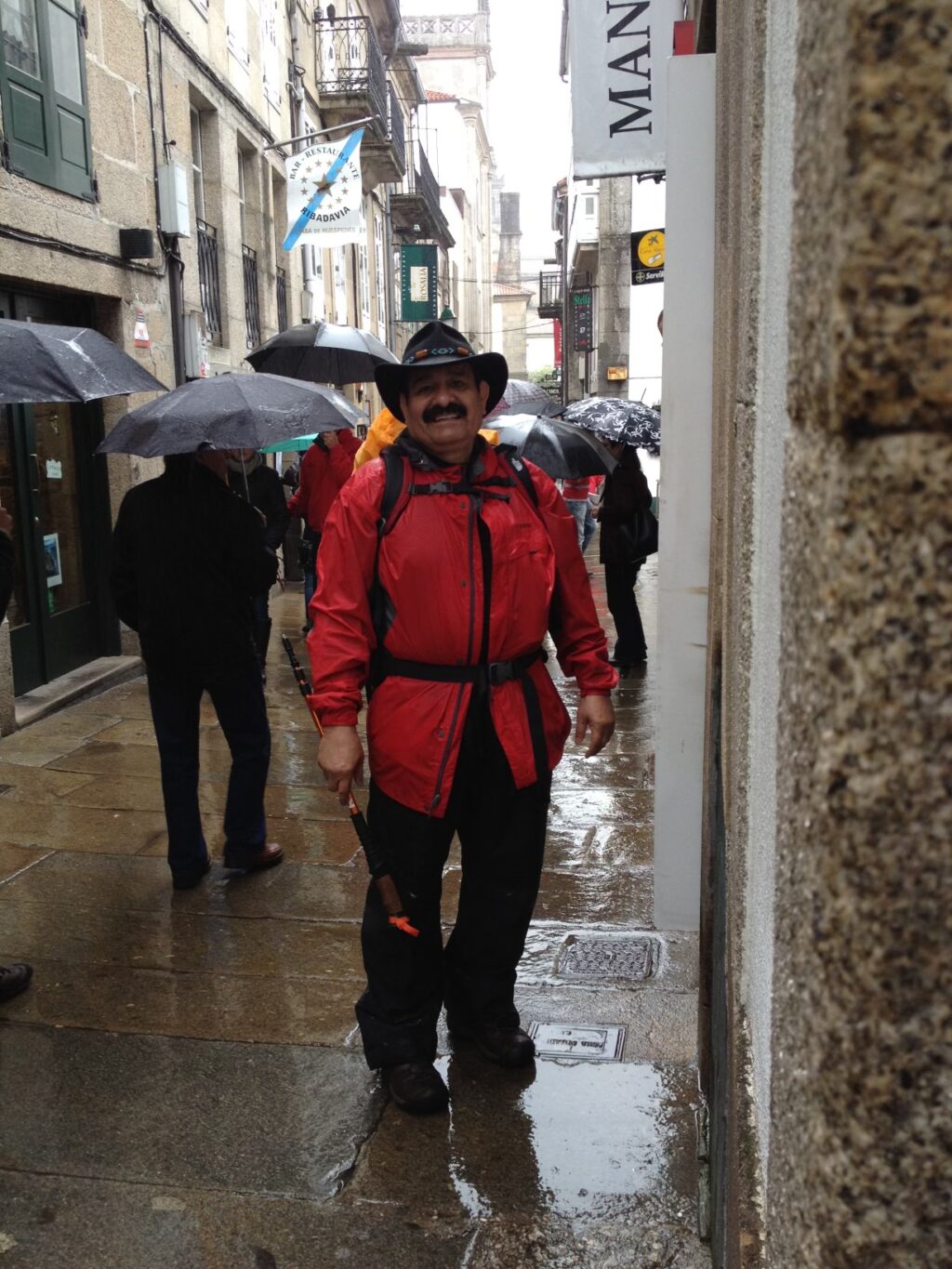
While there were many Latin American students, Marinez remembers there were roughly 20 to 30 Mexican-American students at MSU at the time, which led him, alongside Rosa Morales, and Dan Soza Jr. to spearhead the first Chicano group at MSU called Mexican American Students at State.
They helped organize a conference at MSU alongside other groups such as Latino/Hispanic Ministries within the Diocese of Lansing, with the purpose of informing parents and their children who were eligible to go to college about the importance of higher education.
“Imagine the scene, I mean really grassroots people who they themselves never went to college and were very reluctant to have their kids go to college,” Morales said.
At the conference, parents and kids were able to meet with Hispanic leaders from the community, church, government, local organizations and Hispanic students. The cost to attend was $1 to ensure accessibility and lunch was provided.
Although the Mexican American Students at State Club is no longer active, there are numerous other Latino and Hispanic clubs that have since been formed.
Attending MSU and widening his understanding of the world helped Marinez diverge from the path of assimilation. The experience helped him feel like he belonged here, in addition to making sense of the forgotten Mexican-American history in the United States.
Marinez has continued to advocate for causes he believes are important.
Despite all the progress achieved during the Civil Rights Movement, Marinez feels like the pendulum has swung back, and what is happening under the President Donald Trump’s administration is taking society back in time.
“I did not expect it to be deja vu, I really didn’t,” Marinez said. “I mean I felt like we did our job … we made changes that in my opinion were positive to the state and to the university, and to our surroundings. What’s happening now is resisting to take us back to what it was in the 1950s.”
Like during his days at MSU, Marinez attends seminars, reads literature and protests, most recently at the No Kings protest. These protests aim to oppose perceived authoritarianism and executive overreach.
“I liked it [activism] because it’s not something you’re reading about … you’re actually doing it,” Marinez said. “You’re having to articulate why you’re doing it to somebody who may have a different point of view than you do.”
Marinez didn’t just leave MSU with a degree; he was hired by the College of Agriculture and Natural Resources and worked for nearly four decades as an administrator. His work also reached the highest level of government. He served as the National Program Coordinator on Farmworkers for the U.S. Secretary of Agriculture during the Bill Clinton administration.
In that role, he obtained over $20 million from Congress in a special appropriation fund to support migrant and seasonal farmworkers who were impacted by natural disasters. He also helped establish the first Hispanic farmers’ cooperative in Michigan, Farmers on the Move, to help provide locally grown produce to potential buyer, and spearheaded the oral history project Mexican Voices, Michigan Lives.
Marinez urged young activists not to let fear silence them, saying that withdrawing from the public eye only gives power to those who oppose their cause.