
River Cleanup Program Gives Lansing Area’s Unhoused Residents Work, Purpose and Hope
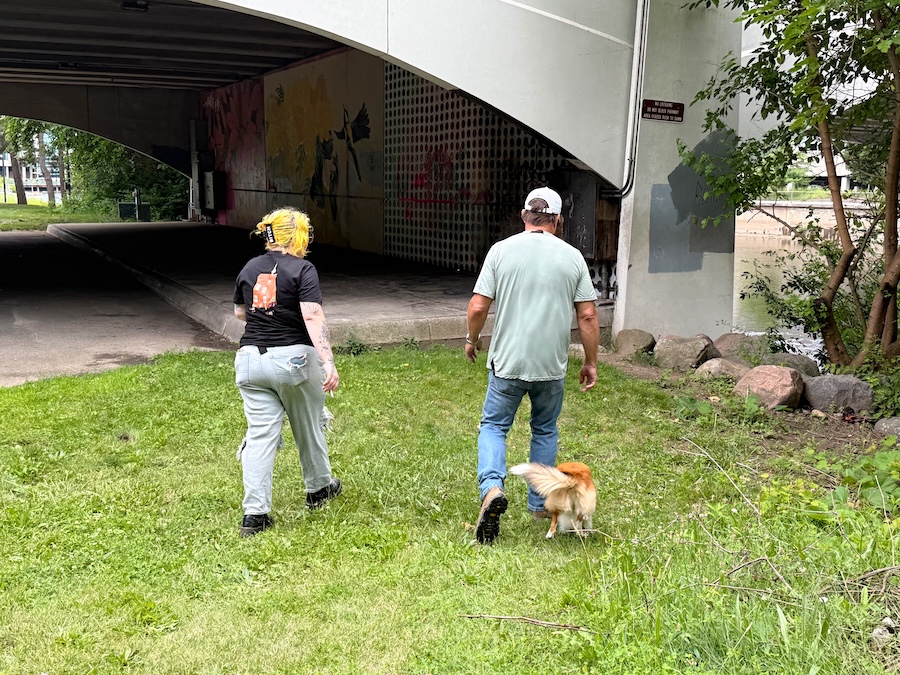
“Someone’s living here,” Kelsea Hector, executive director of Punks with Lunch in Lansing announced as she directed her crew of 20 unhoused individuals to clean around personal belongings stowed behind a bridge at Rotary Park in the heart of Lansing’s Downtown.
Expertly navigating the boulders behind the bridge, hidden by a canopy of trees, two individuals in the cleanup crew gathered food wrappers and other waste into large black garbage bags, leaving items they believed belonged to someone seeking shelter under the bridge during a river cleanup event on June 26.
Over the last several months, Punks with Lunch, or PWL, a nonprofit organization in Lansing focused on providing resources for individuals experiencing homelessness, has teamed up with Michigan Waterways Stewards, a nonprofit working towards keeping the Greater Lansing waterways clean, to include unhoused residents in river cleanup efforts.
Thanks to a $10,000 grant from the City of Lansing, PWL has been able to pay 10 to 20 unhoused individuals to help with cleanup events, Hector said, which Michigan Waterways Stewards reports has resulted in thousands of pounds of waste being collected.
When PWL started partnering with Michigan Waterways Stewards to help with cleanups, the goal was to ensure the Greater Lansing area could get cleaned up without people’s important documents or other personal possessions getting lost. Initially, Hector said she didn’t fully understand just how impactful the program would be.
The main concern remains decreasing encampment sweeps, Hector said, during which the City of Lansing goes to where people have been sleeping and storing items. She said those operations, which often involve bulldozers, can displace residents while scattering or destroying possessions, including clothing and important documents needed for employment or sober living programs.
Since the spring, Hector said Lansing has ramped up its encampment sweep efforts, saying recently the bulldozers were so eager to tear down some tents that they nearly ran over one of the people PWL serves who didn’t hear the machines until the last second.
By decreasing visible waste along the river trail, the hope is to limit these encampment sweeps, Hector said, but an unexpected side effect of the cleanups has been hope for some in the cleanup crew.
“A lot of our folks have been unhoused for so long that they have lost that piece of themselves that tells them that they’re of value and that they can do the things that they used to do, like work, show up and be dependable, put themselves forward in a spot where an employer is going to appreciate them and give them the opportunity to show that ‘hey, I’m not just unhoused, I am a person and I do have the capacity for work, I do have the capacity to help my community,’” Hector said. “A lot of that gets forgotten because they’re always in survival mode.”
That increased threshold for self-compassion and appreciation to themselves for accomplishing a goal has had a powerful impact on one member of the clean up crew in particular, Hector said.
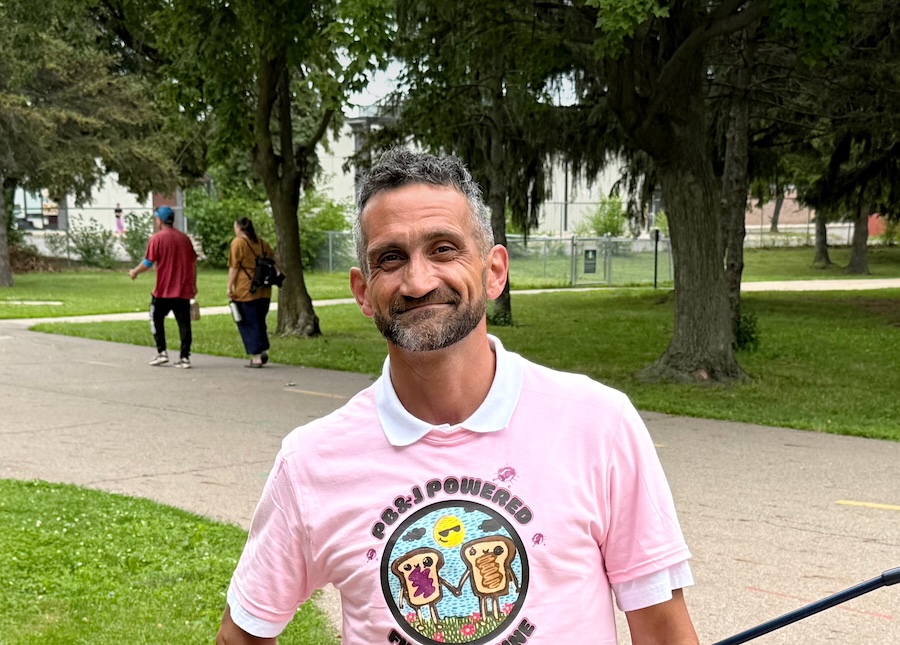
Gary Tanguay, celebrated 90 days of sobriety at the PWL office the morning before the June 26 cleanup event. Tanguay recently secured employment and after four years is no longer homeless, as he now lives in sober housing, he told East Lansing Info. He said that he doesn’t see any reason why he won’t be able to transition into getting his own place.
Tanguay has participated in several of the cleanup events where individuals experiencing homelessness have been paid an hourly wage by PWL to clean up the river trail and he says the financial support and sense of pride in doing a good job have been big motivators for him to improve his life. However, the best part of the cleanups have been integrating with the local community while paying it forward.
Being unhoused is deeply uncomfortable, Tanguay said, and being perceived as a problem for being homeless and producing trash when you are trying to survive is a hard mindset to live in.
“Unfortunately being homeless, people make a lot of messes … it’s nice to be able to at least clean that up and make it more presentable,” Tanguay said.
The cleanups with Michigan Waterways Stewards allow conservation efforts to work with and around people experiencing homelessness, Tanguay said, rather than the encampment sweeps that attempt to work through people.
Focusing on how good stewardship of the Greater Lansing waterways impacts people in their day to day lives has been key in the more than 250 total Capital-area clean up events Michigan Waterways Stewards has supported in the last three and a half years, the organization’s founder Mike Stout told ELi during the June 26 cleanup event.
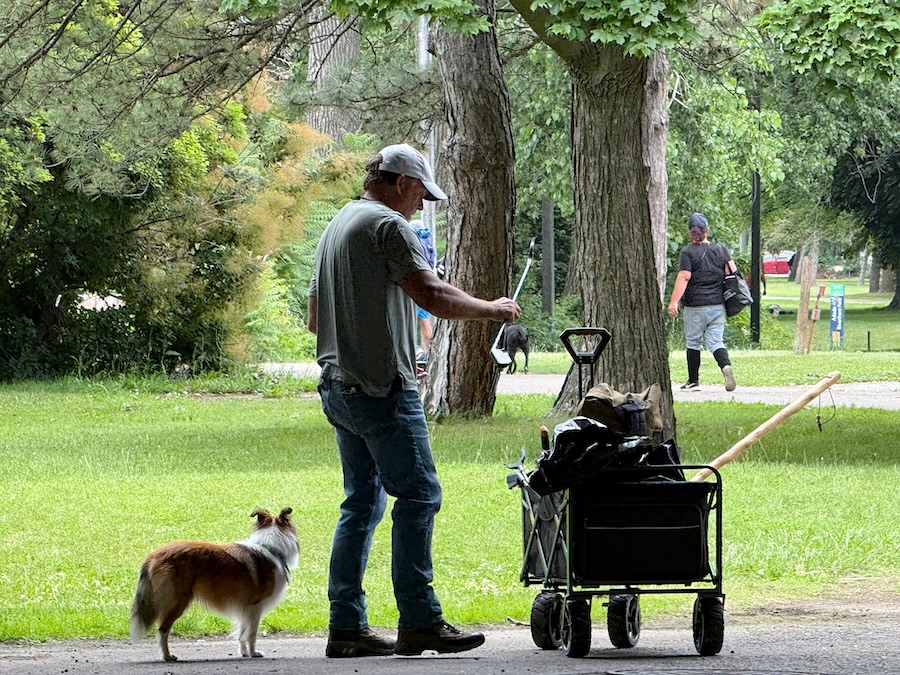
The Greater Lansing community sits on an often under appreciated jewel of outdoor recreation, Stout said. As an avid kayaker, Stout said about four years ago he became so discouraged by the amount of tree debris and garbage blocking the Grand River and Red Cedar River waterways that he was spurred to action and Michigan Waterways Stewards was born.
Since its inception in October of 2022, through partnerships with local businesses, volunteer groups, Michigan State University student organizations and more, Stout said nearly a quarter of a million pounds of trash and debris have been cleared from the Capital area waterways.
Days after the June 26 clean up event, Stout joined leaders in Lansing in the same location in Rotary Park to declare the Capital area waterways as “cleared and clean”.
After years of cleaning up larger items and debris to make enjoyment of outdoor recreation more feasible along the river trail, ongoing cleanup efforts look like picking up food wrappers and bottles, Stout told ELi during the June 26 event.
Utilizing the unhoused community’s knowledge of the river trail and what areas have been long-overlooked has been paramount in accomplishing the goal of a clean rivertrail, Stout said.
“Everyone has a right to live in a dignified manner, so regardless of their socioeconomic story or path, we’re glad to work with them or anybody … We’re not being judgmental. Everyone’s life journey takes a different way,” Stout said.
Prior to the partnership with PWL there may have been a perception that homelessness advocates and outdoor stewardship advocates might clash on priorities, Stout said, but the cleanup events have created community and dialogue between groups that care about all Capital area residents and want them to live in a safe and clean environment.
“They’re respectful. There’s a sense of community now, this engagement before was totally polarized. There’s a strong stigma about the houseless, and regardless, they’re still human, they still have feelings and deserve dignity,” Stout said. “Sometimes our interests may conflict, but you have to work in those areas that you agree on and usually benefit each other and you’ve got great success.”
June 26 was the last clean up event where PWL had grant funding from the City of Lansing to compensate the unhoused individuals it serves, Hector said, and PWL is asking the city to consider how damaging its encampment sweeps are.
In addition to the emotional turmoil and chaos for unhoused people that Hector said has caused area overdoses to spike, the bulldozers often compress trash into the ground and break debris into loose pieces that would’ve otherwise not made it into the water.
Another grant to continue the clean up efforts would be greatly appreciated by PWL, Hector said, but until Lansing addresses the root causes of homelessness, it will be reacting to harm rather than preventing harm to its residents.