
Two Women Sue East Lansing After Sidewalk Falls, One Into an Uncovered Manhole
Two women are suing the city of East Lansing over injuries they sustained in separate falls involving unsecured utility openings in sidewalks, according to lawsuits filed in Ingham County Circuit Court.
The first woman sustained serious leg injuries when she stepped into a utility hole that was not properly secured in April of 2025. Months later, a second woman fell into an uncovered manhole on the Harrison Road Bridge, where she was left trapped without a ladder and with a brain injury and fractured ribs, according to lawsuits filed in the Circuit Court. The city did not respond to a request for comment.
Claire Gangware was walking with her husband in East Lansing on the sidewalk along Grand River Avenue near Raising Cane’s on April 26, 2025. Her husband stepped on an unsecured, bent utility cover on the sidewalk just before her, moving the cover enough that it acted as a “trap door,” Gangware’s lawsuit says.
The fall caused several injuries to her left leg, including a fracture to her foot that has required two surgeries. Due to the injuries to her left leg, Gangware began overcompensating with her right leg, which aggravated degeneration in her right knee, according to her lawsuit.
“She’s going to have problems now for the rest of her life as a result of her injuries,” Theodore Larkin, attorney for Gangware, told East Lansing Info in an interview.
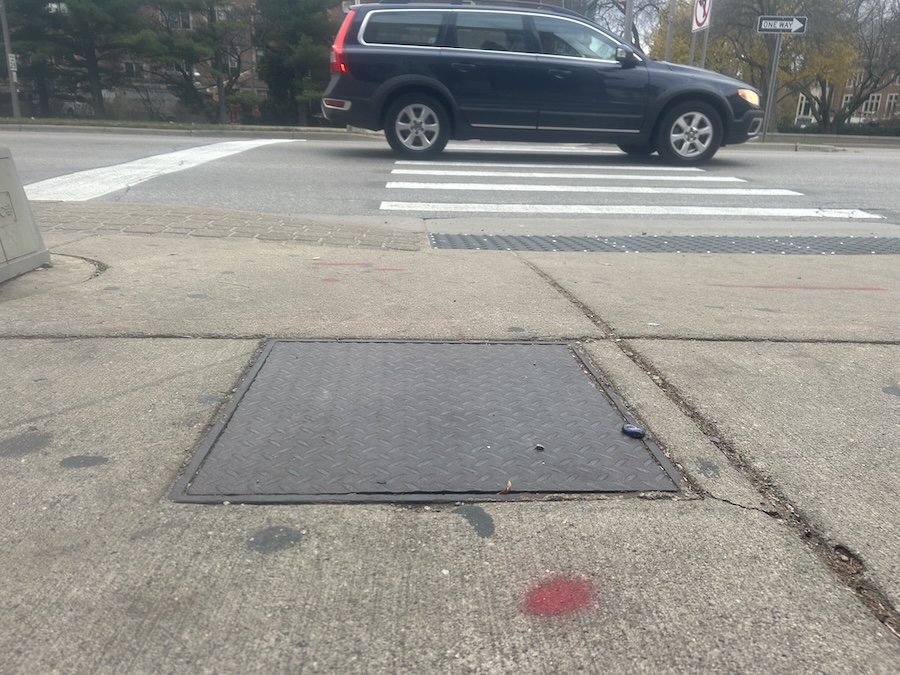
A section of Michigan state law dealing with a municipality’s duty to “maintain the sidewalk in reasonable repair” states that a municipality can’t be held liable for breaching that duty unless it can be proven that the municipality knew, or should have known for at least 30 days prior to the injury, that a defect in the sidewalk existed. The defect also must also create a vertical discontinuity defect of at least 2 inches in the sidewalk or create a dangerous condition in the sidewalk other than a vertical discontinuity.
Larkin said the warped utility cover created both hazards.
According to court records, the city argues that Gangware can’t establish that the city had knowledge of the askew utility cover. Further, the city argues the utility cover in question is owned and maintained by the Lansing Board of Water and Light and is their responsibility.
“The sidewalk where plaintiff allegedly fell was maintained in reasonable repair by the City of East Lansing such that it was reasonably safe and convenient for public travel,” a filing submitted by the city’s attorneys in September reads.
On Oct. 29, Ingham County Circuit Court Judge Rosemarie Aquilina denied East Lansing’s motion of Non-Party At Fault where the city argued they were not the responsible party for any of the injuries Gangware’s lawsuit outlines.
“…the City of East Lansing had an exclusive duty to repair the alleged “dangerous condition in the sidewalk” and/or “vertical disconformity defect of 2 inches or more in the sidewalk” if it is proven such a condition and/or defect existed,” Aquilina’s decision reads, adding that the Lansing Board of Water and Light does not bear such duty.
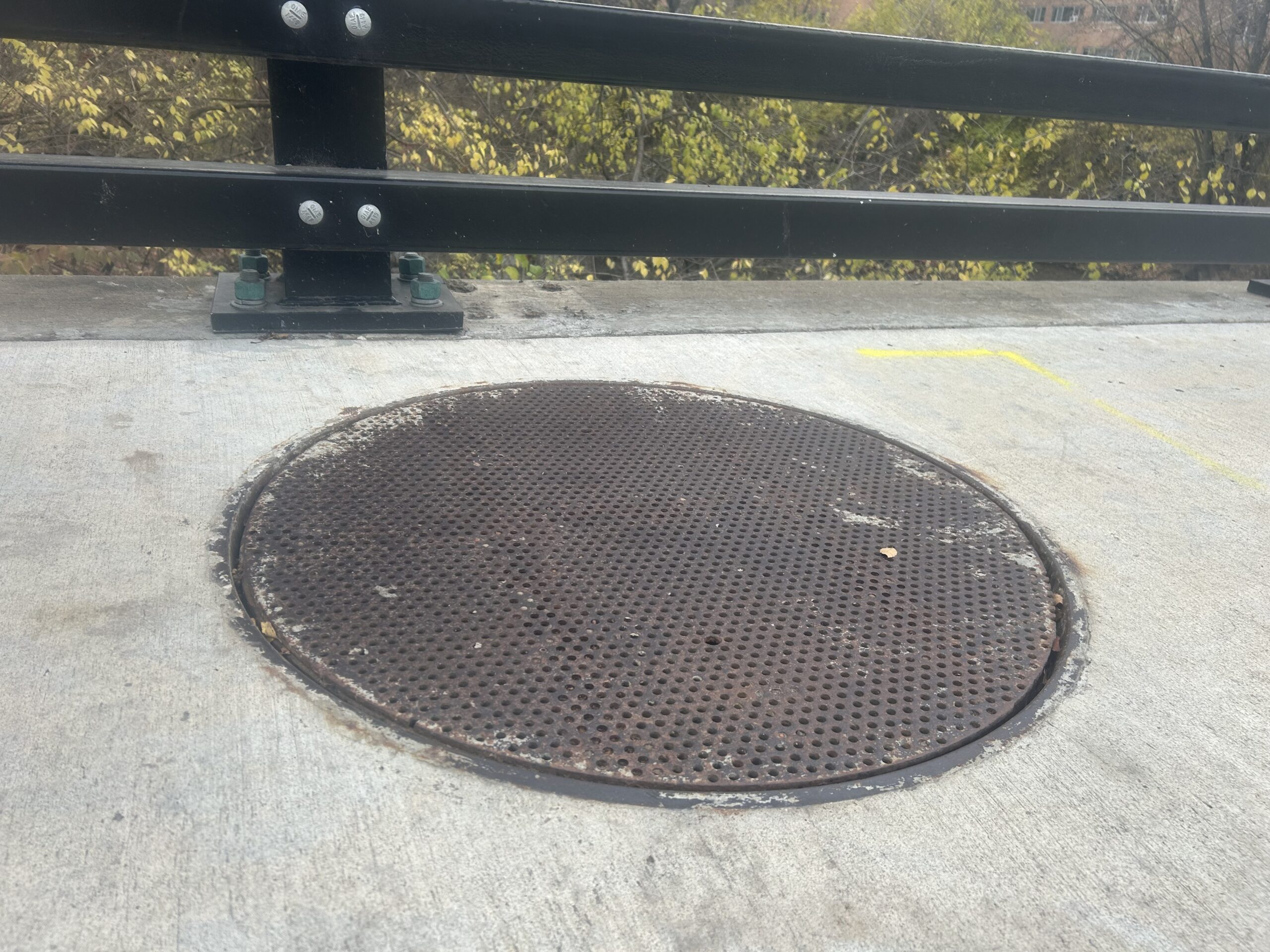
Just a few months after Gangware was hurt, in the early morning of Sept. 12, 2025, a Michigan State University student fell into an uncovered steam vault in East Lansing, where she was trapped with a host of injuries, according to another lawsuit filed in Ingham County Circuit Court in November of this year.
The MSU student was walking on the sidewalk along the Harrison Road Bridge on MSU’s campus when she fell into an uncovered steam vault manhole. She remained trapped without a ladder in the steam vault. The manhole “lacked various safety devices allowing an unknown third-party to remove it,” the MSU student’s lawsuit reads.
The fall resulted in scarring and disfigurement, a brain injury, fractured ribs and injuries to the woman’s teeth and pelvis. The MSU student experiences persistent pain and disability due to the fall, the lawsuit says.
In July of 2025, MSU initiated repair work on the steam vault that was involved in the student’s injury. Construction entities that were contracted to do engineering and design work, Clark Dietz and Fishbeck Thompson, did not include a locking mechanism for the manhole cover, which was also designed to be too small to properly fit the steam vault hole, the lawsuit asserts.
It was foreseeable that someone could remove the steam vault lid in this high foot traffic area of campus, the lawsuit says. The student’s attorney, Michael Laurila told ELi in an interview there is a presumption that the cover was removed by an unknown third party, but the legal argument is that the defendants had a responsibility to secure the cover.
Though other defendants in the case Granger Construction Company and Ram Construction Services had installed other steam vault lids on MSU campus, the lawsuit asserts that despite their knowledge and experience, the defendants placed the defective lid.
“When installing the lids, Defendants Granger and/or Ram knew that the lids lacked any sort of locking mechanism and were too small for the manhole yet completed the work as if it was safe,” the lawsuit reads. “Despite this actual and/or constructive knowledge, at no point did Defendants Granger or Ram question either the university, Clark Dietz or Fishbeck regarding this reckless design.”
After the installation of the defective and unlocked manhole cover, the lawsuit asserts Granger Construction Company and Ram Construction Services continued work at the Harrison Road Bridge and had “ample opportunity” to perceive the danger the lid posed and rectify it.
The City of East Lansing bears some responsibility, according to the lawsuit. The city reviewed plans to repair the steam vault prior to construction beginning and should have noticed that a locking mechanism for the lid was not included, posing a safety issue on the sidewalk it is responsible for maintaining, the student’s attorney argues.
“While it is believed that MSU controls the sidewalks on campus (i.e. where this sidewalk on the Harrison Road bridge is), by nature of its role as the State, MSU cannot be statutorily required to repair and/or maintain a sidewalk,” the lawsuit reads.