
Human Rights Commission Reaffirms Findings Against ELPD as Legal Conflict Deepens
The East Lansing Human Rights Commission reaffirmed its investigation findings that two Black men, Lonnie Smith and Mason Woods, were denied their civil rights due to their race when they were pepper-sprayed by an East Lansing Police Department officer.
Smith and Woods were pepper sprayed by an ELPD officer during Michigan State University’s welcome weekend in August 2025. A month after the incident, the ELPD put out a press release about violence downtown that named Smith and Woods, and said they were charged with crimes related to fighting.
Security footage of the incident later released by the men’s attorney, however, showed an incident that was mild relative to large fights downtown that business owners said were common in the fall. Smith stepped between his friend, Woods, and men he had been arguing with in line outside of a restaurant before an ELPD officer came in view of the camera and deployed pepper-spray within inches of both men’s faces.
The move by the HRC to investigate the police department marks an unprecedented clash between the commission and the city’s legal representation. While commissioners feel they are fulfilling their duty, city attorneys warn the group that it may be overstepping and could impact the city’s defense in ongoing federal lawsuits filed by Smith and Woods.
At Monday’s HRC meeting, City Attorney Gopi Patel urged the commission to delay any action on mediation until she provides a formal memo detailing their legal authority.
“I sincerely plead that you would table the matter,” Patel said.
The commission voted against Patel’s advice, reaffirming its findings that Smith and Woods had their civil rights violated.
The commission plans to send a letter to Police Chief Jennifer Brown, City Manager Robert Belleman and Mayor Erik Altmann reestablishing its investigation findings and to offer mediation. They are also asking for a representative who is authorized to negotiate or mediate on behalf of the police department and city to attend. The commission is requesting a response within 5 business days.
Beyond reaffirming its findings, the commission continues to have concerns about sharing an attorney with the city.
The legal dynamic can present a conflict: City attorneys represent the entire city, which includes the HRC. Commissioners believe this means they won’t receive good legal advice when they are investigating complaints involving the city.
During a tense meeting on Monday, it was made clear the commission will have to communicate with attorneys either through legal memos or a closed session. Both avenues are subject to attorney-client privilege and cannot be disclosed to the public.
When Commissioner Rebecca Kasen asked if the HRC can waive attorney-client privilege, Patel said they are not permitted to, leaving some commissioners hesitant to enter into a closed session.
Investigating these complaints is unprecedented for the HRC, as it is the first time the group investigated the City of East Lansing itself. Unlike previous cases where commissioners relied on city attorneys for guidance, there is now a deep lack of trust as commissioners believe attorneys are only serving the police department’s interests. Additionally, the commission faced significant barriers in obtaining information from the police department due to high Freedom Of Information Act fees.
Commissioner Joshua Hewitt highlighted that the trust was fractured when Carlito Young, another city attorney, originally advised the HRC to not accept the two pepper-spraying complaints because the incident is the subject of lawsuits filed in federal court, despite of the HRC’s purpose to protect the interest of human rights of the residents or visitors of the city.
The conflict led to a debate among commissioners about whether or not the commission should enter a closed-session to discuss legal matters with city attorneys.
“Everybody can see how problematic that is, you have one attorney from the same law firm telling us don’t investigate this complaint, but they’re technically supposed to be helping us with the complaint, that’s crazy,” Hewitt said.
“Even if the city’s attorney office is acting as opposing counsel, I still feel there is benefit to see what they can tell us and answer what questions we have,” Commissioner Matthew Boughton said in response.
“I disagree wholeheartedly,” Kasen said. “[City] Council can waive privilege from that meeting, anything we say can be used against us but anything that is said to us we cannot use and therefore it is a complete power imbalance.”
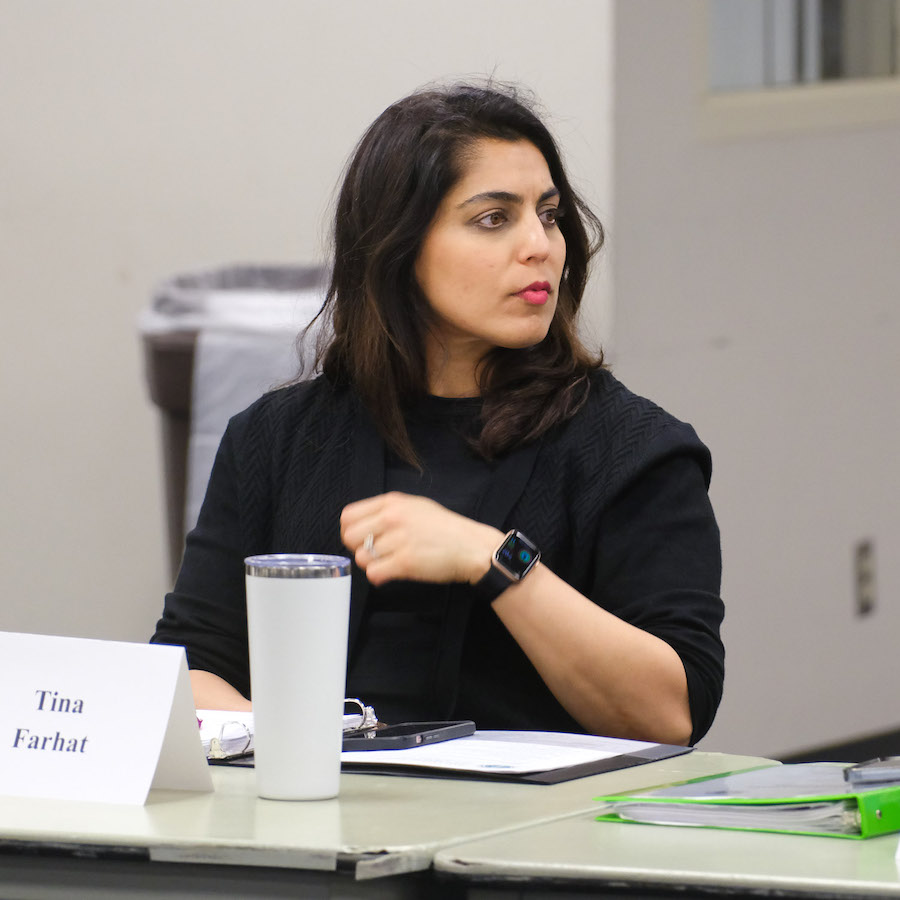
Besides discussing the investigation into the pepper spray incident, Vice Chair Tina Farhat said the commission would be able to ask questions about a legal memo the commission received before its April 13 meeting. The memo, which was confidential but leaked to WLNS prior to Monday’s meeting, said city attorneys had concerns the commission had violated the Open Meetings Act.
“I think if you [Patel] read the tone of the letter that we received prior to our last meeting, you would know that there was a lot of confusion about what the position of the city was vis-à-vis our commission so that was problematic,” Farhat said. “Everything with regards to our duties were being asked to essentially disregard.”
Kasen interpreted the memo as potential action by the city on individual commissioners and although they need questions answered regarding the memo, she said she can’t trust the law firm that wrote the memo to provide fair, unbiased answers.
A 3-4 vote determined the HRC would not enter a closed session, rather, Patel jotted down commissioners’ questions and plans to follow up with the answers in a legal memo that can’t be shared with the public.
While the commission has many questions about its current legal landscape, one persists: Can the HRC obtain pro bono legal counsel without the approval of the City Council?
“If the commission as a whole would like to seek outside counsel you must go through council to seek permission for that. The HRC is established by the council and the council is like your boss,” Patel said.
Commissioner Karen Hoene pushed back and asked if that was explicitly written anywhere, a question Patel said she would have to follow up on.
Other questions asked focus on whether or not the HRC ordinance prohibits investigating city departments and if city attorneys represent individual commissioners in legal action.