
Know the Ballot: Voters to Decide on Hotel, Motel Room Tax Increase
Ingham County voters will soon determine the fate of a ballot proposal in the upcoming Aug. 4 election that would raise taxes on hotel and motel rooms.
This is the second time the proposal will be before voters after 59% of voters were against it in the 2024 election. If approved, the tax increase would raise millions to boost tourism and fund local projects, like large event venues and county fairgrounds.
Since 1991, Ingham County has charged a 5% lodging tax for visitors staying fewer than 30 days. However, legislation passed in 2024 allows eight eligible counties, including Ingham, to increase the tax to 8% if a majority of voters approve.
The 2026 county budget estimates the 5% tax revenue will bring in $3.8 million to be distributed between four entities: 80% to the Lansing Convention Visitors Bureau, also known as Choose Lansing; 10% to Fair Board Capital Investments; 5% to the Greater Lansing Arts Council; and 5% for county administrative expenses.
Mark Grebner, a member of the Ingham County Board of Commissioners, told East Lansing Info on a phone call that the proposal failed in 2024 because it was poorly written. He emphasized two key points voters need to understand: the tax is not levied on local residents, and the county will spend the revenue on projects that benefit the community.
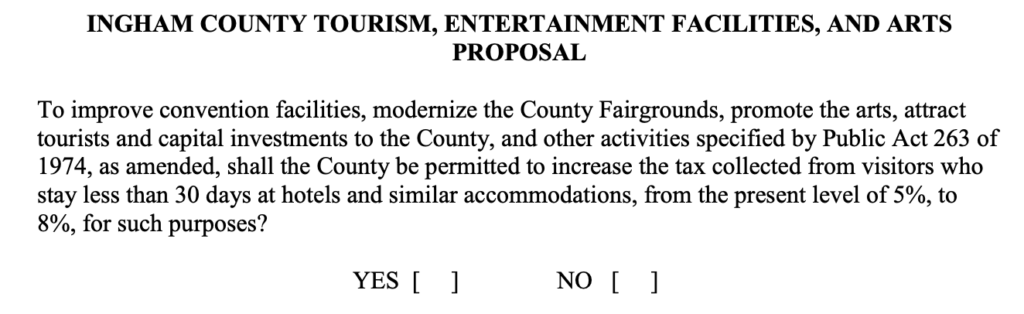
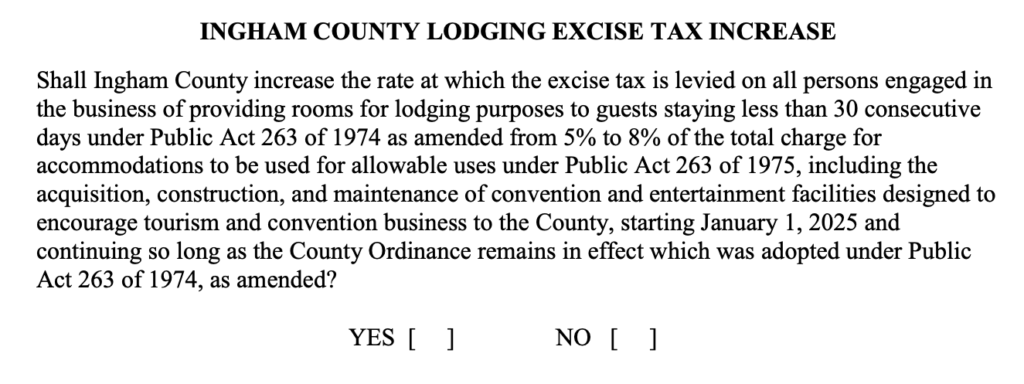
Grebner spent much of his career working as a political consultant writing ballot proposals. Over time, he developed a strategy to reach voters by keeping language straightforward and aligning it with the public’s existing knowledge.
“The voters are going to vote on this thing based on what they know … we need to work with the fact that we have to depend on the voters’ knowledge, and the voters’ knowledge is barely above the level of my Chihuahua, my Chihuahua is a particularly stupid dog,” Grebner said.
Grebner explained that he drafted a version of the hotel tax proposal, but the Board of Commissioners rewrote it during a meeting in April 2026. He has concerns that the version that will appear on the August ballot will not pass either.
“You have to write proposals that accept the limitations of the voters and then work with them … so it might pass, it might pass, but it might fail,” Grebner said.