
DOJ’s Reasoning for Monitoring East Lansing’s Election Doesn’t Make Sense, Officials Say
The U.S. Department of Justice will send election monitors to East Lansing, Lansing and Detroit for the Aug. 4 Primary Election, plans that have drawn a response from state leaders.
The DOJ’s Civil Rights Division requested various documents in a letter sent to East Lansing in late June and used baseless accusations to justify deploying election monitors, according to a written statement from Michigan Attorney General Dana Nessel and Secretary of State Jocelyn Benson.
The DOJ is using false claims like a lack of provisional ballots, long lines and concerns over voter accessible terminals during the 2024 general election to justify sending the election monitors to the three cities, the statement reads.
President Donald Trump has spent years spreading misinformation about the results of the 2020 presidential election where he lost Michigan, a battleground state, by about 150,000 votes.
State and local officials have said poll watchers are welcome to monitor East Lansing’s election, but insist they will not be allowed to interact with voters or have hands-on access to voting equipment. Nessel warned her office is ready to hold to account those who intimidate election workers or take other unlawful actions.
Former City Clerk Marie Wicks, who ran East Lansing’s elections in 2024, told East Lansing Info there were no issues with a lack of provisional ballots or voter accessible terminals in 2024. Significantly shorter wait times for East Lansing voters who needed to register on Election Day was considered a huge triumph for East Lansing election officials at the 2024 general election.
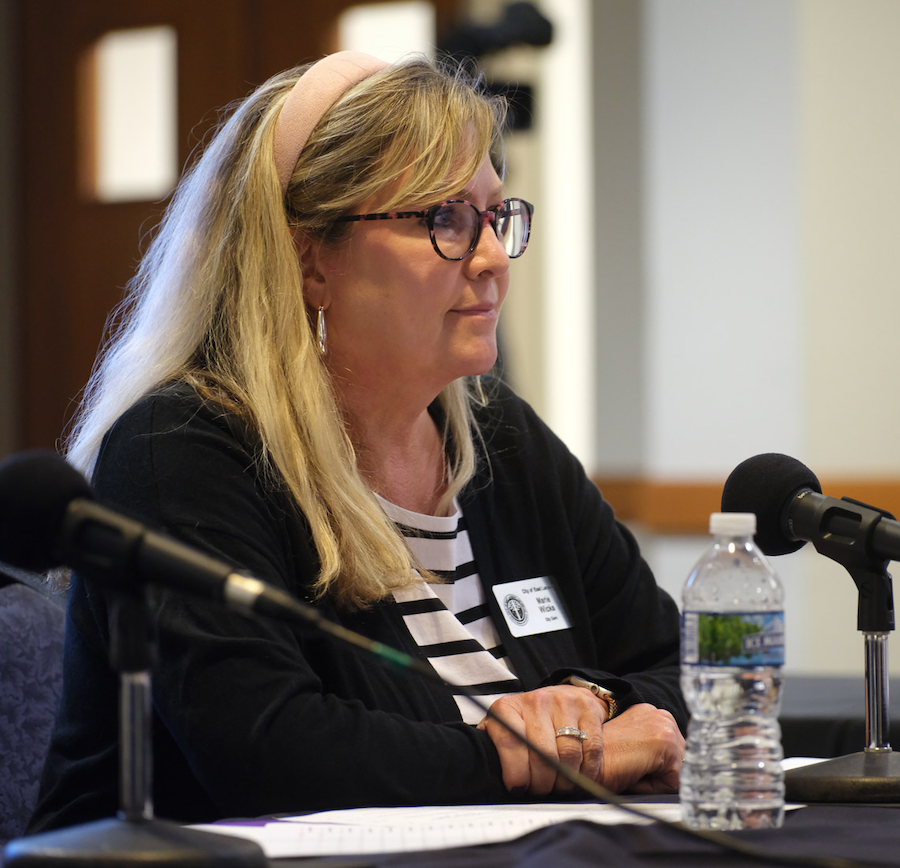
Without viable reasons for sending election monitors, Wicks and East Lansing city council members said they are unsure why the federal government is acting.
Wicks, who is active in Democratic campaign efforts, said she thinks Lansing and East Lansing were targeted because both cities lie in Michigan’s 7th congressional district, one of the most competitive house districts. She believes federal actions will continue during November’s general election and aim to discourage Michigan State University students from voting in the district.
Few students will be in East Lansing during the Aug. 4 primary election, as the MSU fall semester won’t start for weeks. However, if MSU students, who favor Democratic candidates, vote in their hometown districts via absentee ballot during the general election in November, it could flip the results of the hyper-competitive house race, Wicks said.
“Clearly people don’t want students voting in East Lansing,” Wicks told ELi in a phone call on Tuesday. “They want them voting at home. It dilutes the vote.”
East Lansing Mayor Erik Altmann said the reasons the DOJ stated it is sending agents aren’t supported by “the facts on the ground” and that he doesn’t want to speculate about reasons the DOJ could be sending election monitors.
Interim City Manager Annette Irwin is discussing the DOJ’s letter with the city’s attorneys and East Lansing will accommodate requests that are lawful, Altmann said.
“We are going to play it straight,” he said. “There’s very clear rules for what poll watchers can and can’t do and we will ask whoever they send to abide by those rules.”
In her statement, Nessel said everyone is welcome to observe Michigan elections, but they must follow the rules and respect that elections are run by the states.
“We encourage everyone to participate and see for themselves how secure and fair our elections are – but make no mistake, my office stands ready to hold accountable those who attempt to unlawfully interfere with or intimidate Michigan election workers,” Nessel said.
Similarly, Lansing Mayor Andy Schor and Clerk Chris Swope said in a joint written statement that election monitors are welcome, but that statements in the DOJ’s letter are false.
“The City will gladly provide documents and information in response to all lawful requests,” Schor and Swope’s statement reads. “However, as Lansing voters and the observers of Lansing elections know, claims in the letter to Lansing about difficult or abnormal voting practices are simply false. There were no delays at polling locations, the qualified voter file is the list we use for all elections, and provisional ballots are always available as provided by law.”
Councilmember Mark Meadows speculated that the DOJ is sending the election monitors to East Lansing as part of the Trump administration’s efforts to punish the city for maintaining its sanctuary city status. Last year, East Lansing was the only Michigan city included in a list of sanctuary cities created by the DOJ.
He said election monitors are welcome under state law, but he doesn’t know where the DOJ’s authority to target cities comes from.
“The act that they’re relying on, because they didn’t get the SAVE Act passed … was to help states improve the way that they provide election opportunities to people,” Meadows said. “There was a lot of money involved and maybe there still is.”
Meadows said poll watchers aren’t allowed to interact with voters and he doesn’t know what the point of the action is “other than to spend federal money when it doesn’t need to be [spent].”
While Meadows said he is unsure of the DOJ’s intent, he hopes voters aren’t dissuaded from participating in the election.
“Yes, there will be people who will be intimidated by the story about it,” he said. “I think the actual activity within the polling place will determine whether there was an intent to simply intimidate voters. Like I said, they can’t interact [with voters]. I don’t know what they intend on doing.”
Disclosure: Marie Wicks serves on ELi’s volunteer board of directors.