
East Lansing Extends Data Center Moratorium as City Develops New Regulations
The East Lansing City Council approved a six-month extension to a data center moratorium originally set to end in September, as city employees wait to meet with subject-matter experts.
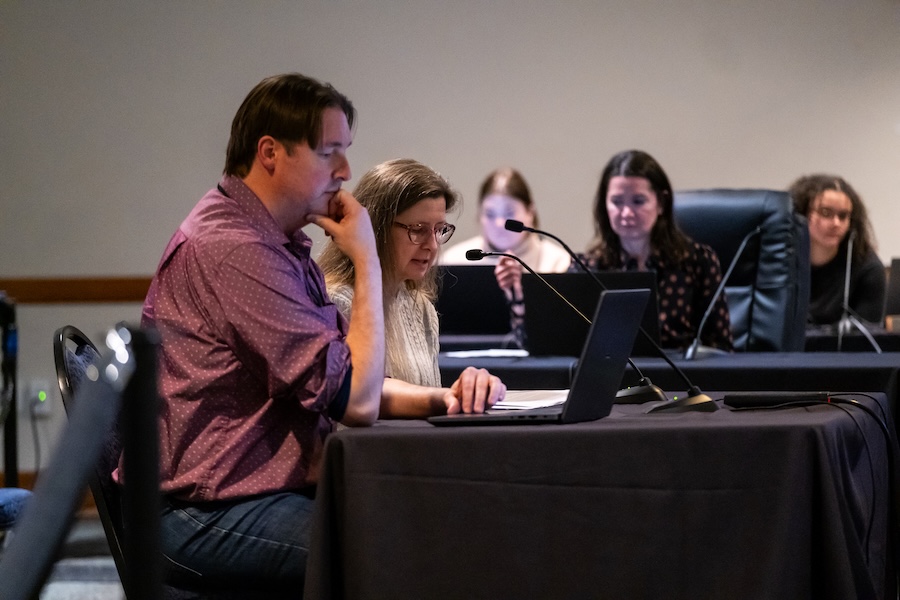
The current East Lansing zoning ordinance does not address data centers, so the city created an internal workgroup to recommend ordinance language to regulate them. After meeting biweekly for months, Principal Planner Landon Bartley told East Lansing Info on Aug. 12 that the group has a conceptual framework of their recommendations, but wants subject-matter experts’ input.
“I don’t think we’re going to be proposing a regulation that’s theoretical … The big question is what do we realistically expect here? What are realistic safeguards that we can put in our ordinance that the community supports?” Bartley said.
While the city had not received any applications to build data centers when the moratorium went into place in March, Bartley said East Lansing has received several inquiries since, with interest dropping off more recently.
There are few places in the city where data centers could be built right now, as construction is limited to industrial zones. East Lansing has two industrial zones, the Manufacturing zone and the Office Industrial Park zone. There are eight parcels in industrial areas across the entire city, two of which are owned by Michigan State University. Bartley estimates there are a total of 15 to 20 acres across all eight properties.
Despite the limited industrial space, Bartley notes that there are big areas that could potentially be rezoned if someone applies for it.
“Right now in our current framework and current zoning I think there are very few potential locations,” Bartley said. “But … things always change. Zones change, buildings come down, roads move … it’s not outside the realm of possibility that we could still have requests.”
The city’s workgroup consists of employees from several city departments and members of city boards.
The group researched how different cities across Michigan, including Ann Arbor, Mason and Saline, as well as places in Virginia, Iowa and Missouri, regulate data centers. The group looked at a variety of factors such as noise, energy usage, water usage, setback requirements, zoning, size thresholds, and renewable energy requirements. Bartley mentioned the group heavily focused on potential environmental impacts and surrounding property disruptions, noting their research shows significant noise impacts.
Additionally, the workgroup examined wellhead protection, which is a safety plan that protects groundwater from becoming contaminated. They also explored what would happen in the event a data center is decommissioned, and what would be required if the structure becomes obsolete.
The workgroup has until March 2027 before the moratorium expires, but Bartley is hopeful to propose ordinance language sooner.
“We might still change things but we do have a pretty good conceptual framework of what we’re looking to recommend,” he said. “Once we have that vetted by experts, [we will] then turn it into draft ordinance language, [and] bring it to council for a first look.”