
East Lansing Council Members Talk Infrastructure, Upcoming Election at Community Forum
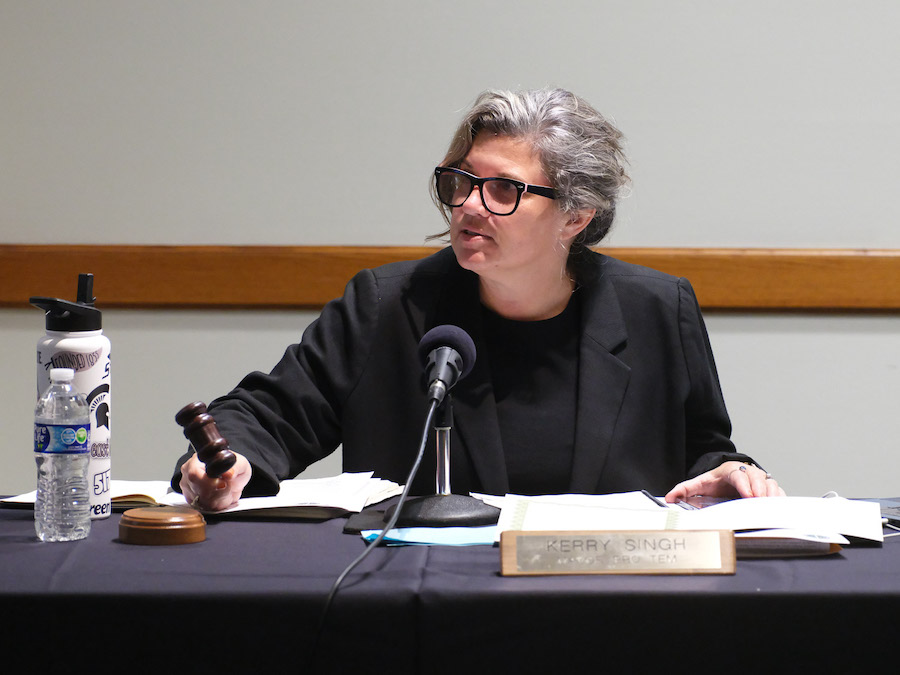
About 10 community members attended a community forum where East Lansing Mayor Pro Tem Chuck Grigsby and Councilmember Kerry Ebersole Singh addressed pressing topics like the upcoming midterm elections and the city’s plan to tackle stormwater and its aging infrastructure.
The council members said they held the Sept. 25 event to provide a forum where community members can interact with officials outside of formal meetings. Attendees wrote questions on slips of paper, which Singh and Grigsby read and responded to, before opening the floor for back-and-forth discussion.
Both weighed-in when asked about a citizen-led ballot initiative for the November election that would amend the city charter to move City Council elections from odd- to even-numbered years. The process would extend sitting council members’ terms by a year.
This move would align local elections with national, gubernatorial and congressional races, which would boost voter turnout, as there are far fewer votes cast in off-cycle elections where the council races may be the only item on the ballot. The change would also save the city money by reducing the number of elections it holds, advocates say.
Grigsby said isolating local races is important because it allows voters to focus on local issues, though he noted he would be happy to serve an additional year if that is what voters decide.
“I think when you go to even years you have a lot more to compete with in regards to your message,” Grigsby said. “Advocating for what community members are looking for, some of the specific things going on in our neighborhoods, I have really big concerns about going to even years in regards to that being lost.”
He added that his past campaign depended on door-to-door canvassing to connect with the community, allowing him to campaign without much fundraising or major donors. Further, he noted that the switch would force candidates to compete for attention with candidates running in state and federal elections.
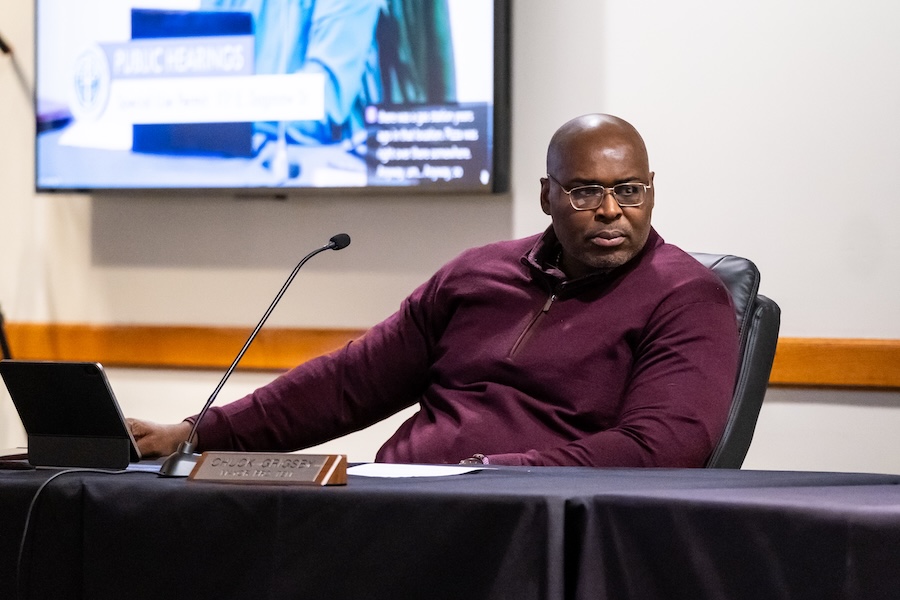
“I think people like myself will have [a] less likely opportunity to come in here and compete as a new candidate coming in and wanting to get involved,” Grigsby said.
Singh said this initiative is an important endeavor to drive voter turnout, but noted she is not overly passionate about either side of the issue. She said that if she had been involved in crafting the charter amendment, she would have preferred the five-year term extension to apply to newly elected members, rather than tacking an additional year on for sitting members.
For the change to take place in 2028, as is proposed, terms of council members had to be extended, as terms cannot be shortened under state law, the group pushing for the change previously told ELi.
Singh echoed Grigsby’s sentiment regarding the challenge of competing with national elections.
“You are going to have thousands and thousands more people to communicate and introduce yourself to,” Singh said. “We have heard from past members of council concerns with access and it could favor candidates that can raise more money that would benefit them in a large election.”
Additionally, she emphasized that East Lansing City Council races are nonpartisan, meaning there is significant voter “drop off” from the top of a straight-ticket ballot to the bottom.
“Doing the straight ticket won’t touch the City Council races, so that’s a voter engagement education piece too that has to be considered,” Singh said.
In response to a community member asking about the core idea behind pushing for more inclusion, Singh noted that even-year elections draw significantly more students to the polls. She recalled that when she ran in 2023, she attended campus debates and spoke to student organizations, yet precincts on campus only saw a handful of votes cast.
“You won’t see that in an even year with a presidential election and a targeted national congressional race, there’s going to be a lot more interest,” she said. “Unfortunately there was not a lot of student interest in the City Council elections … They are part of our community but there has to be interest for them.”
Another major talking point was the city’s sewer system and the aging infrastructure, which is struggling to withstand climate change. The City Council recently reviewed a comprehensive wet weather resiliency plan designed to address high-priority areas in phases, a massive undertaking that is estimated to cost $309 million.
“Respectfully, over the last few years or so we’ve been doing a lot of Band-Aids,” Grigsby said. “We’re dealing with extremes now in our weather system, we just don’t have the infrastructure to really combat that.”
Singh added, “What we’re seeing is more heavy rainfall, wet weather events, they’ve been distinguished as … a storm once every 50 years, well guess what, we’ve had three of those in the last two years.”
She noted that they are currently brainstorming how to phase in the projects and fund these enormous infrastructure upgrades, as the city cannot fund them through its current revenue streams. She highlighted that while the federal government no longer provides direct communities funding for stormwater management, the State Revolving Fund would allow the city to borrow money at a reduced rate to tackle the critical fixes.
When the council discussed the infrastructure projects at a meeting earlier in September, it was estimated that the projects would take decades to complete. Officials also discussed the possibility of installing a new utility to pay for the improvements.
“It’s going to be a step process and a long-term process as well,” Singh said.