
East Lansing is Weighing a Six-Figure Fine Over Trees Cut Down Near Coleman Road
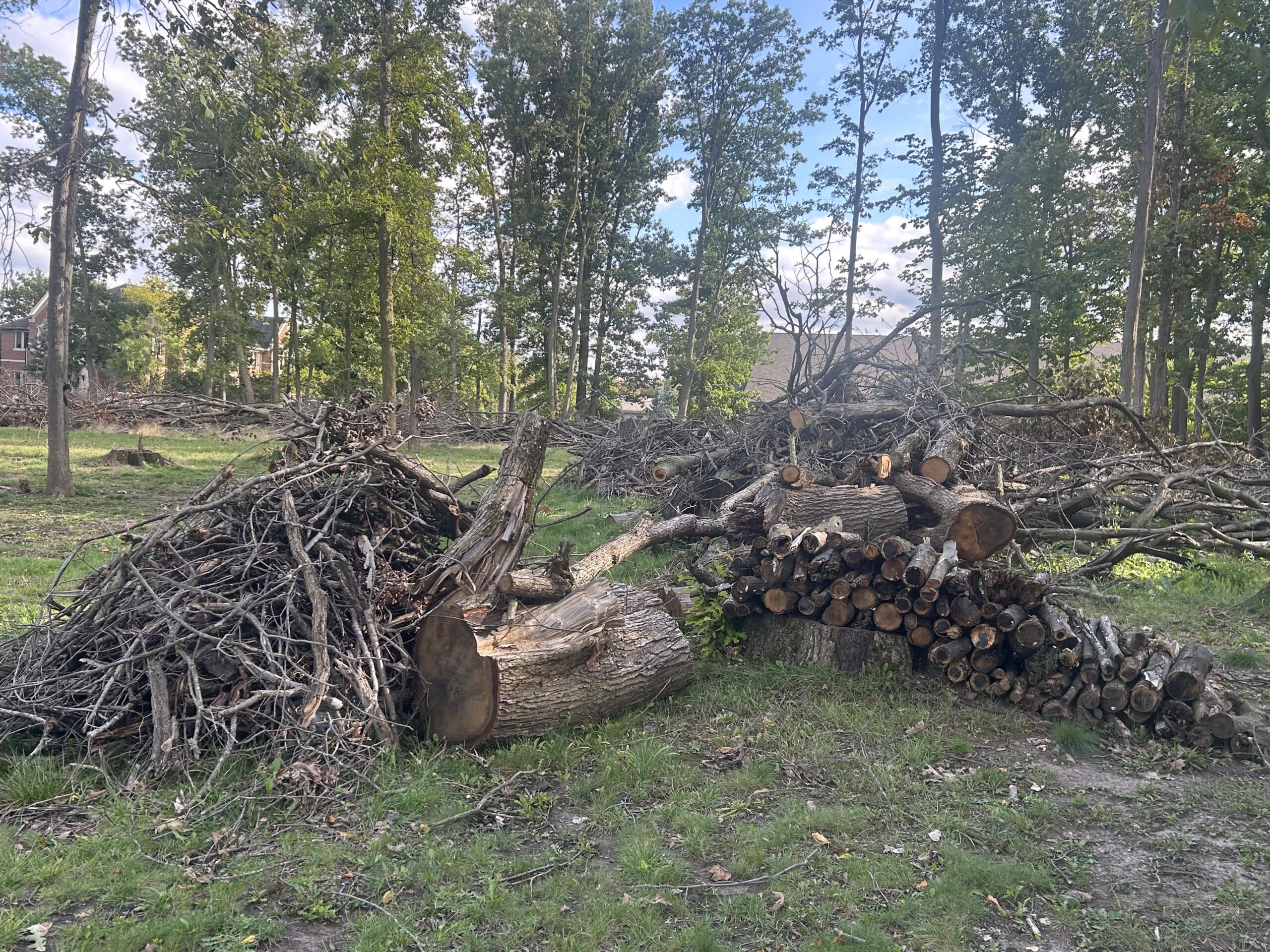
The East Lansing City Council is weighing a fine that could exceed $150,000 against a real estate agent accused of illegally cutting down trees at 2982 E. Coleman Road in northwest East Lansing.
Brandon Green, co-owner of the properties, said the fine would sink his planned rental housing project, while a city report says some of the trees cut down will take decades to replace and their removal caused significant environmental harm.
Green said he had the trees removed due to a miscommunication. In an interview with East Lansing Info, he said he was born and raised in East Lansing. A real estate agent with Berkshire Hathaway, Green buys and renovates properties independently of the agency, and sometimes with a business partner in California.
He said the two purchased the Coleman Road properties in March and had frequent communication with city officials regarding permits.
Green believes that somewhere in his communication with Principal Planner Landon Bartley, he was given the go-ahead to remove 26 trees. In an April 30 email, weeks before the trees were cut down, Green asked Bartley to connect him with neighbors of the properties to inform them of ongoing work.
“We also have a company doing some tree-work along the property line in the next few weeks, which I wanted to notify them of,” Green wrote to Bartley.
Bartley responded that he had shared Green’s contact information with the neighbors but did not address the planned tree work. At the Sept. 22 City Council meeting, Bartley said he did not know Green planned to remove trees from the property and he would have told him about regulations if he did.
In an Aug. 6 email to the City Council, Green wrote that he believed Bartley would have told him about relevant regulations when he reached out in April.
At the Sept. 22 City Council meeting, City Attorney Carlito Young said it doesn’t matter what Bartley said or how it was interpreted, the city’s ordinances dictate tree removal regulations.
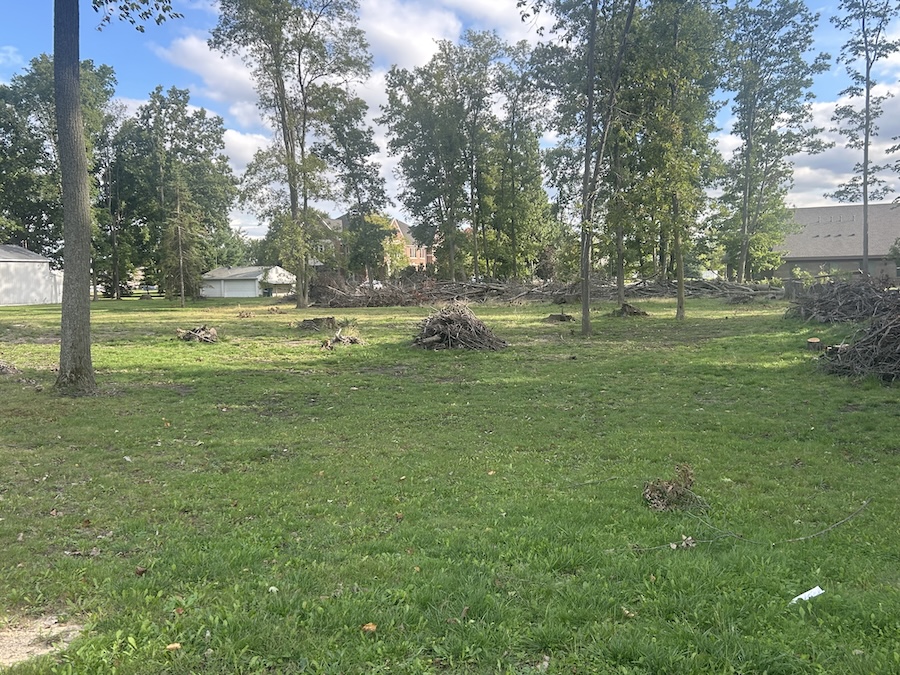
In a report to the City Council, City Clerk Emily Gordon said Department of Public Works, or DPW, forestry staff were contacted May 28 about potential unauthorized tree removal at the site. DPW staff assessed the area a week later and identified 26 mature hickory and red oak trees that had been removed.
“Under Sec. 48-94, a tree removal/land clearing permit is required prior to the removal of one or more trees four inches in diameter or larger,” Gordon wrote in her report. “An exemption exists for properties that are zoned residential, are two acres or less in size, and are used for single or two family homes. All three must be true.”
Gordon explained that the penalty for illegal tree removal is $200 per inch of diameter for trees 4 inches or larger. The 26 trees collectively measured 747 inches in diameter, resulting in a proposed fine of $149,400. However, the fine could end up being larger. At the Oct. 6 City Council meeting, the body delayed a decision on issuing the fine because staff reported finding more stumps on the site that were initially missed because they were underneath piles of cut down trees. Green could be on the hook for those trees as well.
Cutting down trees carries significant environmental consequences, including decreasing an area’s ability to absorb stormwater, a loss of wildlife habitat and a loss of air-quality benefits. It takes decades for mature trees to be replaced, according to a staff report attached to the Sept. 22 City Council agenda.
The Michigan Tree Valuation Guide places the value of the 26 trees originally identified between $148,276.74 and $186,435.74, according to the staff report.
At the Sept. 22 council meeting, Councilmember Steve Whelan and Mayor Pro Tem Chuck Grigsby expressed interest in finding a way to make the tree removal “teachable” rather than issuing the large fine the ordinance outlines.
Councilmember Kerry Ebersole Singh also signaled a desire to find a middle ground.
“A six-figure fine is steep, it’s real, but 26 trees … is significant as well,” she said at the Sept. 22 meeting. “I will say, whether it should be part of this equation or not in this quasi-judicial process we’re embarking upon is, you know, if we were putting affordable housing in there … I’d probably feel more forgiving about some of the trees that we lost.
“I would love for you guys to convene and perhaps come back to us with another option away from the top figure,” Singh said.
At the Sept. 22 meeting, Mayor Erik Altmann expressed concern about the example it sets if Green is not fined the full amount.
“Do we care whether this happens again?” Altmann asked. “Because if all you have to do is come in and say ‘I’m responsible’ and you get a deal, then it’s going to happen again.”
In an email shared with ELi and sent to City Council after it delayed action on the fine at its Sept. 22 meeting, Green offered several alternatives for restitution, including donating the resulting firewood to East Lansing parks or a nonprofit organization.
He also offered to plant “no less than 26 white oak, red oak, and hickory seedings at our site, as well as any other site of the city’s choosing.”
Green also proposed a biennial music and art festival fundraiser to raise awareness about the importance of planting trees.
“This is my hometown,” he said. “I’ve lived here for 46 years. My family’s been here since 1966. I’m very aware of these neighborhood dynamics, of the history of East Lansing.”
He said he grew up in the East Lansing housing developments Deerpath and Edgewood at a time when Black home ownership was still rare.
“When I buy a property … I’m a young looking Black guy. I come in, move into a property and we’re all familiar with the term, ‘There goes the neighborhood,’ okay?”
Green said that when he moves into a neighborhood, the value of the property he purchases increases, along with the value of surrounding homes, because of the work he puts into them.
“I know how these folks feel,” he said. “They just have limited thinking, some of these people. What happened here is we were out [there] doing our work and some neighbors … don’t like who [they] see, don’t like who’s in [their] neighborhood, don’t like who’s moving in. None of that is relevant, but all of it is fact.”
In a text message exchange with ELi earlier this week, Green said he was told that the matter would be revisited at the Nov. 17 council meeting.
“The city staff said that was in order to allow them to update their report and get back with use with a new schedule of fines based on the city’s second inspection of the site,” he said, adding that that the original report contained a number of inaccuracies and “flat out lies” concerning additional stumps at the site.
Green said he worked with a lumber mill to cut the trees but maintained that some of the trees counted by the city were cut down before he purchased the property.
He said he is pursuing rental permits for the Coleman Road properties and wants to convert a warehouse on the property into livable space, something he said he’s done for 17 different properties in the Greater Lansing Area since 2017.
“We buy properties that need work and convert them into affordable housing for families and individuals,” he said. “We plan on fighting these fines and taking it to whatever court necessary and executing our plan and keeping the properties long-term. If a high court holds us to the fines they are trying to impose we would have to sell off the properties. No chance we can pay a six-figure fine.”