

East Lansing Parks and Rec Director Talks Deer Management
After about a decade of gradual decline in deer-vehicle collisions in East Lansing, the director of the city’s Parks, Recreation and Arts Department says 2025 saw a spike in collisions and the city is looking into long-term solutions to manage the deer population.
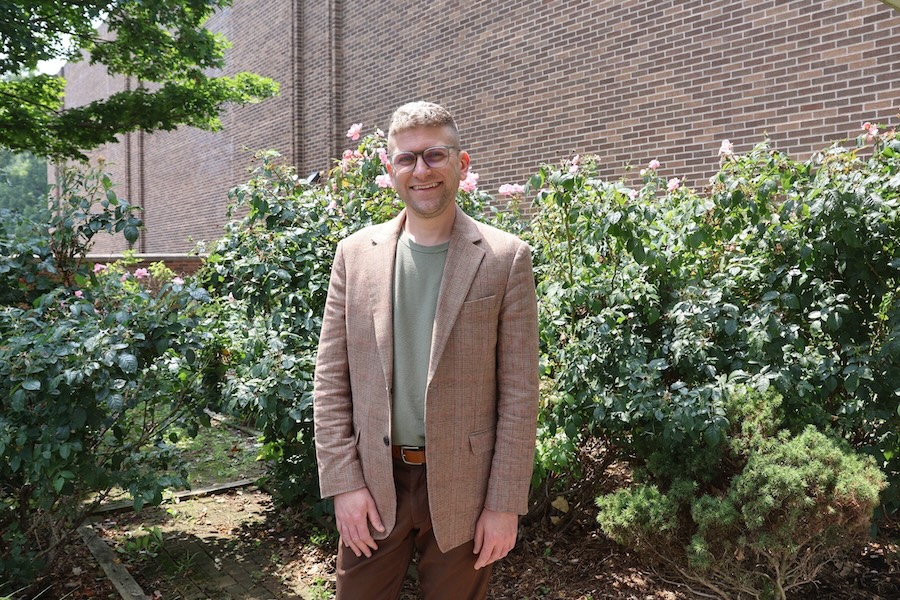
For the last six years the city has called in the U.S. Department of Agriculture, or USDA, to perform annual deer culls, where sharpshooters kill deer in city parks at night for typically about four nights. Deer culling has been an important component of the city’s efforts to facilitate the best interactions between human residents and wildlife residents, Parks, Recreation and Arts Director Justin Drwencke said, but other wildlife management strategies could be coming down the pipeline.
Deer-involved vehicle collisions in Michigan have increased in the last decade, according to Michigan Traffic Crash Facts annual crash data, going from about 47,000 in 2015, to more than 58,000 in 2024. In Ingham County, deer-car collisions dropped from 1,087 crashes in 2015, amongst the highest for counties in the state, down to 887 crashes in 2024, a more average number for Michigan counties.
In 2020, in response to residents’ concerns over the growing deer population causing safety hazards on roadways, destroying residential area landscapes and the spread of Chronic Wasting Disease, city leaders authorized deer culling.
In urban areas like East Lansing, where a significant portion of the surrounding rural area is apt for growth in deer populations, there aren’t very many natural factors that manage the deer population to safe ratios with the human population, Drwencke said.
“There has to be some type of intervention in order to create that opportunity to coexist in that space in a way that doesn’t cause the deer population to suffer. Ultimately, if you see overpopulation in a deer population…not only do you have more conflicts with humans, but they also then are more likely to transfer diseases among themselves. They really start to compete with each other more and it ends up with worse health outcomes for the deer population themselves,” Drwencke said. “So, in my opinion, it actually is more humane to help manage the population to something that the area can sustain.”
And until last year, East Lansing had seen a downward trajectory in deer-vehicle collisions. However, Drwencke said preliminary data from the Michigan State Police shows that there were 24 deer-vehicle collisions in 2025, an increase from recent years.
The deer culls have not been an ultimate solution to fostering safe interactions with the deer population, Drwencke said, and the process can face several barriers as the city has to coordinate with the state Department of Natural Resources, or DNR, on the number of deer that can be killed and then has to coordinate with the USDA to determine viable days for the cull.
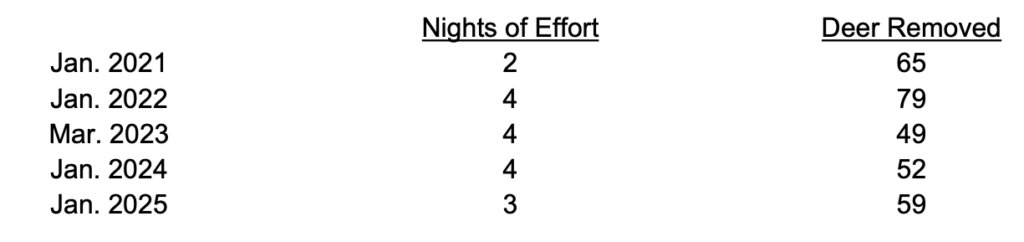
East Lansing’s annual cull typically takes place in January, but multiple days of heavy fog and delays with the DNR could push this year’s cull back to April, Drwencke said, and the USDA has to schedule East Lansing around other municipalities that also perform a cull.
“I think that right now, what we’re trying to do is figure out what is the long term solution? Because, to me, it does not feel like the right answer to constantly just do the same thing over and over,” Drwencke said. “We’ve kind of gone through this process of doing this kind of managed cull…this would be the sixth time and so we’re looking… [for] the ways that also help manage the population longer term too.”
One idea East Lansing leaders are considering is pooling resources with surrounding municipalities to fund research on the area’s deer population and what steps could be taken to increase public safety while maintaining healthy habitats for deer, Drwencke said.
The Grand Rapids area in Kent County has developed such programming where with the support of the County Road Commission and collaboration with cities and other separate municipalities, the Kent County Deer Management Coalition has come up with long term plans for managing the deer population.
Similar to Kent County, one contributing factor to deer overpopulation in East Lansing is a lack of hunters, Drwencke said, but that’s just one factor and investing in research on the subject could greatly benefit East Lansing’s long-term deer management strategy.
East Lansing and other municipalities in the Greater Lansing area may be more effective working together to manage the deer population than they would be separately, Drwencke said. Chipping in to have a full-time biologist looking at wildlife management across the region is an option the city is interested in.
“Deer don’t understand what the city boundaries are and so we’ve got all of these different communities that are trying to figure out what to do, or spending time on figuring out what’s going to work,” Drwencke said. “East Lansing could partner with Meridian Township and the City of Lansing and do a similar program.”