
For East Lansing Band Students, the Lessons Go Beyond Music
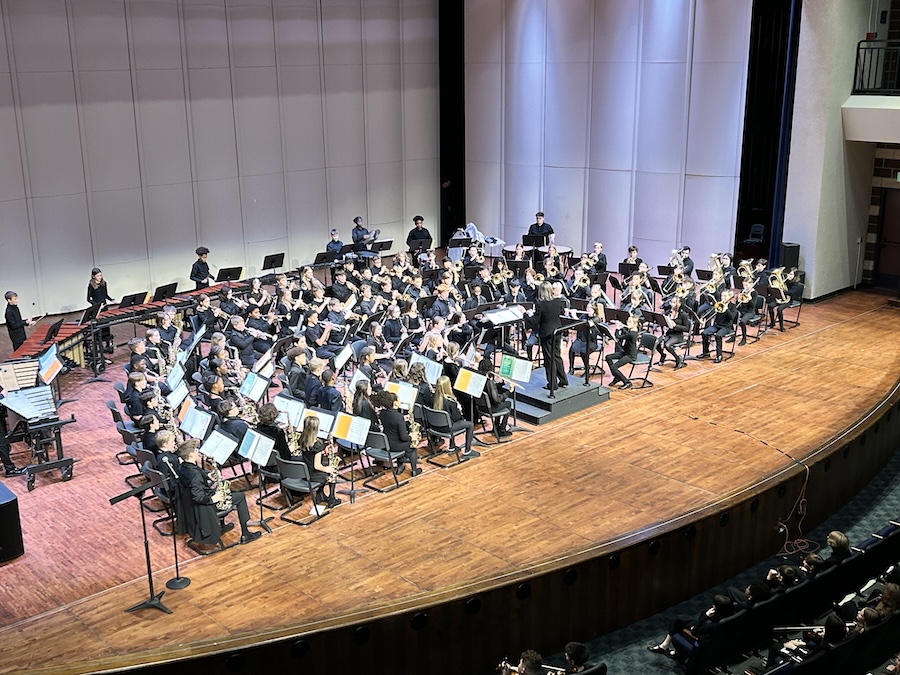
David Larzelere and Holly Thornton manage classrooms of more than 70 students, helping young musicians turn dissonance into harmony while teaching them skills and lessons that extend far beyond the band room.
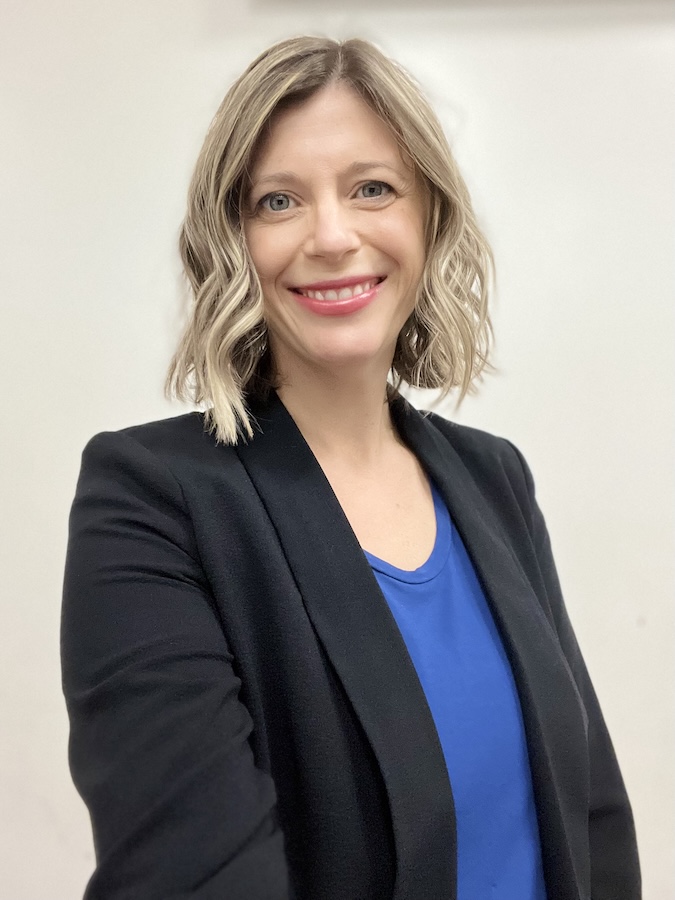
Larzelere is an East Lansing High School alumnus — class of 1995 — and is in his 17th year of teaching at ELHS. Thornton taught for eight years in Okemos before becoming the band teacher at MacDonald Middle School four years ago. Together, they create spaces for students seeking community and a shared passion for music.
In a joint interview with East Lansing Info, the two spoke about the programs they lead, the students they teach and the rewards of helping young musicians discover their potential.
For both, a career in education seemed almost preordained.
“I come from a long line of teachers in my family,” Larzelere said. “Both my grandparents were teachers. My mom was a teacher. My aunt was a teacher. And so that was something that was kind of in my blood. When I graduated from high school, I really was more focused on being a performer. I really wanted to be a professional trumpet player.”
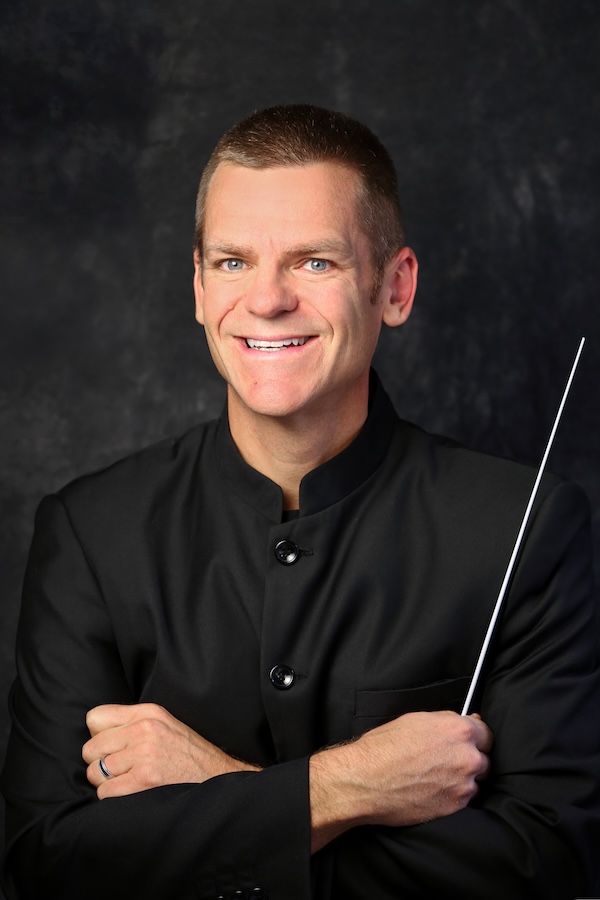
An impactful student teaching experience, however, helped him discover what he called “a better path.”
Thornton said she always knew she would become a teacher, but it was her own music teacher who inspired her to pursue music education. She wanted to create that same experience for other children.
While Larzelere began playing the piano before dabbling in trumpet and saxophone, Thornton fell in love with the French horn and had no reason to look elsewhere.
Both inherited strong music programs, which they’ve had opportunities to make their own.
Despite their shared commitment to education, the two acknowledge that their classrooms operate quite differently from those of colleagues who teach math, science or social studies.
Thornton said band instruction is teacher-led about 99% of the time, whereas other classrooms might alternate between whole-group instruction, individual work and small-group activities.
“If we’re not leading the class or facilitating [or] playing together, we really can’t all learn at the same time,” she said. “It’s just too noisy and too chaotic, so it’s very teacher-led. It’s a little more responsive and adaptable, but has the benefit of being a bit more customizable.”
Unlike teachers working through a set curriculum, Thornton said she doesn’t necessarily know how long it will take students to master a particular piece of music.
“We just want to perform at a high level and give kids a great experience,” she said. “But it means that we’re sort of cultivating the curriculum as we go, always adapting and modifying to the students who are in front of us and to what they can do, and what music we’re preparing for the performance schedule, as well.”
And while band requires discipline and dedication, neither teacher believes students need to demonstrate musical aptitude before joining.
Thornton said students aren’t required to pass an audition or test to participate. Teachers might help determine which instrument is best suited for a student, but they don’t turn children away based on their abilities.
“We’re certainly willing to give every kid a chance who has the desire to want to learn to be a musician,” Larzelere said.
“For a student who’s starting band [class] and just wants to get in there as a beginner,” Thornton added, “they just need to care and try. They just want to try and do the thing because it’s not an easy task to learn how to read music and play an instrument. It’s hard for kids to tolerate being bad at something, and to keep trying and persevere and push through. And that growth is one of the best parts about my job, seeing them go from no concept of how to do it to being able to play a whole song, or a whole melody, and play in front of the class.”
Larzelere said band is one of the few remaining places where students can’t rely on technology, instant gratification or shortcuts to achieve success.
“There’s no app,” he said. “You just gotta put in the work, put in the time and keep trying your best.”
He said students who are successful in band often demonstrate the same skills that help them succeed elsewhere in school.
“They can sit and listen to a teacher for five minutes, and then you say, ‘hey, can you do this,’ and they do that, and they have the executive skills to kind of function in a classroom.”
But learning those skills, and developing the confidence to use them, doesn’t happen overnight.
“There’s just something really valuable about making kids do something hard,” Larzelere said. “I think when you put kids in a situation that’s challenging and then give them support so that they can be successful, to me, that’s how you build self confidence for a student and how you’re giving them skills. There’s always going to be hard [times] in life, and if you can teach them how to get through those hard things, that is going to then help them as they develop into human beings.
“Giving them the skills and the coping mechanisms to get through situations like that, I think, is invaluable.”
Thornton sees those lessons unfold in her classroom, sometimes in the smallest moments.
She said that no matter how well she’s teaching, there will always be a student struggling to understand something. But watching that student finally succeed is among the most rewarding parts of her job.
“When someone is kind of struggling, struggling, and then they figure it out, that first time a beginner trumpet player gets their G out, that first time they can play the line and everybody claps for them because they really finally did it, and they’ve tried a bunch of times in a row,” she said. “The struggle is worth it. Like, I will often say to kids, it’s not easy, but it’s always worth it.”
Support outside the classroom can also make a significant difference.
Thornton said parents who encourage their children’s musical pursuits, help them obtain instruments and remind them to practice play an important role in their success.
“It certainly helps to have somebody who’s going to rent you an instrument and to remind you to practice,” she said. “I myself have two kids who are taking piano lessons, and I struggle to get them to practice sometimes. So we know that that’s real. We’re all busy. There’s a lot of activities.”
For families unable to afford rental instruments, Thornton said the program provides assistance to ensure that students who want to participate have the opportunity.
Beyond the music itself, both teachers see band class as a place where students develop relationships, find community and discover a sense of belonging.
“Band and music is a place where kids belong, where they have a community, and where they kind of find their own growth and confidence in connection with others,” Thornton said.
Those connections can last well beyond graduation.
Both teachers said they stay in touch with former students. Larzelere said he keeps up with graduates through Facebook and enjoys seeing former ELHS musicians perform in college marching bands.
“I think I have three [former students] right now that are actually teaching music and I have one student who is in a graduate school for performance,” he said, “and he will be a professional bassoon player. He’s an outstanding musician.”
The teachers credit the East Lansing community for helping sustain the district’s strong music programs.
“The East Lansing community has always been supportive of the arts program,” Larzelere said. “[Like] budget cuts, I’ve been here 17 years and it’s never even in the back of my mind that this community is not going to be supportive of our music program and performing arts programs in East Lansing.”
The East Lansing Band and Orchestra Parent Association, a booster organization, raises funds and provides volunteers to support the programs. Both teachers said that support reflects a broader appreciation for music and the arts throughout the district.
“It’s one of the cooler things about this district, though, that it is so collaborative,” Thornton said. “I was just explaining this to my student teacher today, that it’s nice that we’re not positioned in opposition to each other, that it really is instrumental music, and just trying to support each other. We’re just celebrating music and kids who want to.”