
From Social Soirées to Student Rentals: 99-Year-Old East Lansing Landmark Home Awaits Its Next Story
The house at 1107 W. Grand River Avenue has stood for a century and served nearly a dozen owners. It has been home to families, renters, socialites and tastemakers.
It came on the market late this summer and ELi was given a tour of the 99-year-old structure dubbed the Johnson-Stoddard Home after two notable former owners.
The house was constructed in 1926 by T. Ray Johnson, a native of Saginaw who worked his way up within General Motors. Johnson started in engineering and sales, and eventually became a plant manager in 1921.
It’s unknown who designed or built the home, but it was intended to make a statement.
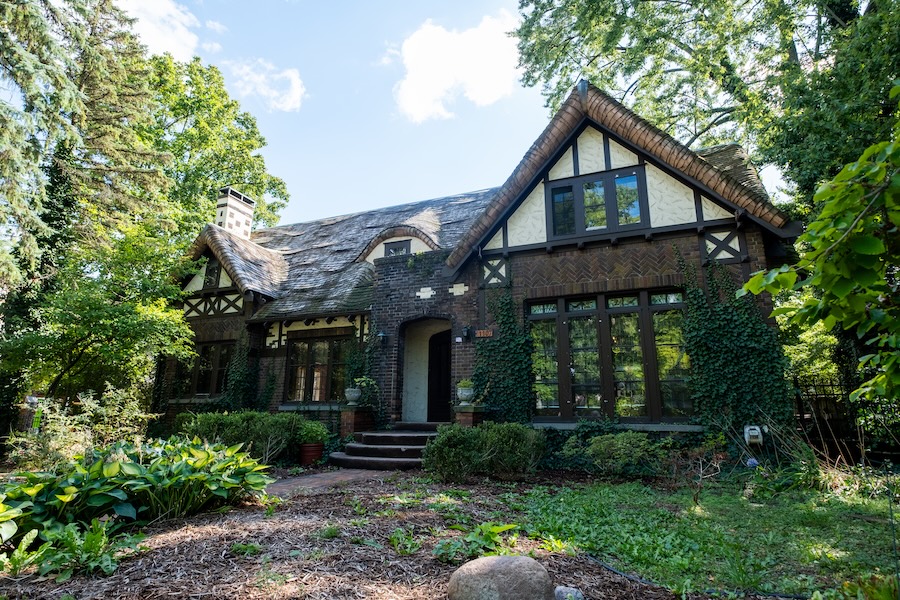
The Tudor Revival design has steeply pitched gables, tall chimneys, leaded or stained-glass windows, and stucco brick exteriors. It was a fashionable choice for upper-middle class families but not the norm in Michigan.
It would have stood out from the more prevalent Colonial Revival homes and Craftsman bungalows in East Lansing neighborhoods. If its roof were the only noticeable difference between it and other homes, it would still stand out. Cedar-shake (and last replaced in the 1990s), it’s meant to elicit daydreams of thatched-style English country homes.
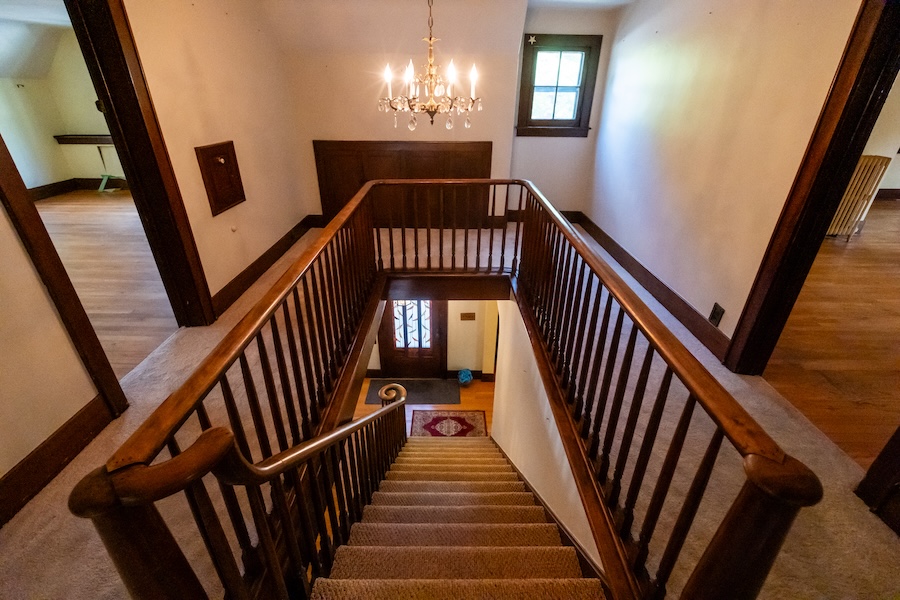
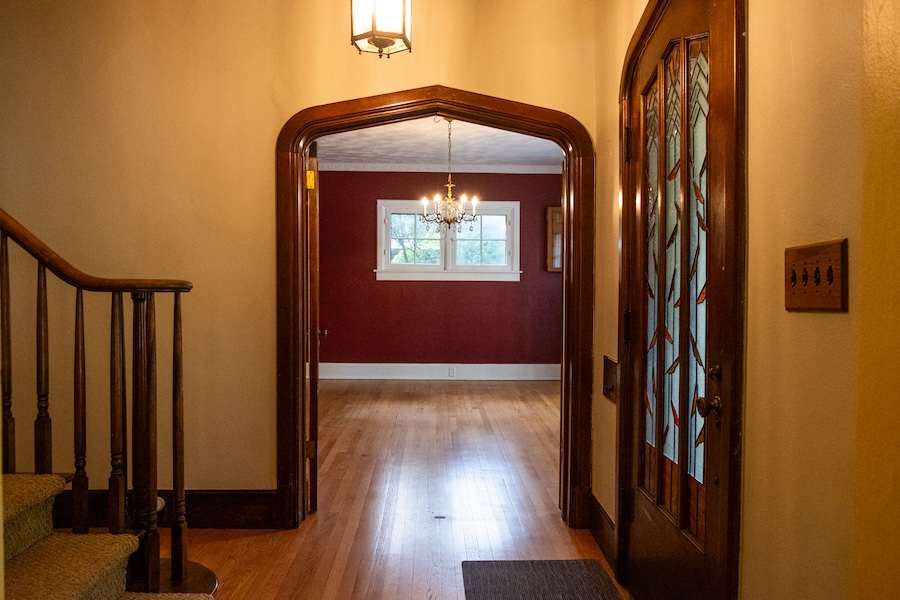
Guests entering the wide, stained-glass front door see a foyer and prominent staircase. The original woodwork is striking, giving the feeling that the guest is surrounded by warmth and grace. Crown molding sits atop the formal living room. The original stone fireplace sits at the head of the space and a sun-filled den sits off the living room, ideal for early morning coffee and quiet or a botanical collection of plants and ivies.
On the other side of the foyer is the formal dining room. Three doors open up to the front of the house and stained-glass dragon motifs sit above in transom windows, causing the guest to again consider medieval English origins of the home.
When Johnson moved his wife Alice and five (soon to be six) children into the home and away from Saginaw, they quickly found their footing in the new scene. Old issues of the Lansing State Journal are rife with society notices of events at 1107 W. Grand River Ave. In 1931, the Lansing Theosophical Society met to commemorate H. P. Blavatsky with a bohemian dinner at the home of Mrs. T. R. Johnson.
They weren’t the wealthiest family in town, but like other leaders in the automobile industry, the Johnsons were among the elite. The family employed a maid, Alma, who likely had her own private bedroom and bathroom, simply because each of the five bedrooms have their own ensuite lavatory. In 1930, the home had an estimated value of $32,000 – more than $600,000 in 2025 purchasing power.
The Johnsons spent at least five years in the home before returning to Saginaw where T. Ray’s estimation in the auto industry continued to rise.
Banker Howard Stoddard and his wife Jennie were the next owners, purchasing the home in the late 1930s and living there until 1946 with their four children and maid, Virginia.
Stoddard — who is not the namesake of Stoddard Avenue according to his only surviving son — came to the rescue of Michigan banks when that industry was near failure during the Great Depression. He reorganized more than 30 banks, creating Michigan National, the first statewide bank that grew to more than $1 billion in assets at the time of his death in 1971.
Howard and Jennie were leaders in their community, hosting countless events at their home for both Howard’s work, to support the war effort, and for their church. They were members of the Church of Latter Day Saints and in the coming decades would give funds to construct the Stoddard Student Living Center in East Lansing for collegiate members of the church.
From the time the Stoddards moved out until the late 1960s, the home bounced from owner to renter to owner, sometimes inhabited by a motley crue of graduate students from Michigan State and bachelor Lansing area teachers.
George Barker purchased the home in 1968 when he was a young junior high school teacher and would turn it into a home for his future family, owning it longer than anyone else.
“The English Tudor outside was spectacular,” he told ELi in a phone interview. “The wood shingle cedar roof was quite unique [and] the ‘eyebrow’ in front of the house was also unique. I saw I could rent the house and it wasn’t going to cost me much money.”
He continued renting to college students until he brought home his bride, Kathy. Barker said that his wife had a love-hate relationship with the place.
“It took a lot of furniture and decorations and curtains to keep it decorated the way you wanted it — and there were always issues with one of the five bathrooms,” he said with a hearty laugh. “It was old galvanized pipes. I learned how to be a pretty good plumber.”
Barker said it was scary to raise little children on Grand River Avenue with all the traffic they encountered. But they lived there until 1989. When the house went up for sale this summer, Barker, his two daughters and son traveled East Lansing to tour the house.
“The girls found out it wasn’t as big as they remembered,” he said. “I kept telling them of all the work it took and of my mother’s words to me when I bought the house: ‘you just took on a second job.’
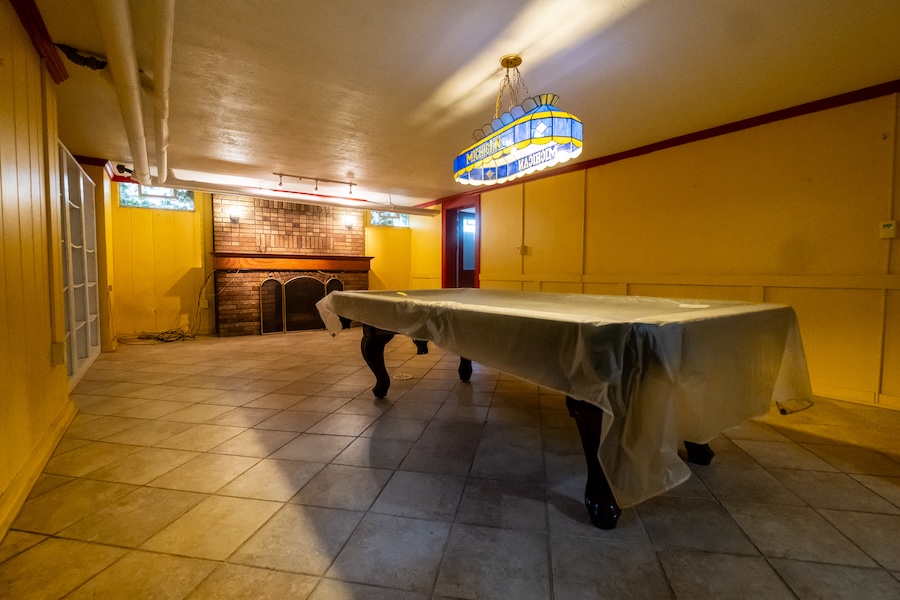
“But it was really beautiful, especially around Christmas time with the tree and fireplace. Halloween was great, too. We would quite often get students from art classes who wanted to make a drawing of the house.”
The house sits empty now until it finds its next steward. Its expansive windows are temporarily sealed and the original wooden built-in cupboards, closets and bookcases all sit empty. May its future owners find beauty and charm in the details that made it stand out over its surroundings.