
Lansing Might Have a Serial Killer. Its Failure to Protect the Unhoused is no Mystery, Advocates Say.
The Lansing Police Department has not ruled out that a serial killer may be lurking in the city, behind a series of deaths of unhoused men along Lansing’s popular River Trail in the last year. However, local advocates say the city’s housing crisis and inaction to protect those most vulnerable is hiding in plain sight.
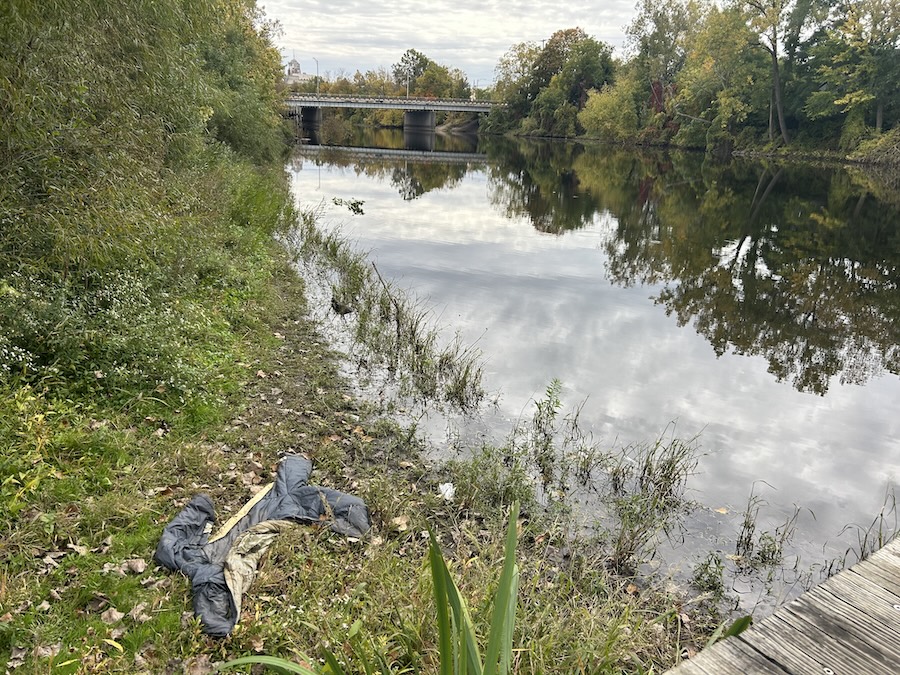
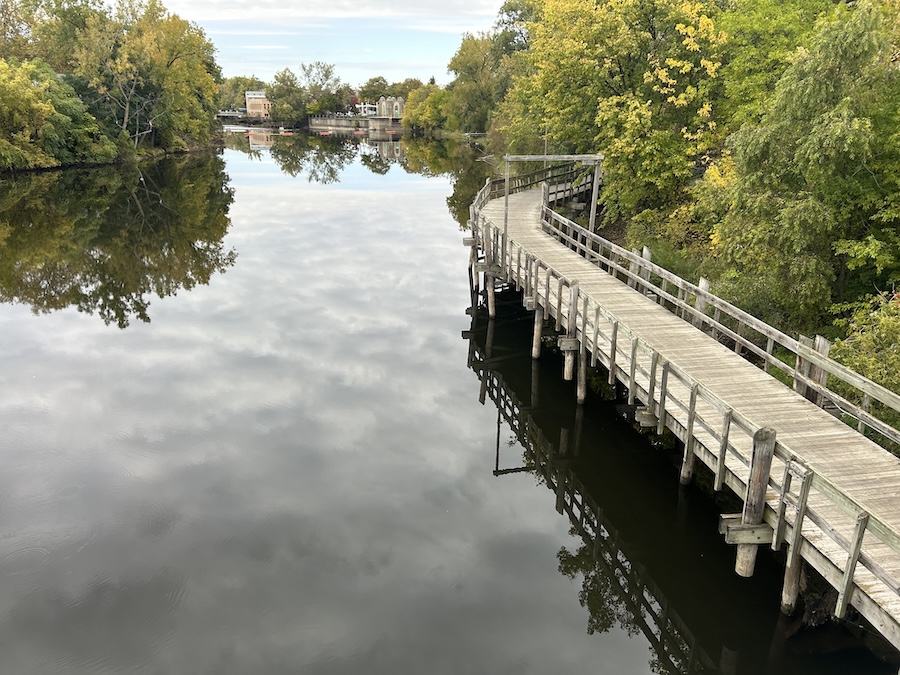
Since last October, five men, all believed to be homeless, have died along the Lansing River Trail in a manner that seems to reflect a pattern, Lansing Police Chief Robert Backus said during a news conference last week.
“One question that we are being asked is: Do we have a serial killer in Lansing?” Backus said. “What we need the public to know is that we are investigating all of these cases. They are all active investigations, and we are looking at the idea or the possibility that these may be related cases. We look for information, we look for trends, we look for patterns, and we have developed some.”
The five victims are all white men, ranging in ages 22 to 70 years old with crime scenes that suggest each may have sustained injuries in the early morning hours, lying down, potentially while they were sleeping, Backus said. Three of the deaths have been ruled homicides, while two have not yet been determined.
All five cases have enough common threads that law enforcement is examining them collectively to identify suspects, Backus said, but particularly four of the incidents that appear to involve blunt force trauma to the head of the victims show noticeable similarities.
The first incident occurred on Oct. 14, 2025, where police responded to 54-year-old Gino Chouinard who was found with injuries to his face and was pronounced dead at a local hospital on Oct. 27, Backus said.
On July 9 this year, 268 days after Chouinard’s death, Denis Dunnebacke, 70, was found with facial injuries and was unresponsive and covered in vomit, and was pronounced dead at a local hospital on July 16, Backus said.
On July 13, four days after police responded to Dunnebacke, 57-year-old Robert Smith was found along the River Trail unresponsive and bleeding from his head, Backus said. Smith was pronounced dead at a local hospital on July 17.
The fourth killing was different from the rest, Backus said. The youngest victim, 22-year-old Daniel Lusk was found on Aug. 20 stabbed to death and unlike the rest of the killings, the Lansing Police Department has a suspect, Edward Smith, 23, who has been charged with open murder.
The fifth incident happened on Aug. 30 when police found 57-year-old Louis Woodruff with facial injuries, Backus said. He was pronounced deceased at a local hospital on Sept. 1.
“When I’m reporting these patterns to you, I wish I had more information to share with you. I wish I could be more certain and concrete in what I say, but there are challenges in these cases,” Backus said.
The River Trail is fairly populated during the day, but because the incidents appear to be happening while it’s dark outside, without witnesses or surveillance footage along the nature area, Backus said the Lansing Police Department, or LPD, is having to implement additional resources to determine the cause of the deaths.
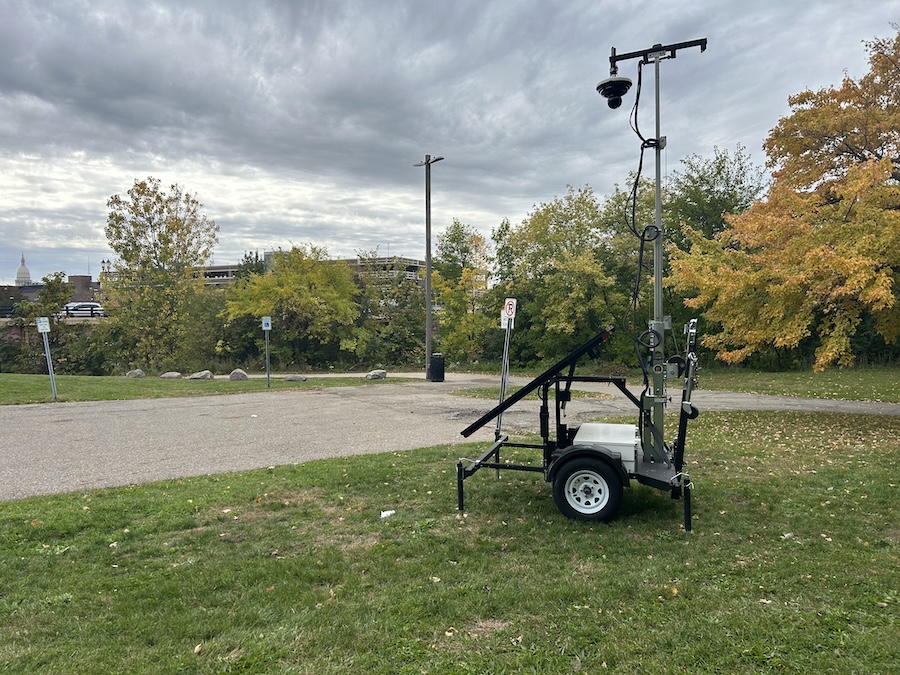
Flock cameras are a contentious topic right now in Lansing, Backus acknowledged, but he said the department has set up camera trailers along the River Trail and increased the presence of night shift officers in the area.
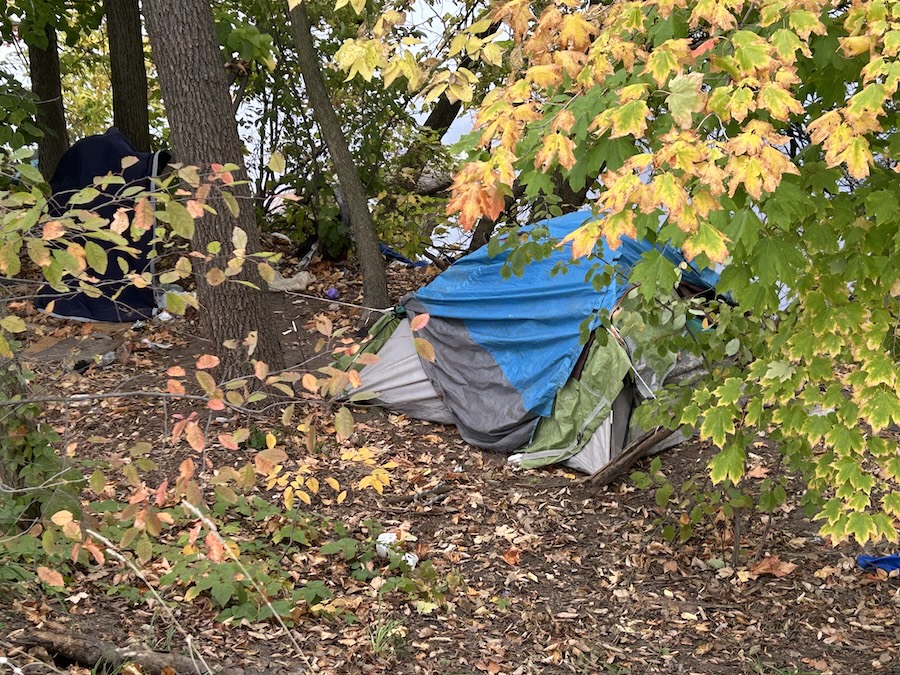
All these incidents occurred as the City of Lansing ramped up its efforts to clear out homeless encampments where unhoused individuals found safety in numbers for years, said Khadja Erickson, who works with the area’s homeless population as Tenant Resource Center Mid-Michigan executive director.
Unhoused people are losing the few safe places they’ve developed for themselves, Erickson said. Single, middle-aged unhoused men, the demographic of the victims Lansing Police have identified, are the least likely to access shelter bed spaces.
Meanwhile, nearly a year after the first death, once the public began to sound alarm bells about a potential serial killer, Lansing Police Department is revealing information about the deaths, Erickson said.
“These are like actual human beings … All of us have contributed for this environment to exist. The way we talk about homeless people … the fact that we’ve done nothing to fight the stigma that visible poverty means that you’ve had some sort of personal moral failing, and that’s why you’re on the street,” Erickson said. “All of that contributes to the thought process that they’re not worthy of investigation, which is why it took so long for LPD to even consider that people might be interested, that their neighbors, housed or unhoused, are being killed and targeted on the River Trail.”
What is a serial killer?
Serial killers are a popular troupe in true crime media, but incredibly rare in real life, largely because of developments in police technology and the level of surveillance and facial recognition technology that exists, David Hayes, a mid-Michigan based criminologist said.
The overarching characteristics that define a serial killer is someone who kills three or more people with cooling off periods that range from hours to days to years, Hayes said. This is different, but at times hard to distinguish from a mass murderer who kills many people in a short time.
In examining the River Trail incidents, law enforcement will have to determine if there’s been a series of killings by one individual or if the deaths are just coincidental crimes committed by multiple offenders, David Carter, professor in the Michigan State University School of Criminal Justice added.
Elements like commonalities in victims and how they’re selected could lead the LPD to determine there is a serial killer, Carter said, as well as location and time of the killings, in addition to the method. Each consistency stacks and can further point to serial murders.
“It certainly can’t be ruled out if we look at just from what we know publicly, but that doesn’t mean it is a serial killer, but it means it’s certainly worth investigating further,” Carter said. “It’s the small bits of evidence, the small characteristics, behavioral characteristics that can be found at the crime scene, those kinds of things will lead them to make a conclusion on whether or not it’s a serial homicide.”
With all the attention right now on Lansing because of these five deaths, and the local concern for navigating the River Trail, Carter said it’s important to recognize how individuals who engage in targeted violence work.
In the case of individuals who engage in targeted, organized violence, such as terrorists and serial killers, three things drive them: Motives, methods and targets, Carter said. Some strange or perverted psychological reason provides them with the motive to perform these crimes in a method that includes levels of consistency, targeting individuals for reasons that coincide with their motive.
Unhoused individuals, particularly ones that are believed by law enforcement to have been sleeping when they were attacked, are easy targets, but that doesn’t necessarily mean these were crimes of opportunity if this is in fact a serial killer, Carter said. There would be a motive behind choosing this demographic, but that doesn’t erase how vulnerable unhoused individuals already are to violence.
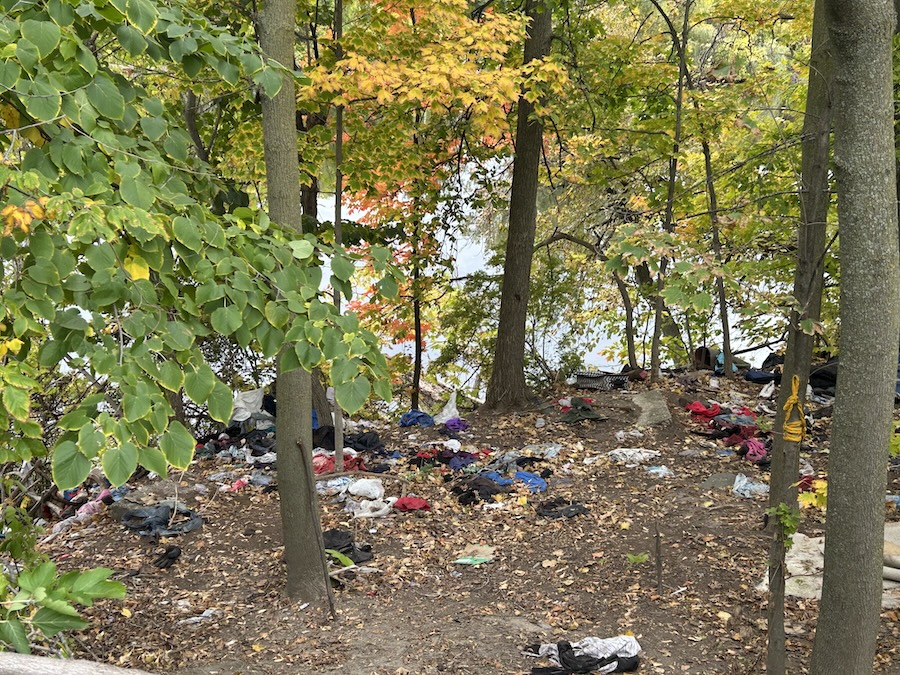
Hayes said most true crime media frames young and middle-aged white women as the victims, primarily because that is the demographic that consumes the most true crime and it makes the most sense to create media that will resonate with that known audience. But with unhoused men, they are considered “high risk” as they are more likely to be exposed to violence by virtue of vulnerability to the public, potential mental and physical impairments, and because they are often forgotten by society and their deaths can go under the radar.
“This is a classic case. If this is, again, we don’t know for sure if this is connected, but if it is, then it’s a case of someone choosing an incredibly vulnerable population at an incredibly vulnerable moment, and most importantly, choosing a population that sadly not many people care about,” Hayes said.
Public awareness that something is happening on the River Trail is a good thing in order to put it on the local radar that people should be vigilant and avoid navigating the area alone at night, Hayes and Carter said.
Trail cameras and other forms of monitoring that don’t unduly impede the movement of citizens or store their data are a good idea at this moment as the LPD will have to navigate best practices to speedily and safely bring their investigation to a conclusion, Hayes said.
Carter added that signage that alerts those on the River Trail that there are cameras and the area is being watched by the LPD could also go a long way, as it would act as a deterrent and those with criminal intent would not know where cameras may be located or how many may capture their activity.
The average citizen should be aware that there isn’t much indication in these cases that the average citizen would be targeted should there be a serial killer, Hayes said.
The words “serial killer” drum up a lot of attention in the media, despite it being a rarity that an investigation concludes that a serial killer ties together multiple crimes, Hayes said.
Something that the public can be certain of is that unhoused people are vulnerable to violence, Hayes said, and there’s plenty of individuals who live a paycheck away from losing their housing and could end up seeking refuge under a River Trail bridge.
“It is tragic in the sense that it took this, these events for someone to look at this population with a little bit of compassion,” Hayes said. “It shouldn’t take a tragedy or multiple tragedies for that matter, to spotlight real need in our community.”
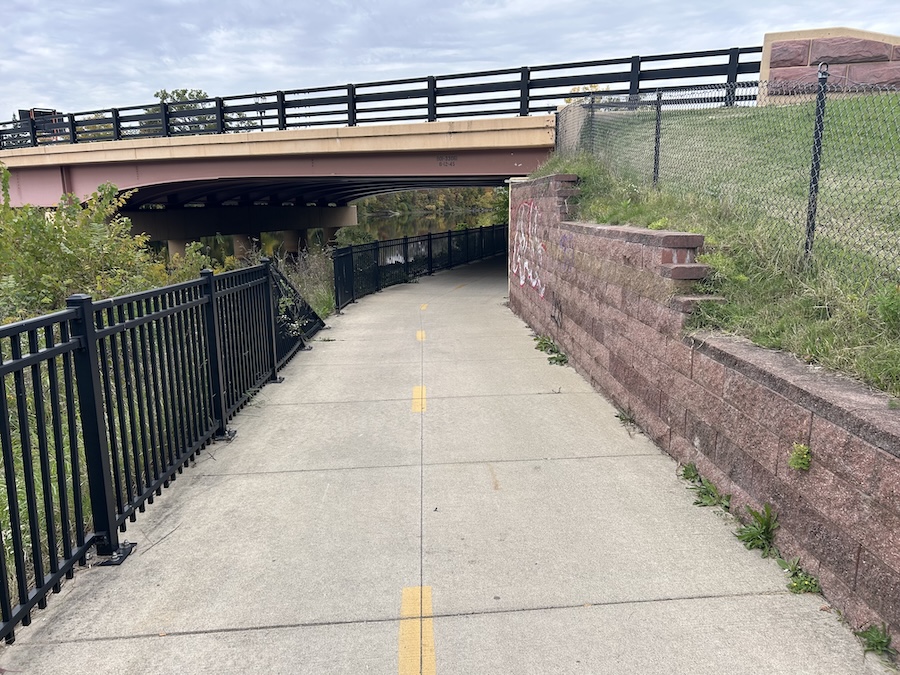
Threats against unhoused people are often addressed too late.
Erickson said Lansing-area unhoused individuals and local service providers have been talking about violence that is all too common against the homeless population for years, even before the River Trail deaths.
Through her work providing food, hygiene supplies and other resources to the Lansing region’s homeless population, Punks With Lunch Executive Director Kelsea Hector said she has seen just how terrified local unhoused people are. As the city has bulldozed encampments, more people are camping alone in an effort to avoid police interaction.
And now the LPD is asking unhoused residents to speak with officers, inform them of things they see along River Trail and seek help if they need it, when unhoused people in Lansing largely fear the police department, Hector said.
Backus acknowledged that reality during his news conference last week sharing the LPD’s findings in its investigation. He thanked the organizations that have shared information that may help in the investigation and beseeched the public to be vigilant and reach out if they may have witnessed strange activity along the River Trail.
“… we know that given our unhoused population, there are issues of mistrust, and we have to bridge that if we’re going to make progress in these cases, we have to bridge that,” Backus said. “Our advocacy groups can help us with that. Our social worker groups can help us with that. But also being here today and relaying the seriousness of these events and how much we depend on people and their cooperation. We hope that that will build people’s motivation to come forward.”
Working in housing advocacy is too often an act of warning local and state governance that problems exist and housing access is the answer, but issues have to reach a critical mass before they get attention, Hector said. Whether it’s addressing a lack of shelter space as another Michigan winter approaches or now a potential serial killer targeting homeless people, harm against unhoused populations gets addressed only after there has been loss.
“I wish it didn’t take an emergency to get us to this point. I will say though that we met with the city, we’re talking about potential solutions, and we’re just waiting to see what can actually be done … I would love to see a moratorium on [encampment] sweeps. If you just pause sweeps, even for a month while you continue your investigation, it could help people stay in community enough to protect themselves,” Hector said.
There’s conversation in the community about creating an emergency shelter while the LPD performs its investigation, Hector said, but it comes down to what is the local area willing to put into such a resource and for how long.
“We continuously see camp sweeps, and so if we want to talk about the position that we’re putting people in, it really does come back with how we treat people and where they have the space to be safe and also keep autonomy, and that just really doesn’t exist right now,” Hector said.