
Six Months After Her Son Was Fatally Shot By East Lansing Police, a Mother is Still Asking for Transparency
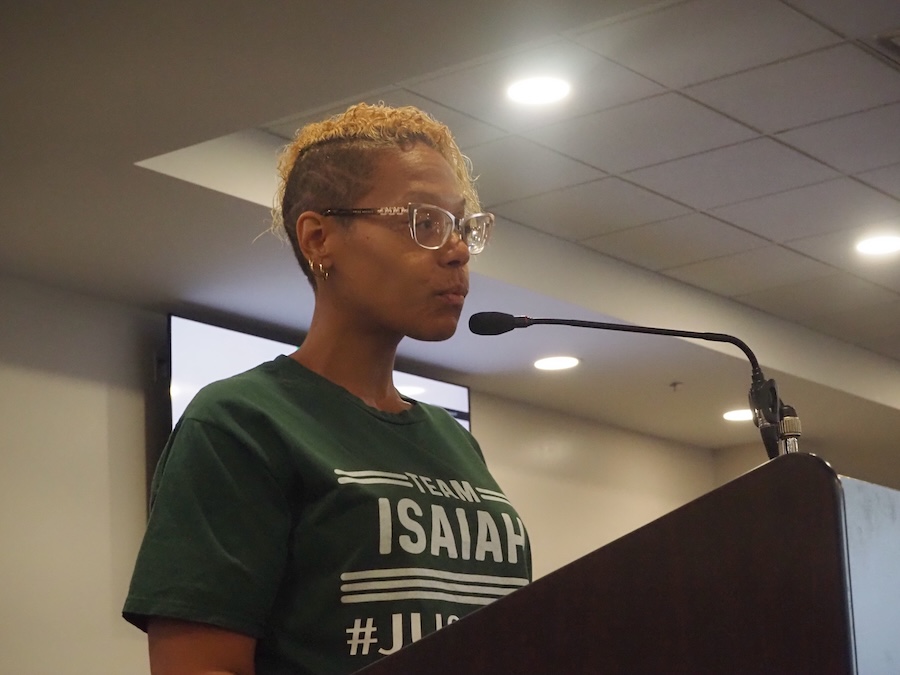
Almost six months after East Lansing Police Department officers shot and killed her son, Karyn Kirby demanded transparency from the East Lansing City Council.
Karyn’s son, Isaiah, a 21-year-old Michigan State University student, was suspected of stabbing local attorney Douglas Mielock before he was fatally shot by four ELPD officers on April 15.
A month after the shooting, the ELPD released footage that showed officers fired around 20 shots at Isaiah while he was running along the bike lane on Abbot Road in the direction of officers who had stopped their cars in his path. There were three distinct volleys of shots fired – two when Isaiah was no longer on his feet. Some residents and advocates have said officers used excessive force and that Isaiah’s death could have been prevented.
“Do not reduce Isaiah to a few minutes. Isaiah was 21 years old, a Michigan State University student getting ready to approach graduation. He loved snakes, he laughed, he had dreams, he had plans, he had people who loved [him]. He loved herpetology and marine biology and football,” Karyn said at Tuesday’s meeting. “What happened on April the 15th does not erase who Isaiah was. This is not about hating police officers, this is about demanding accountability for police officers.”
Since Isaiah was killed, Karyn said all she has wanted is to know what happened, but her inquiries have been met by suspicious behavior from police. The ELPD eventually released unedited footage of the shooting, but initially Karyn said the family was shown a heavily edited version of events. Now, Karyn is asking the ELPD to turn over the department’s review of the shooting.
“Transparency that must be dragged and forced out of a government agency is not transparency,” Karyn said. “It’s a disclosure under pressure.”
The Kirby family, along with local advocacy groups, is holding a town hall at Edgewood United Church in East Lansing Thursday at 6 p.m.
At Tuesday’s council meeting, residents again criticized city leaders for their handling of a series of police controversies. In early August, a bystander recorded an ELPD officer punching a 20-year-old Black woman who was restrained and facedown outside of Harper’s Restaurant and Brew Pub. More than two months later, the city has released little information about the incident, other than saying that the video does not capture the entire interaction and that additional footage will be released. The county prosecutor declined to pursue charges against the woman, but the ELPD said in a Sept. 18 press release that the city attorney is now reviewing the matter.
In September, Adrian College Professor Cedrick Heraux presented an analysis of ELPD use of force during 2025. The review showed a more than 50% increase in the number of incidents where officers used force compared to 2024, a widening racial gap and that officers were more likely to use severe force against Black people than white people, even when factors like resisting arrest are accounted for.
Some speakers at Tuesday’s meeting asked how the Lansing Police Department was able to release footage of a Sept. 23 shooting and the names of five officers involved within eight days of the incident, but the ELPD has been unable to address the incident outside of Harper’s for more than two months.
ELPD updates use of force polices.
At Tuesday’s meeting, the City Council authorized Police Chief Jennifer Brown to sign revised use of force policies. Members of the council said the policy revisions were a response to community concerns and the result of unprecedented collaboration between the ELPD, East Lansing Independent Police Oversight Commission and city attorneys.
The practical impact of the council’s action, however, is unclear. The body authorized Brown to sign on to policies that she would typically be allowed to sign without the council’s approval and City Attorney Carlito Young said Brown can change the policies again later on without the council’s permission. Two members of the police oversight commission said they expect the policy changes will do little to address the police department’s surge in use of force.
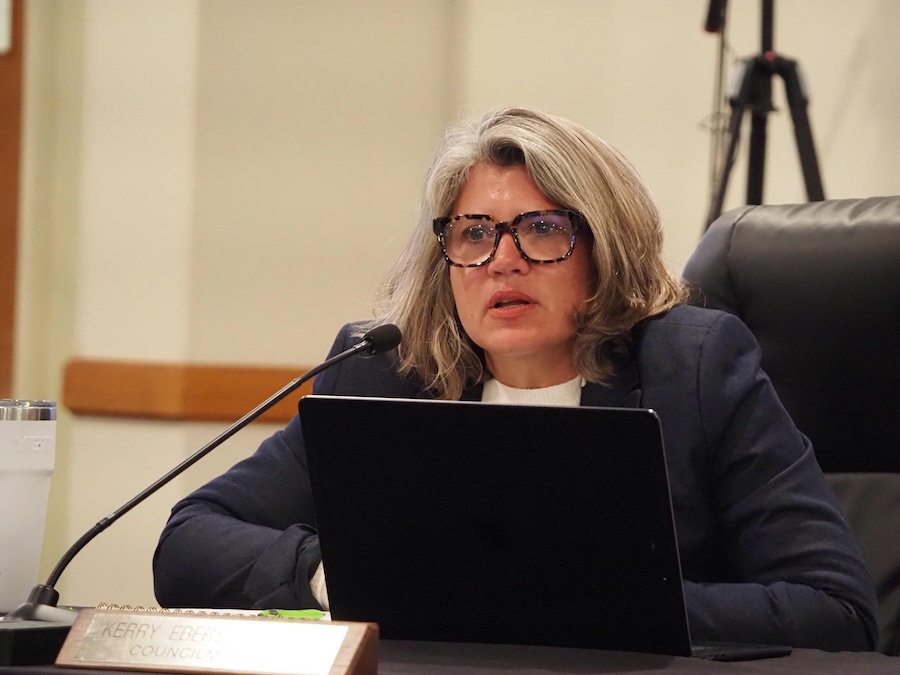
At Tuesday’s meeting, ELPD Lt. Chad Stemen said revisions created a standalone deescalation policy that provides details on how to deescalate and resolve incidents peacefully, which will be presented to officers during training. The department also updated its use of force policy.
In a phone call with East Lansing Info on Wednesday, Chris Root, a member of the police oversight commission who worked on the sub-committee that suggested the policy revisions, said that the updates were not recommended by the entire police oversight commission and expand on existing concepts within police policies.
The main accomplishments of the members of the oversight commission who participated in drafting the new policy was preventing the police department from weakening existing policy, Root said. The initial draft revision Brown and Young presented suggested removing a clause that establishes “sanctity of life” as a priority and added less lethal weapons as a deescalation technique.
“There were very few policy revisions,” Root said. “As I said, what we had to fight about was returning to simply the current policy from their initial draft revision.”
The oversight commissioners on the subcommittee did support creating the standalone deescalation policy, so it would be emphasized in training, Root said. Additionally, at Tuesday’s meeting it was announced two ELPD training officers will attend deescalation training from the Police Executive Research Forum. Root said the oversight commission has been recommending this training since 2023.
The police oversight commission has made official recommendations regarding use of force policies over the years, Root said, but the police department was not open to those suggestions
“We tried to talk about proportionality, we tried to talk about minimizing force, they’re just not interested in considering those things,” she said.
Further, at Tuesday’s meeting police oversight commission Vice Chair Kath Edsall said she has no faith that Brown will hold officers accountable even when they break policy.
“Change does not happen because of a paragraph here or there that was tweaked,” she said. “Change requires leadership who see the need for change and want better outcomes. Not ones who make excuses and hide outcomes. Change starts at the top. The chief needs to go or none of this matters.”
Since the start of 2025 – about the time Brown took over as police chief – the police department has not found any policy violations in police use of force, even with the surge in incidents, Root said. There have been multiple incidents the oversight commission has reviewed during this time period that commissioners believe show policy violations.
The commission has not been given the department’s evaluation of the Kirby shooting yet or received the August use of force report that captures the incident where the officer punched the restrained woman outside of Harper’s, Root clarified.