
MSU Astronomer: Find a Dark Spot and Watch the Moon Turn Red Thursday Night
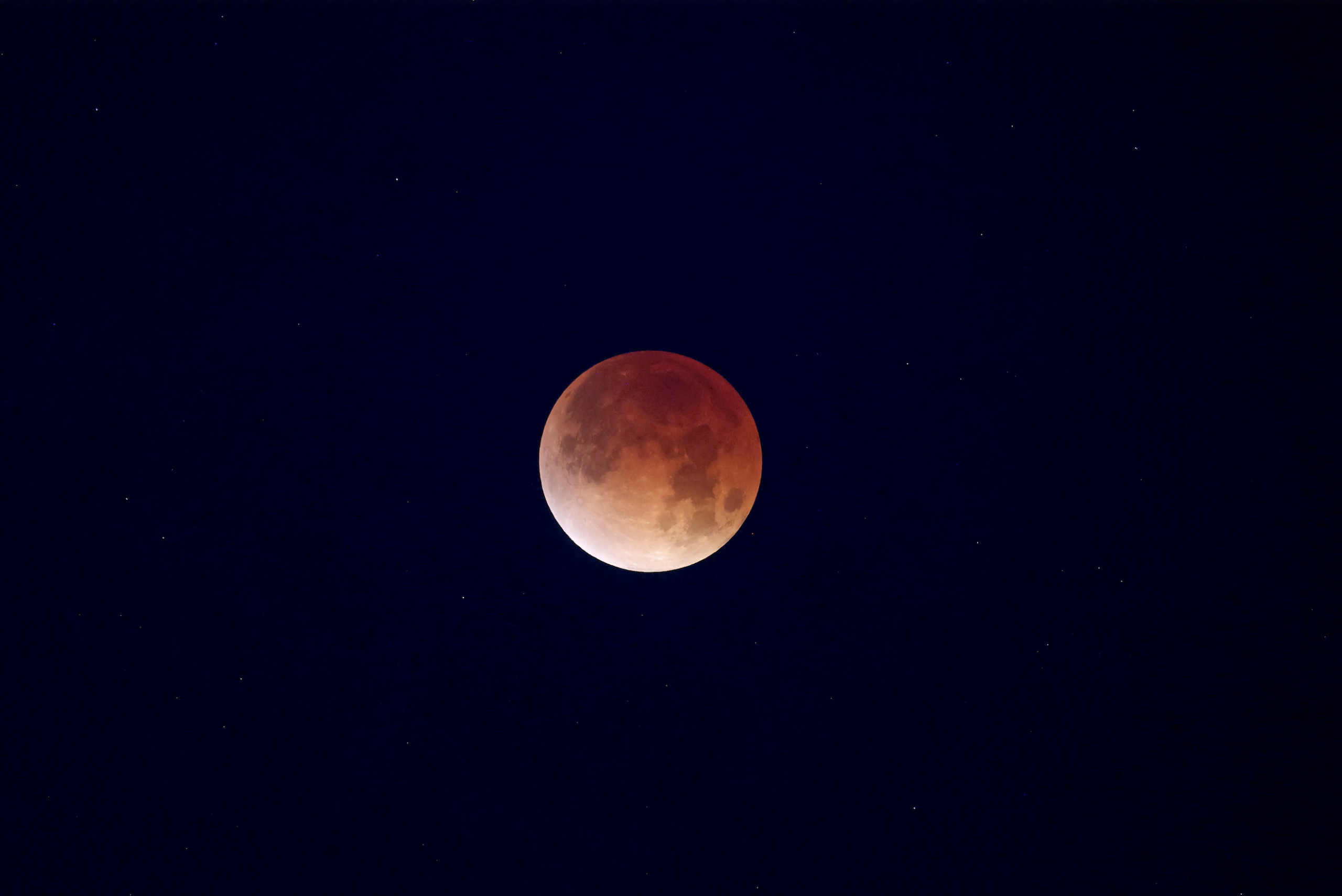
East Lansing residents will have a chance to watch the moon slip deep into Earth’s shadow Thursday night, turning much of the lunar surface a reddish hue during a nearly total lunar eclipse.
Bob Victor, astronomer emeritus of the Michigan State University Abrams Planetarium, reached out to East Lansing Info about the coming celestial event.
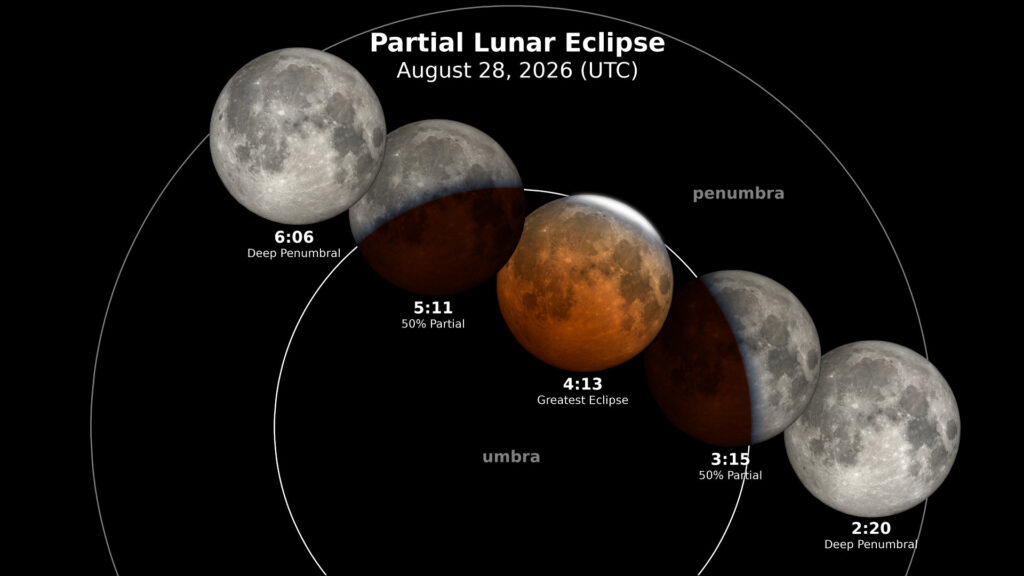
On Thursday evening the full moon will rise shortly before sunset, Victor said. Later that night, at 10:33 p.m., the moon will enter the “dark, central core of Earth’s shadow” and the partial lunar eclipse will begin.
For the next 100 minutes, he said, the moon will become immersed and a circular outline of the edge of Earth’s shadow will become apparent. During the eclipse, the moon is expected to take on a reddish color.
“When enough of the moon’s disk is immersed in deep shadow,” Victor said, “reddish colors typically become noticeable, from sunlight which has been reddened by its passage through Earth’s atmosphere, and refracted into the shadow, on its way from the Sun to the moon.”
The astronomer said 93% of the moon’s diameter will be covered by 12:13 a.m. Friday.
“With the moon mostly in shadow,” he said, “the Milky Way should be visible, passing from Perseus low in northeast, upward through Cassiopeia, Cepheus, the neck of Cygnus the Swan within the Summer Triangle of Vega, Deneb, and Altair just west of overhead, down toward the steaming Sagittarius Teapot about to set in the southwest. It’ll be worth arranging to be in a dark place for this nearly total lunar eclipse, just to experience the full impression of how much darker the sky will get with the reduction in moonlight.”
Victor said that even in East Lansing, with its urban light pollution, sky viewers should be able to see the heavenly light show. He said Harrison Meadows Park would be a perfect viewing spot, far enough from most streetlights.
Victor began working at the MSU Planetarium in 1967, and despite being retired for 27 years, he has kept his eyes on the sky and his heart in East Lansing. The 87-year-old lives in California, but he takes Amtrak back to Michigan each year and even prepares monthly sky calendars for the planetarium to distribute to visitors and sky enthusiasts.
The retiree said there are at least two eclipses of the moon each year, but often the moon won’t encounter the dark central core of Earth’s shadow — in other words, it won’t be completely eclipsed. He said the next three or four eclipses after this week’s will only have the moon traveling through the outer shadow of its planet, resulting in less of the satellite being obscured.
In a phone conversation, Victor recounted how childhood experiences sparked a lifelong passion for the night sky.
“I had a sixth-grade teacher who led us to create a mural of the solar system,” he said, “and a wonderful school library that had books that helped me find my way around the sky. And that’s how I got really hooked. One of the books was from 1907 and was called The Friendly Stars by Martha Evans Martin.
“Why look at the sky? It’s beautiful, a part of nature and the environment and human history, and a source of inspiration. It’s kept me going for 75 years since I started looking closely.”
Victor said the next total lunar eclipse visible in the eastern United States will occur on the evening of June 25, 2029.