

MSU Student Clinic to Help Homeless Pet Owners Keep Animals Healthy
Eighty veterinary medicine graduate students from Michigan State University will set up tents at Lansing’s Reutter Park later this month, offering their services and burgeoning expertise to pets that belong to people who are homeless or at risk of becoming homeless.
The Michigan Community Street Clinic hosts these outreach days twice a year under the guidance of licensed local veterinarians. Two members of the group’s executive board spoke with East Lansing Info about the work.
Isabelle Bembas and Danielle Henry are both third-year students in MSU’s College of Veterinary Medicine and senior officers in the student group.
“I think what initially drew me to the street clinic was the mission of providing veterinary care for people or pets who may otherwise have difficulty accessing it,” Bembas said. “I value the idea of vet med [and] that it can extend beyond the walls of a traditional clinic and actually serve the community instead. I just love the hands-on experience that we can get.”
Henry was in a service-based organization while she completed her undergraduate degree in Texas and was excited to have another opportunity to give back.
“I’m from a middle-class family, but I always think that when I do serve the underserved community, that it really helps me reflect on, you know, the things that I have that I take for granted,” she said.
The Michigan Community Street Clinic partners with Homeless Angels in Lansing, which spreads the word about upcoming clinics.
Bembas said that on a typical clinic day, 80 MSU vet students volunteer to see just over 100 pets. The students work in teams, with separate areas for cats and dogs. The upcoming clinic will be held Sept. 27.
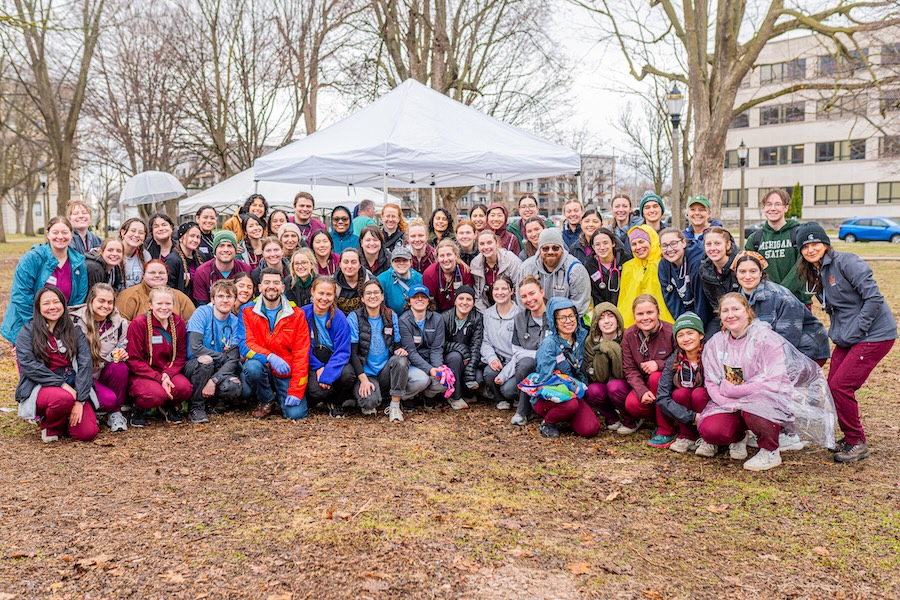
Clients start lining up to be seen before the students even have a chance to set up.
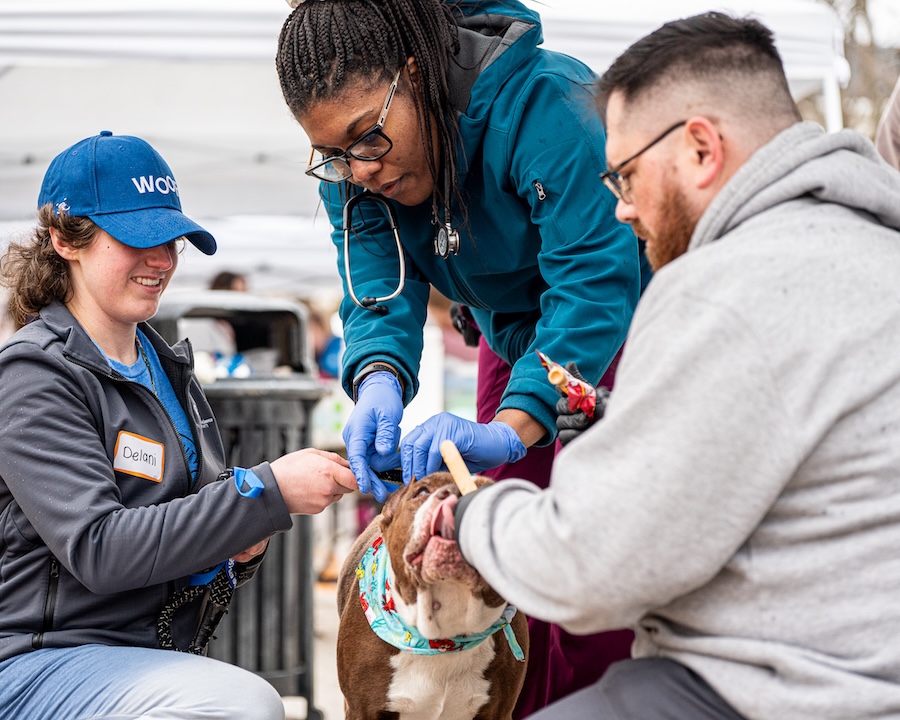
“There’s a doctor overseeing each team,” Henry said. “Students will perform physical exams and do the documenting on what’s going on and [will] make sure that they get all the vaccines that they need to stay up-to-date.”
She said pets are provided six months of heartworm, flea and tick prevention medication after they’re seen, in addition to being checked for skin and ear infections and getting microchipped if they aren’t already. The students also provide routine vaccinations, including those for rabies and leptospirosis.
“We are pretty limited in what we can offer,” Bembas said, “because we don’t have a lot of diagnostic ability. But we do try our best to do all we can do, but it’s mostly just preventative care.”
She said she feels these clients are often more grateful than pet owners she sees in brick-and-mortar clinics and that the connections feel more genuine.

Henry said that because the clients are unhoused or at risk of becoming unhoused, they may be worried about keeping their animals.
“They don’t want to take them to a shelter and get rid of them, or give them to somebody else,” she said. “They really value that human-animal bond and they’re doing the best that they can to provide. Without the services that we provide, they would most likely not get any veterinary care.”
Clients can also get supplies like cat litter, food and winter clothes for their pets. Simple grooming opportunities like sanitary shaves and nail trims are also available for the animals.
The clinics cost money to run, and the group receives supply donations and a few grants from veterinary companies such as Banfield. The students have set up donation bins at vet clinics, businesses and dog boarding operations throughout the area.
The Michigan Community Street Clinic will run Sunday, Sept. 27, at Reutter Park, 400 S. Capitol Ave. in Lansing. Those with questions or who wish to make a donation can reach the group at msu.mcsc@gmail.com.