
National Politics Are Driving Anti-Muslim Hate in East Lansing, Islamic Center Leaders Say
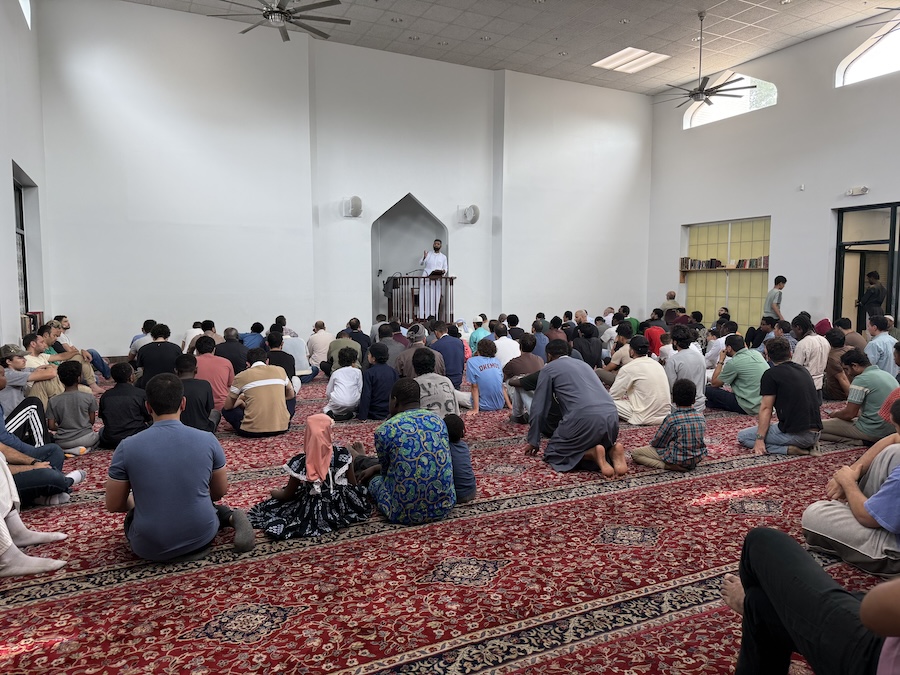
Men and boys slip off their shoes and tuck them into cubbies as they file into the East Lansing Islamic Center on Aug. 14. They form uneven rows facing the front of the room, where Imam Sohail Chaudhry, dressed in a crisp white religious garment, warns the congregation about rising Islamophobia, a trend he fears will intensify as November’s midterm elections draw closer.
“I want all of us to get ready,” Chaudhry said. “We are going to be targeted in the next few months even more, until this election is over, and the next … presidential election.”
Since Abdul El-Sayed narrowly won Michigan’s Democratic Senate primary election on Aug. 4, anti-Muslim hate online has been rampant. A study conducted by the Center for the Study of Organized Hate spent eight months tracking Islamophobic posts directed towards El-Sayed, and found a surge in anti-Muslim posts targeting El-Sayed and a general increase in anti-Muslim sentiments shared on social media in the days following his primary victory. El-Sayed is seeking to become the first Muslim to serve in the U.S. Senate.
The increase can be seen locally. East Lansing Islamic Center Trustee Thasin Sardar said hate comments written under posts made by the center’s social media pages have jumped from roughly one per month to between 12 and 20 daily since the August primary election. Hidden comments under the center’s posts include threats like “death to Muslims,” and people calling Muslims “demonic subhumans.”
Pervasive anti-Muslim hate and Islamophobia trickle down from elected leaders, including the president, senators and congressional candidates, Sardar said, adding that politicians are “having a field day” attacking Muslims.
“They should be reaching out to us as constituents and earn our support, but sadly they seem to be going in the other direction and feeding into this Islamophobia,” Sardar said.
In April, the Center for the Study of Organized Hate published a report detailing how a social media post from Texas Governor Greg Abbott served as a catalyst to an online surge in anti-Muslim bigotry. Sardar noted that this brand of hostility has steadily risen as El-Sayed gained traction and won his primary election, leaving many politicians and elected officials who weaponize Islamophobia rattled over losing control.
More recently, Robert Reminga, a trustee for West Michigan’s Plainfield Township, faced intense backlash after he allegedly made a comment on Facebook depicting a Muslim hunting permit last week. While Reminga denied creating the post, Sardar emphasized that it places a direct target on the backs of Muslims.
Despite the vitriol, quite a few people have reached out within the last week to extend their support, inquire about literature, or ask questions directly, Sardar said. To foster this engagement, the Islamic Center of East Lansing hosts an Islam 101 class once a month, where anyone wanting to learn about the religion or ask general questions is encouraged to attend.
Even with the escalating rhetoric, Chaudhry ended his sermon by emphasizing that Muslims should not hide. Instead, they should actively help combat the misinformation circulating on social media and educate the public on the true teachings of Islam.
“Even those people who hate us, they are not bad people, they’re being fed bad information … If we were in their place, and we were fed that garbage that they’re fed on television everyday about Islam and the Muslims, we probably would also think the same,” he said.
A sentence was added to this story post-publication.