
National Weather Service Says Saturday’s Storm was Largest in a Year; City Offers Flood Prevention Advice
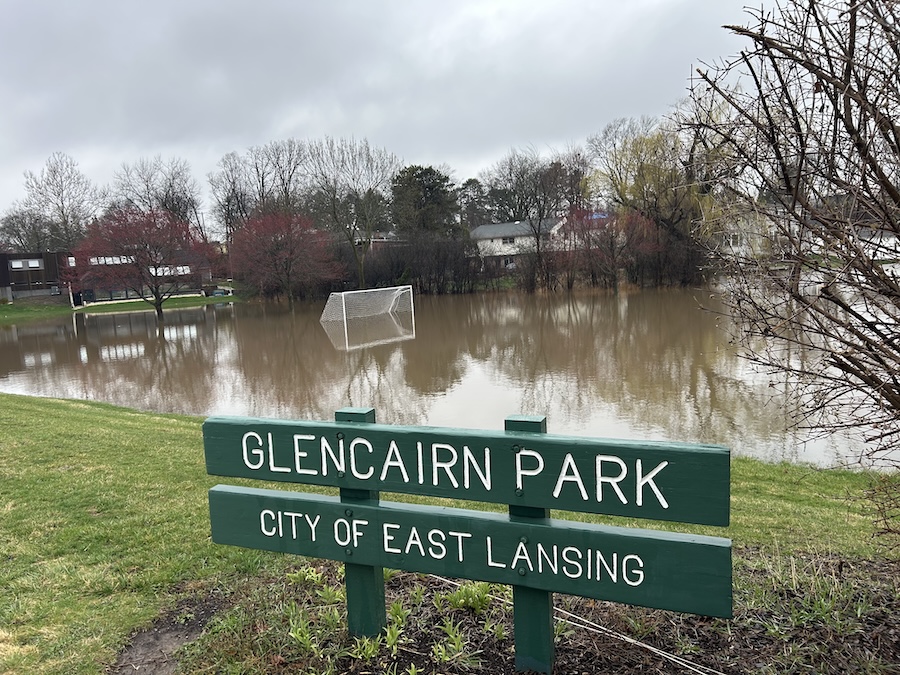
The Lansing area saw its highest level of daily rainfall in about a year on Saturday when a storm brought widespread street and basement flooding to East Lansing.
The 1.87 inches that fell Saturday was the most since 2.22 inches on April 2, 2025, according to Walt Felver, meteorologist with the Grand Rapids National Weather Service station.
In terms of daily rainfall, Saturday’s storm was the eighth largest in the last five years and 14th largest over the last decade, according to the rain gauge at the Capital Region International Airport in Lansing, Felver said.
At Tuesday’s East Lansing City Council meeting, City Manager Robert Belleman said rainfall totals measured in East Lansing were even higher than at the Lansing airport, and that the city’s infrastructure was overwhelmed.
“Saturday’s storm exceeded what our system was built for,” Belleman said. “At the city’s water resource recovery facility rain gauge, we recorded 3.34 inches of rain, including roughly 1.73 inches in a single hour between 4 and 5 a.m.”
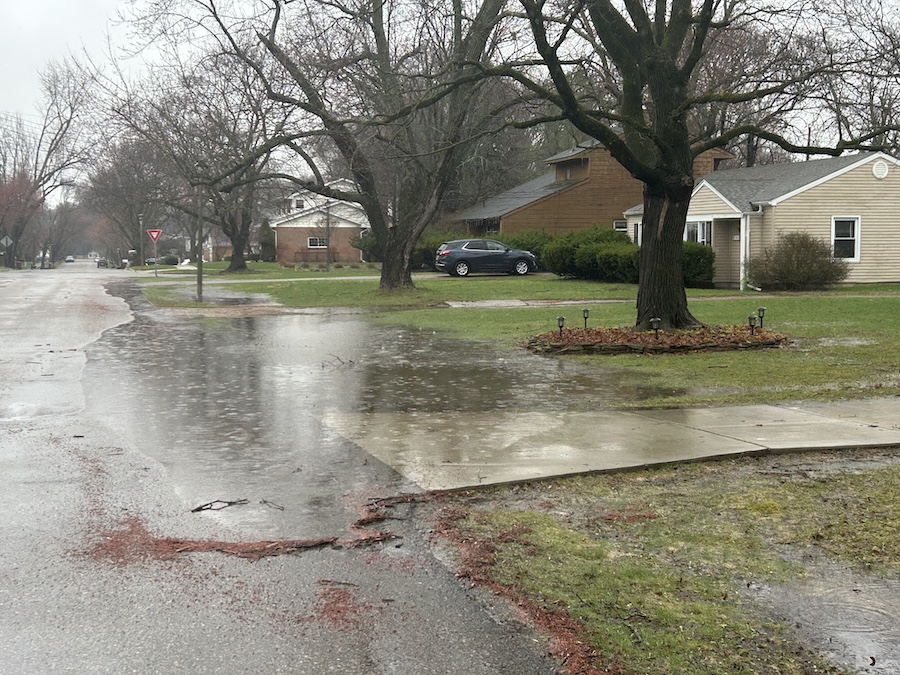
Belleman added that high water levels at the Red Cedar and Looking Glass rivers limited the city’s ability to discharge water, which led to street and basement flooding.
Flooding issues this past weekend were not an isolated incident, Belleman acknowledged. He said longterm data shows the city receives about 30% more rainfall each year than it did 75 years ago due to climate change.
“The weather our infrastructure is designed for is not the weather we’re experiencing today,” he said. “Some areas of the city see recurring flooding and we are identifying these locations and will be evaluating solutions.”
Widespread basement flooding has become common in East Lansing over the last several years. Some residents have told East Lansing Info that their homes with no flood history before 2021 have now had multiple incidents of stormwater coming through floor drains, raising concerns about the city’s infrastructure.
At Tuesday’s meeting, Whitehills Neighborhood resident Katherine Daugherty said the area she has lived in for 35 years did not have flooding issues until recent years. Since August 2021, there have been five instances of severe flooding, sometimes even leaving cars submerged, she said.
“I read the statistics about these new, recent very heavy downpours and I agree,” she said. “But after 35 years, for all this to happen in the last four years, we feel something’s changed.”
The city recently added a page to its website to give advice about best practices to reduce the risk of flooding.
The webpage recommends homeowners ensure that gutters and downspouts are not clogged by debris, and downspouts extended to bring water at least 4 to 6 feet away from a home. If downspouts are not extended far enough from a home’s foundation, it could lead to basement flooding.
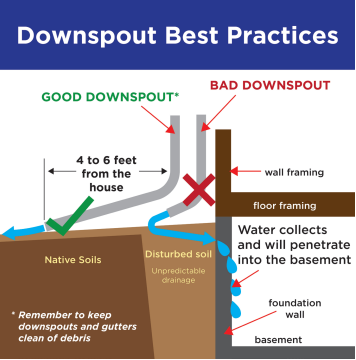
The webpage also recommends residents be careful that their landscaping does not contribute to basement flooding. The ground should be sloped away from homes, and homeowners should ensure that garden beds, patios and other hardscapes do not direct water toward homes.
The city is hoping a Wet Weather Resiliency Plan it has spent years developing will identify ways to reduce flooding.
Community feedback and a flood model developed as part of the plan identified and prioritized 58 areas of concern in the city. The ranking took into consideration the number of buildings flooded, the depth of water in roadways, the risk for combined sewer backup, and the proximity to the city’s police and fire stations.
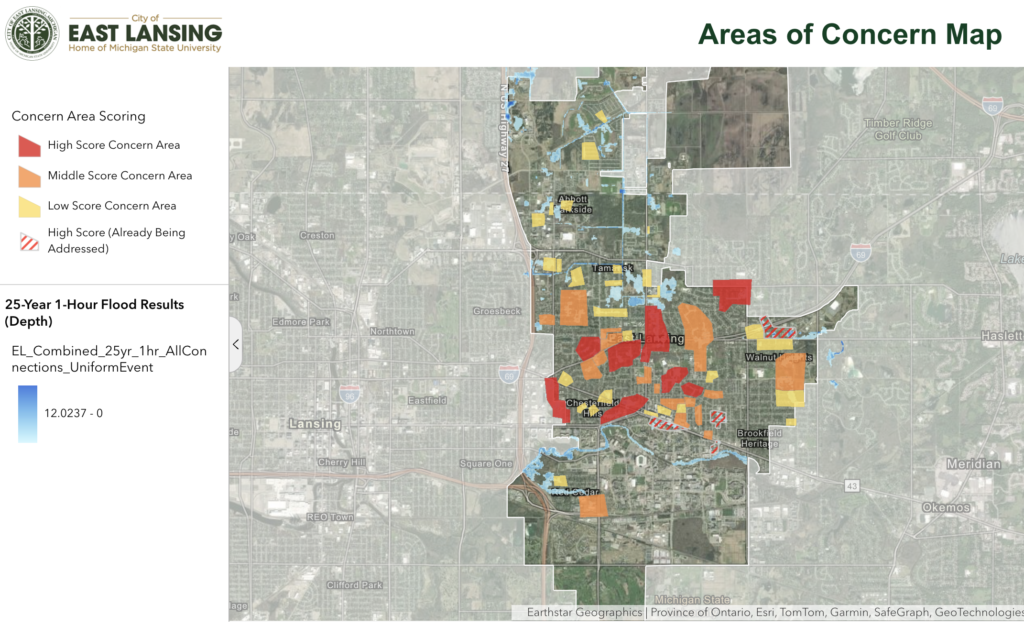
The city is collecting feedback from residents about flooding as part of the study. Initially, the deadline for feedback to be submitted was Sunday, but after the latest storm the city decided to continue to accept comments.
While identifying infrastructure improvements is a step towards reducing flooding, addressing the root of the problem will take time and money.
“The larger infrastructure problem is very expensive to fix, it’s probably in the order of hundreds of millions of dollars,” Mayor Erik Altmann said at Tuesday’s meeting. “So, there’s a range of different things that we need to keep an eye on.”
Previously, city officials floated the idea of having residents pay a stormwater utility to pay for infrastructure improvements.