
Promoting Sustainability at the Library and Beyond
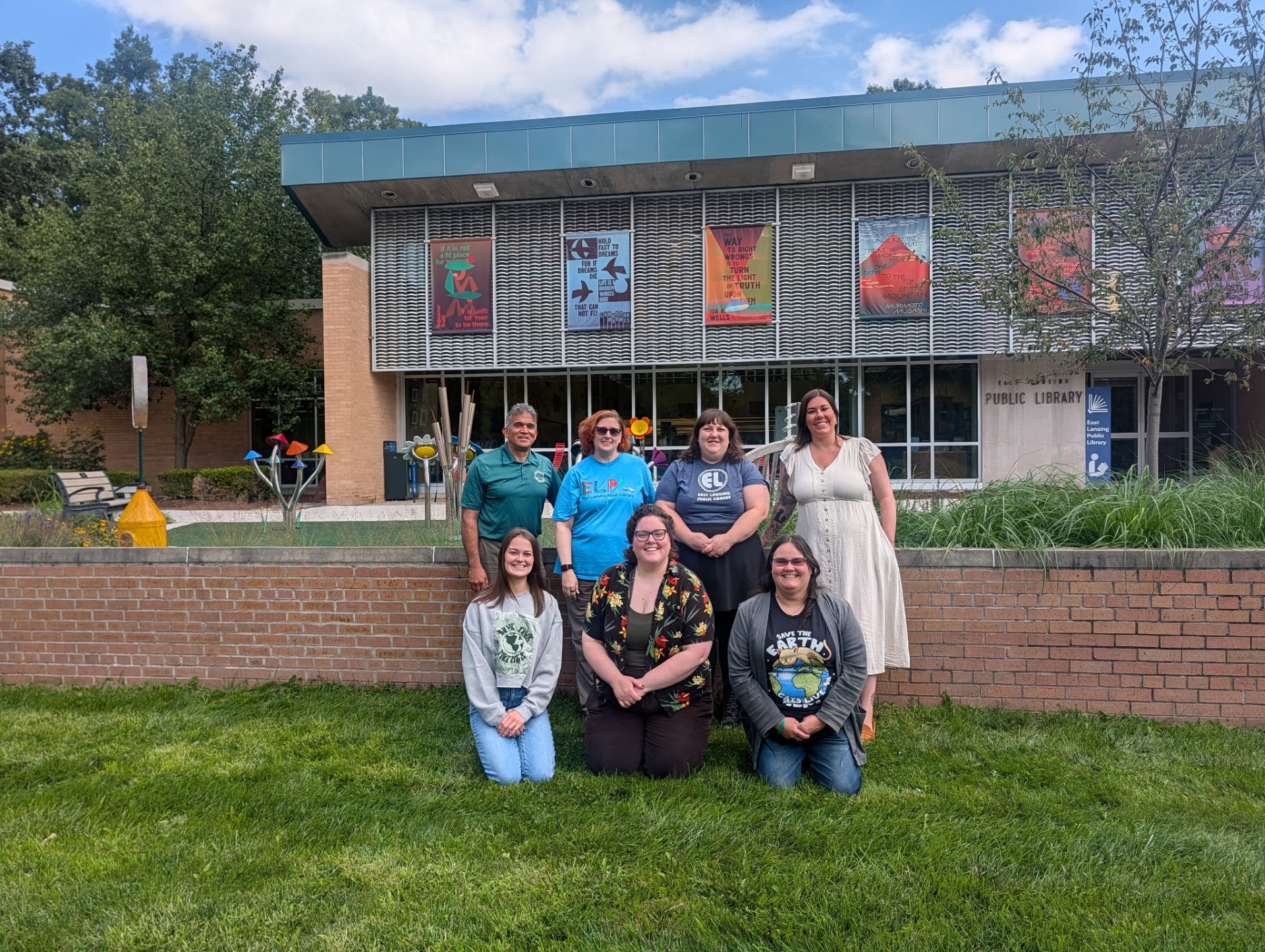
Through a series of initiatives that promote practices like restoring old clothes and healthy recycling habits, the East Lansing Public Library, or ELPL, is working towards a prestigious environmental certification from the Sustainable Libraries Initiative. The ELPL is one of only three Michigan libraries going through the certification process.
“It is really important for libraries to think about sustainability in order to remain relevant [and] serve our communities,” said Mindy Rietkerk, the ELPL adult services librarian. She added that the library is seeing the effects of climate change in the community through poor air quality and extreme temperatures.
“If libraries can position themselves as a place for credible information, resources and programs that help [to] address some community issues, that’s going to help keep its relevance moving forward,” Rietkerk said.
Since beginning its pursuit of the certification over a year ago, library staff have completed about 75% of the required tasks outlined by the program. Along the way, new programs have emerged that promote reduced consumption, stronger community partnerships and higher staff engagement.
To guide these efforts, a committee made up of librarians from each ELPL department identified practices the ELPL has already implemented that fit the triple bottom line model. This framework encompasses environmental stewardship, economic feasibility and social equity.
Some of these practices include an empathy and equity box – a community pantry where food, hygiene and school materials are donated to those in need. The building also features a biophilic design, which uses natural elements to help people feel connected to nature. Other green features include LED lighting, multi-use staff equipment and bathroom faucets that power themselves and recharge their own batteries.
Fostering community partnerships is another major focus. These partnerships allow staff to identify what services are currently offered and brainstorm new ideas, such as the clothing repair-a-thon held in February, where participants learned how to mend clothing.
The library also expanded its quarterly community swaps, where people exchange items rather than buying new ones. Past events have included clothing, craft and plant and seed swaps.
“I think people really get into it because they’re like, ‘my stuff can have a new second life with someone who’s going to appreciate it,’” Rietkerk said.
The certification process also included offering free, fresh produce to library staff and community members. Through a partnership with the Michigan State University Student Organic Farm, library staff volunteer on the farm weekly in exchange for a share of the harvest. The fresh produce is placed near the entryway and is usually gone within a matter of hours, Rietkerk said.
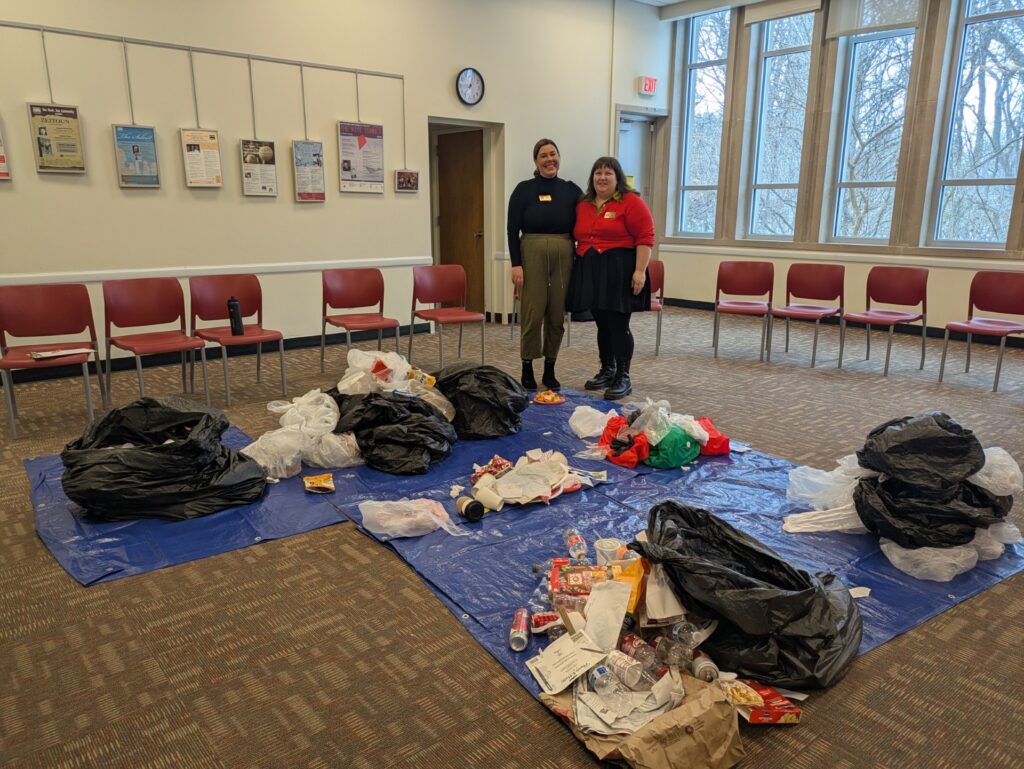
The journey has also brought some eye-opening challenges. Last winter, Rietkerk and Elizabeth Kish, the ELPL experience team leader, sorted through three days worth of trash to see what was accidentally being thrown away instead of recycled.
“What came out of that is a whole can of worms,” Rietkerk said. “You would think recycling would be an easy issue to tackle, but it’s been a through-line throughout this whole journey.” She noted that people still struggle with knowing what can and cannot be recycled, which means more public education is needed.
ELPL staff members added that garnering staff buy-in has remained a priority throughout the process, which has helped the library culture.
“What this process really is, is a cultural overhaul of the way that we make decisions,” Rietkerk said. “Change is hard for people – even if it’s a good change, people can be resistant to it. So, it’s been helpful to incorporate some of the staff wellness aspects.”
The cost of implementing these changes has been very low, according to Rietkerk. A small grant from the Friends of the East Lansing Library helped purchase workshop supplies and plants for staff members who do not sit next to windows.
Larger projects, like upcoming roof repairs and the now completed musical garden, were already built into the library’s budget.
While much progress has been made, a few higher-level tasks remain. Collecting data on the library’s energy use from the past two years and calculating the driving distances of employees and patrons are just a few of the remaining tasks.
The committee hopes to complete the certification by the end of the year, but their goals go far beyond a piece of paper.
“It’s really looking at the longevity of the organization as a whole,” Rietkerk said. “It’s just this holistic view that I really love to see percolate and spread among other types of organizations.”