
Ask ELi: Why Is My Sidewalk Being Replaced?
Earlier this year, East Lansing Info reported on the City of East Lansing’s Hazardous Sidewalk Program, an initiative launched in 2001 to replace damaged sections of sidewalk.
Under the program, the city repairs sidewalks in different sections of the city each year. The city absorbs the cost if the damage is caused by a city-owned tree or a city project, otherwise homeowners foot the bill of sidewalk repairs adjacent to their property.
In June, East Lansing began replacing about 22,000 square feet of concrete sidewalk, driveways and drive approaches on Virginia Avenue, Lexington Avenue, Snyder Road and Beech Street, according to a press release.
Todd Berlinski, a homeowner on Virginia Street, reached out to East Lansing Info in June as the city’s Department of Public Works worked on the project on his block.
“I’ve lived at my home … for approximately 29 years,” he said in his initial email. “I’ve found myself in an unfortunate predicament where the city wants me to pay for the replacement of the sidewalk in front of my house that they consider ‘hazardous.’ The sidewalk is in perfectly functional condition.”
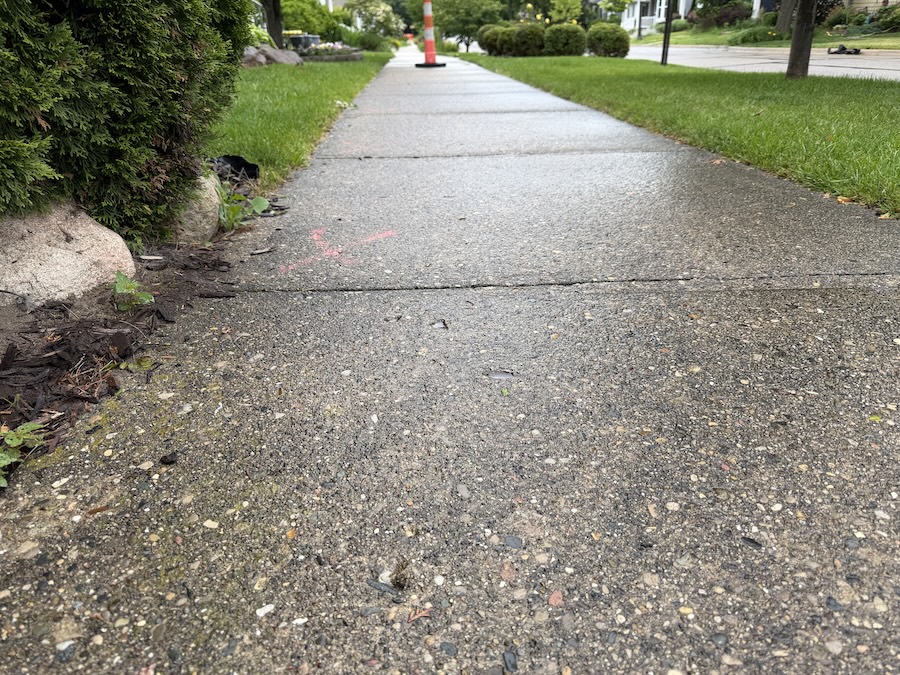
He said that on Monday, June 15, DPW workers began cutting the sidewalk in front of his home. Berlinski convinced them to stop and return later in the week so he would have time to speak with DPW Director Ron Lacasse about the situation.
Berlinski received a letter from the city in November 2025 informing him that “190 square feet of 4-inch-thick … deteriorated sidewalk” next to his home needed to be replaced.
The cost will not exceed $2,155.
The letter gave him two options: hire his own workers to complete the job before July 17, 2026, or have the city’s workers do it.
Berlinski, however, did not believe there was anything wrong with his sidewalk. In an email to DPW Project Engineer Joseph Callahan in January, Berlinski said the sidewalk was “in perfectly fine condition with no water retention, uneven slabs, cracks or tripping hazards.”
In subsequent emails, Callahan informed Berlinski that he could appeal the decision at the March 17 City Council meeting. Berlinski missed that meeting because of a previously planned out-of-state flight, but he continued asking DPW staff and City Council members he copied on the emails to come to his home and inspect the sidewalk themselves.
Berlinski also missed two February dates to meet with DPW staff during “Administrative Review” sessions of the sidewalk replacement plans, which were open to all homeowners who received notice about their sidewalk.
When Berlinski reached out to Lacasse in June after workers arrived to replace the sidewalk, he was informed that the director was on vacation that week. Lacasse has not responded to multiple emails from ELi asking about the specific reasoning behind this replacement.
DPW Engineering Administrator Stephen Clayton did respond to ELi, however, saying that surface erosion is one of the criteria used to determine whether a sidewalk should be replaced.
“[It] can seem strict to able-bodied people but is based on feedback from those in the community that walk with canes or other impairments,” he said.
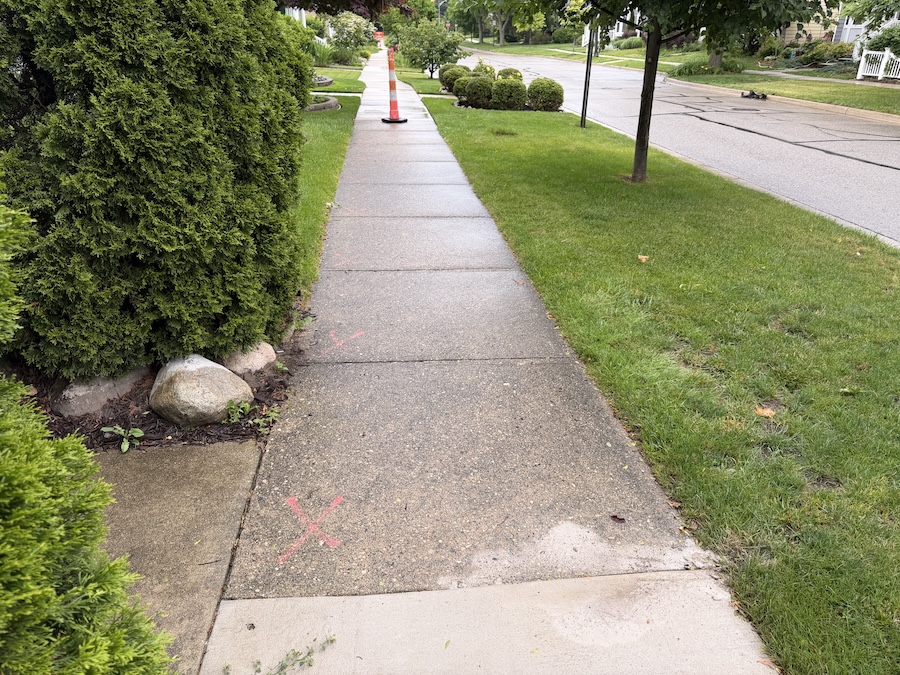
While Clayton did not specifically say whether Berlinski’s sidewalk had been affected by surface erosion, it was the example he cited from the policy.
DPW workers returned on Thursday, June 18 to remove the sidewalk and start replacement.
Berlinski said he has not received an official bill yet and isn’t sure what he’ll do when it comes.
“I honestly feel like I’m being robbed by the city,” he said. “To me, this was not subjective. It was clearly cut and dry. The sidewalk did not need to be replaced and was not hazardous. Forcing me to pay for it feels like a crime.”