
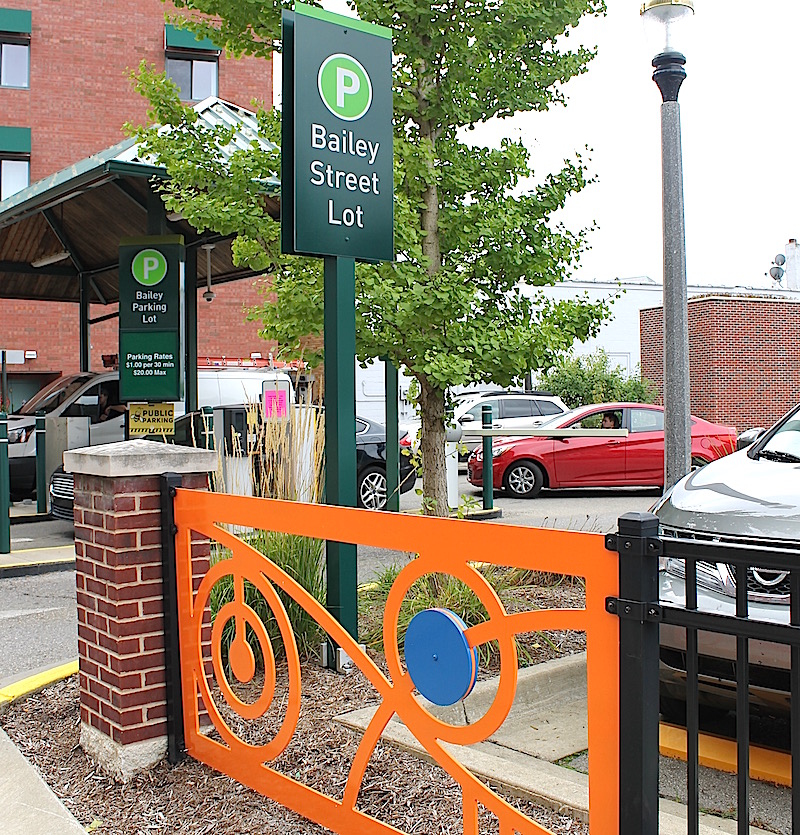
Bailey Street Lot Reaches a Crossroads After Development Defeat
Another proposal to build an apartment where the Bailey Street surface parking lot sits was voted down by the City Council earlier this month.
Bob Metzger represented the Fabian and Metzger families, who own the property, at City Council and commission meetings. He spoke with East Lansing Info about the recent council vote and the future of the parking lot after announcing at the same meeting that the family would be ending its partnership with the City of East Lansing, which means most of the public parking will be lost.
“They literally ambushed us,” he said. “I’m really sad to say that we have not been approached by anybody from the city or anybody from City Council with any ideas or even any follow-up about why they blindsided us like they did.
“I think that East Lansing has always had a difficult reputation in regard to ease of development, and I think that this, you know, exacerbates, or, you know, I think that this strengthens that opinion among developers.”
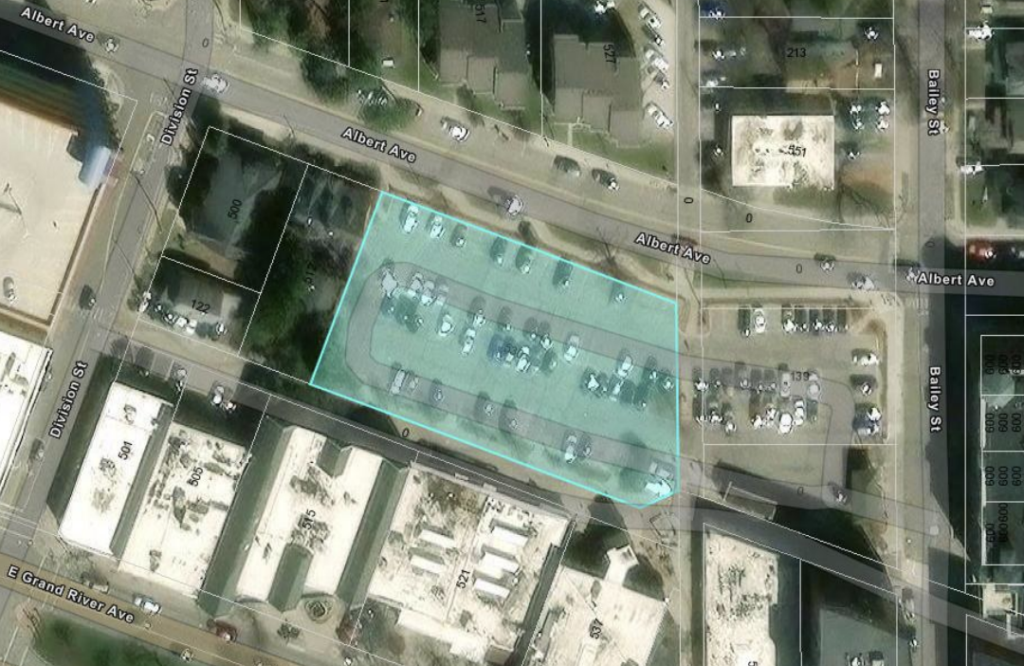
Metzger said the property was once the site of four homes owned by their grandfather, Frederick William Fabian, a professor at Michigan State University. The homes were student rentals that were inherited by his grandchildren, the Metzgers and Fabians.
In the late 1990s, he said, leaders from the City of East Lansing approached the family with a proposal to convert the property into a surface parking lot. The family went along with the idea and entered into a long-term lease with the city. During the COVID-19 pandemic, the family amended the agreement to allow six weeks free with no lease payments, he said, giving the city time to recover when no one was parking downtown.
In 2022, with the agreement between the city and the Metzger-Fabian family set to expire soon, City Manager George Lahanas and Director of Planning, Building & Development Tom Fehrenbach approached the family. The city officials said they wanted the parking lot developed, and would not negotiate a long-term lease. They urged the family to usher in a development or sell the property to a developer, Metzger said.
“Everything that we’ve done since has been to try to deliver on what the city told us was going to happen, that they were not going to renew the lease. We’ve brought them three developers,” Metzger said.
The first developer hoped to bring work force housing to the site and presented the City Council with a version of the project without parking. In a 3-2 vote, the council turned down the development.
Still, members of the council indicated the city wanted the property developed – they just didn’t think this proposal was right.
“I will say, the surface parking is going away,” then-Mayor Ron Bacon said after announcing his vote against the project.
The second developer never made it to council to present its vision.
“They didn’t like some of the messages they were getting from [city leaders],” Metzger said. “It was very confusing. They did their due diligence and decided it wasn’t something they wanted to [get involved with].”
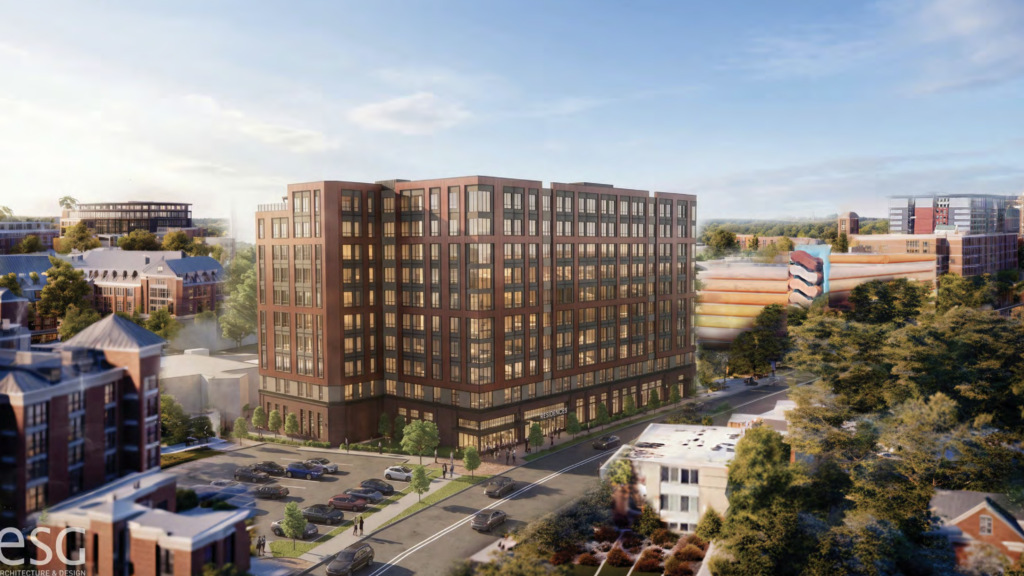
The third developer, Tareen Development Partners, or TDP, had their proposal denied by the City Council on July 21. TDP presented two plans. The first proposal was a 13-story building and two levels of public parking that would replace the spaces from the surface lot lost.
To make this project work, developers said they would need the city to either grant a tax break or lessen a requirement that 25% of units be affordable or dedicated to another purpose that diversifies the downtown housing stock, partially because the cost of building parking would carry a significant expense.
After the City Council deferred a vote on the initial proposal at a March meeting and some members balked at the idea of a tax break, TDP crafted the new smaller proposal without parking. By shrinking the project, developers avoided a height threshold that triggered the diverse housing requirement. The city’s Planning Commission unanimously voted to recommend the revised project, but multiple commissioners said they preferred the first version.
“Every person from the city staff to City Council to other community members has been so impressed by [their] inclusiveness and willingness to collaborate and answer questions,” Metzger said about TDP.
“I’m just a guy trying to sell a piece of land,” Metzger said. “When it gets down to it, the Metzger-Fabian family is just trying to sell a parcel of land and we’re being thwarted by the city that told us that we had to sell the land. It’s absurd.”
At the same meeting the TDP apartment proposal was rejected, a different developer had a 12-story apartment building approved at a nearby site off Grand River Avenue.
From the time both apartments were proposed last fall, parking was a main concern. Residents worried tenants would park in nearby neighborhoods and business owners said the loss of public parking from the second TDP proposal could cause them to lose traffic. The city’s parking department indicated it could lease a little more than 200 spaces from city garages to tenants of new developments, an amount some residents believed was not enough for potentially 1,200 new tenants.
Before the council approved the 12-story apartment, a requirement was added that developers lease more than 220 spaces from city garages for tenants to use. Metzger wondered why the city chose to devote all its available spaces to the other project.
“I don’t wanna speculate about anything that happened,” he said, “but it was unfortunate that they were on the docket right before us and got everything that they wanted, including parking that we had been proposing using for our project as well. I’m not saying that anything untoward was occurring … How one project gets approved and the project 100 yards away doesn’t get approved, I don’t quite understand.”
As for the future of the parking lot, Metzger announced during public comment that his family will be terminating the agreement with the city effective Oct. 1. The family owns 71% of the lot, while the city owns the remainder.
He said the family decided it needed to respond to demands that the property remain a parking lot.
“We felt we needed to send a message that this is not going to be a parking lot again,” he said. “Let’s take that out of the equation.”
If the Metzger-Fabian family and the city do not reach a solution, he said, the family will install concrete barriers to prevent anyone from parking on its portion of the lot.
For now, he said, the family will follow TDP’s lead in deciding its next steps. The family’s contract with the company runs for another two to three months.
Cody Dietrich, who led TDP’s effort to bring the apartment, declined to comment.