
East Lansing Accepts Federal Grant Despite Concerns Over Immigration, DEI Conditions
The East Lansing City Council voted to accept a $472,000 federal grant for security camera upgrades, despite residents’ concerns that conditions attached to the funding could undermine the city’s policies on immigration and diversity, equity and inclusion. Council members said the conditions are unenforceable.
The grant will pay for security camera upgrades, as East Lansing’s decade-old cameras are past their ideal lifespan. While the city could continue to extend their use, it presents a security risk, East Lansing IT Delivery Manager Chris King said at Tuesday’s City Council meeting. The grant funding will pay to replace the city’s 350 security cameras, providing cameras with better image quality and motion detection.
The grant comes with stipulations that recipients will not restrict employees from communicating with immigration officials, does not hold diversity, equity and inclusion programs and will comply with all presidential memoranda and executive orders.
Residents were upset because the conditions seemingly conflict with East Lansing’s sanctuary city status and employment of a DEI director. Additionally, residents chastised the council for putting the grant approval on the meeting’s consent agenda – which is usually passed without discussion – accusing them of trying to quietly push the grant through without the public noticing.
“Do not ask for immigrants to pay for city surveillance cameras with their safety,” resident Abbie Tykocki said at Tuesday’s meeting. “Don’t ask our most vulnerable residents to bear risks that you aren’t willing to bear yourselves.”
After moving the grant approval to the meeting’s business agenda, members of the City Council said accepting the grant won’t force the city to change its policies.
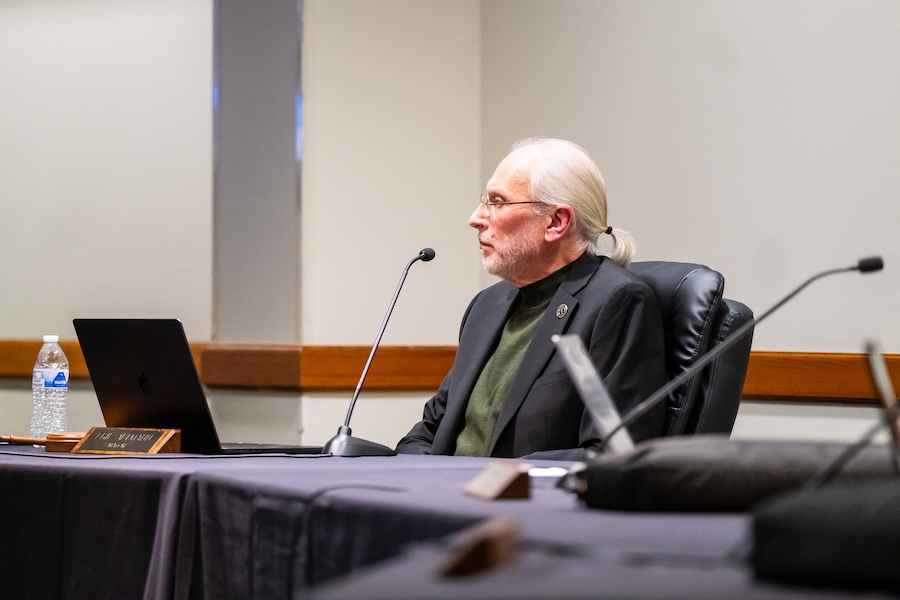
Councilmember Mark Meadows said the federal government can’t force local governments to cooperate with agencies like Immigrations and Customs Enforcement, or ICE.
After recounting the city’s history of limiting cooperation with immigration officials and reading from policies restricting assistance to criminal matters, Meadows said accepting the grant would not change how East Lansing works with federal immigration agents.
He said the federal government could move to terminate the grant or require it be repaid if conditions aren’t met, but that the city should accept the money and react if the federal government attempts to revoke the funding.
Meadows said there are limits to the conditions the federal government can attach to grants and judges have sided with cities that accepted federal grants and did not comply with similar conditions. He acknowledged that the city could incur legal expenses if the DOJ tries to revoke the grant.
“We are not abandoning any of the policies which we have established within this community that would protect the individuals that may be targeted by ICE,” Meadows said.
Mayor Erik Altmann said he is comfortable with the city’s legal position and the money is important for a city that “doesn’t have two nickels to rub together.”
“We have a $472,000 grant on the table that we can choose to accept to replace some critical infrastructure,” Altmann said. “We have some conditions that we have been briefed on that are unenforceable. I think we’re overthinking this.”
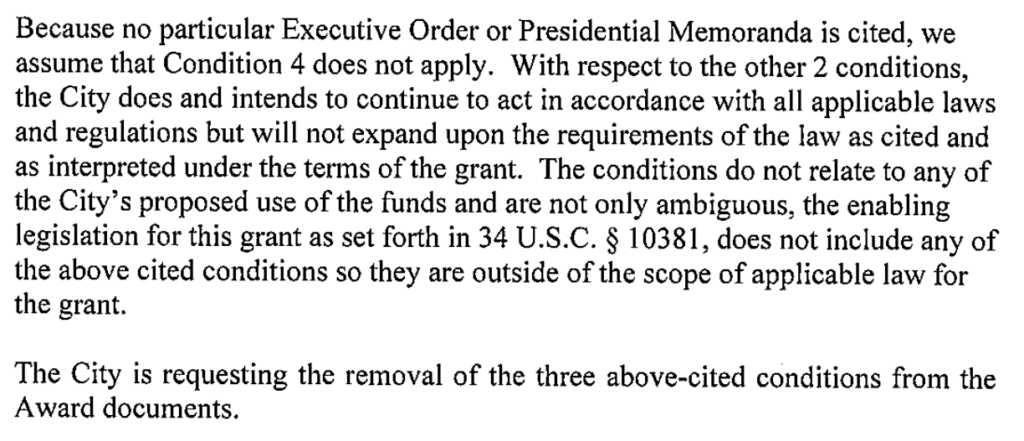
Tuesday’s council meeting agenda includes a memo from Interim City Manager Annette Irwin that asks that the conditions referencing DEI, immigration enforcement and executive orders be removed. The memo argues that the conditions are not enforceable.
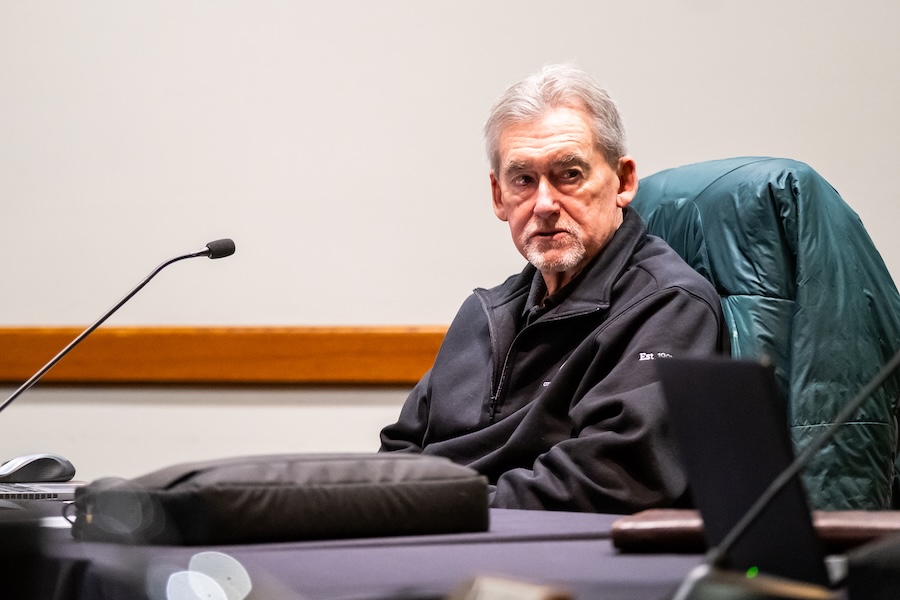
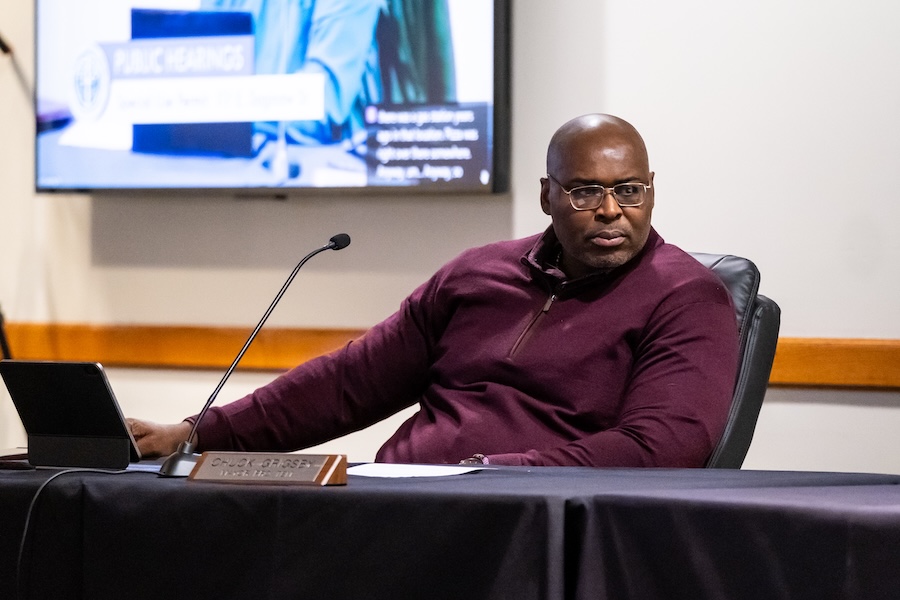
Ultimately, the council voted 3-1 in favor of accepting the grant funding. Mayor Pro Tem Chuck Grigsby was the lone vote in opposition, saying he was concerned about litigation and that he believes the city can develop a plan to phase in camera upgrades through the city budget. Councilmember Kerry Ebersole Singh was absent from the meeting.
“I think we can come together in a way where we handle this in-house,” Grigsby said.
East Lansing Grants Coordinator Erica Dziedzic said at Tuesday’s meeting that federal funding is unpredictable right now and this type of grant opportunity is hard to come by. Dziedzic also said that she “completely understands” concerns residents shared at the meeting and that she works closely with a city attorney when seeking federal funding.
Before the meeting started, the council received a barrage of emails imploring them to decline the grant, a trend that continued into public comment of the meeting, as some residents worry accepting the grant puts immigrants in the community at risk.
East Lansing Human Rights Commission Chair Karen Hoene asked the council to wait for the DOJ’s response to the city’s request to remove the conditions before accepting the grant.
“It makes absolutely no sense that you would vote on it tonight because we do not know whether or not these stipulations are going to be removed,” Hoene said.
Dziedzic later said the grant needed to be signed by Nov. 20, unless the city received an extension.
Since President Donald Trump began his second term in January of 2025, there have been questions about federal funding and East Lansing’s sanctuary city status, as Trump’s administration has worked to carry out a mass deportation campaign.
Legally, the term sanctuary city doesn’t mean anything and sanctuary municipalities have different resolutions declaring themselves as such, an MSU law professor previously told East Lansing Info. East Lansing’s resolution says “in a manner consistent with state and federal law” city officials will not collaborate with federal agents solely to enforce immigration law.
Earlier this year, the Trump administration threatened to revoke federal funds from East Lansing, which was the only Michigan city on a DOJ list of sanctuary municipalities.
In 2025, former Mayor George Brookover exchanged letters with former U.S. Attorney General Pam Bondi regarding East Lansing’s sanctuary city status.