
East Lansing Gets Good News on Pension Debt; Officials Still Plan to Push for Income Tax Renewal
A “ballpark estimate” found that East Lansing’s pension plan could be fully funded by the time the city’s income tax expires in 2030, a substantial improvement compared to other recent estimates.
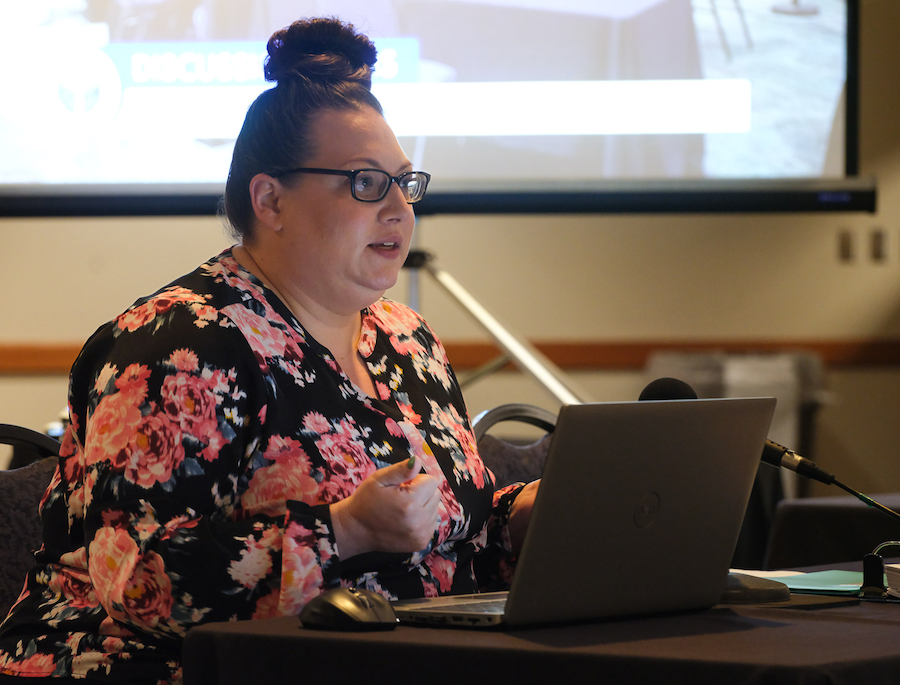
East Lansing Chief Financial Officer Audrey Kincade delivered the news at the Nov. 17 City Council meeting, placing a heavy caveat on the possibility the projection comes up short.
Members of the City Council were pleased with the news, as pension costs have long been a drag on the city’s finances. If the city is able to pay off its pension debt, it would reduce the amount that needs to be paid into the system, freeing up millions of dollars every year to be spent elsewhere.
City officials discussed the pension fund and broader outlook of East Lansing finances, as the city prepares to finance improvements to the sewer system and city facilities through bonds.
The latest projection shows an improved outlook compared to other recent estimates. Kincade said the improvement is due to factors like the city paying more than its minimum requirements into the pension plan and a surplus fund that was helped by a state grant.
Councilmember Mark Meadows said Kincade’s presentation was “kind of rosey” but that the Municipal Employees’ Retirement System of Michigan, or MERS, changes its assumptions often, factoring in things like life expectancy. MERS administers East Lansing’s pension system.
The broader financial landscape could also impact East Lansing, Meadows added, saying the city took a significant hit during the 2008 recession.
City officials are still planning to push for a renewal of the income tax before it expires in 2030. Right now, the tax is structured so 60% of the net income goes toward the pension fund, while 20% goes to public safety and 20% goes to infrastructure. The income tax is paired with a five mill reduction to property taxes and is projected to net the city more than $10 million this fiscal year.
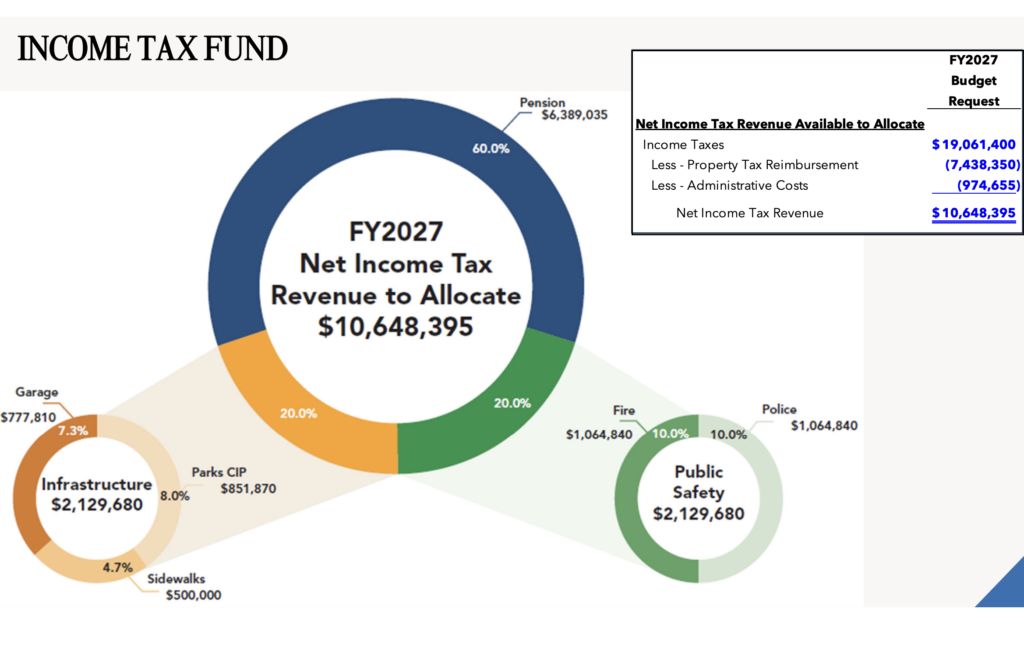
Kincade said the tax could be restructured to allow the funds currently being used to pay down the pension debt to be used more broadly. She suggested the revised income tax be used to maintain payments on pension plans, and pay for other long-term costs like retiree healthcare and debt the city takes on.
A volunteer committee that spent six months reviewing local finances recently recommended the city put a 10-year extension on the tax up for a vote before the tax expires. If the extensions is approved, the committee recommended residents vote on whether the tax is made permanent before 2040. Meadows said making the tax permanent would provide stability for the city during periods of national financial downturn.
Along with the encouraging pension projection, Kincade shared a 10-year look back on city finances that shows revenue is outpacing expenditures, with the city adding about $750,000 per year to its reserves over the last decade. Kincade’s report notes that some of the savings are due to the city delaying large infrastructure projects.
“I say this because I think that we are at a place, hopefully with all of the COVID turmoil behind us, to say that we are able to weather a storm,” she said. “And that as debt comes up and additional expenditures come up, we have some room to move on that.”
The outlook shared by Kincade is a sharp turnaround from sentiments shared about East Lansing finances in recent years.
Last year, city officials expressed concern after a projection showed that East Lansing would be bankrupt by 2030 if it did not make adjustments. The city later asked residents to allow for an increase in property taxes, a proposal that was soundly rejected at the November 2025 election.
The city’s Financial Health Review Committee found earlier this year that city finances are not dire, though the possibility the income tax is not renewed poses a significant risk. The committee found that some of the city’s budgeting practices – like anticipating that all positions will be staffed for the entire year – are leading the city to expect expenses that do not come to fruition.