
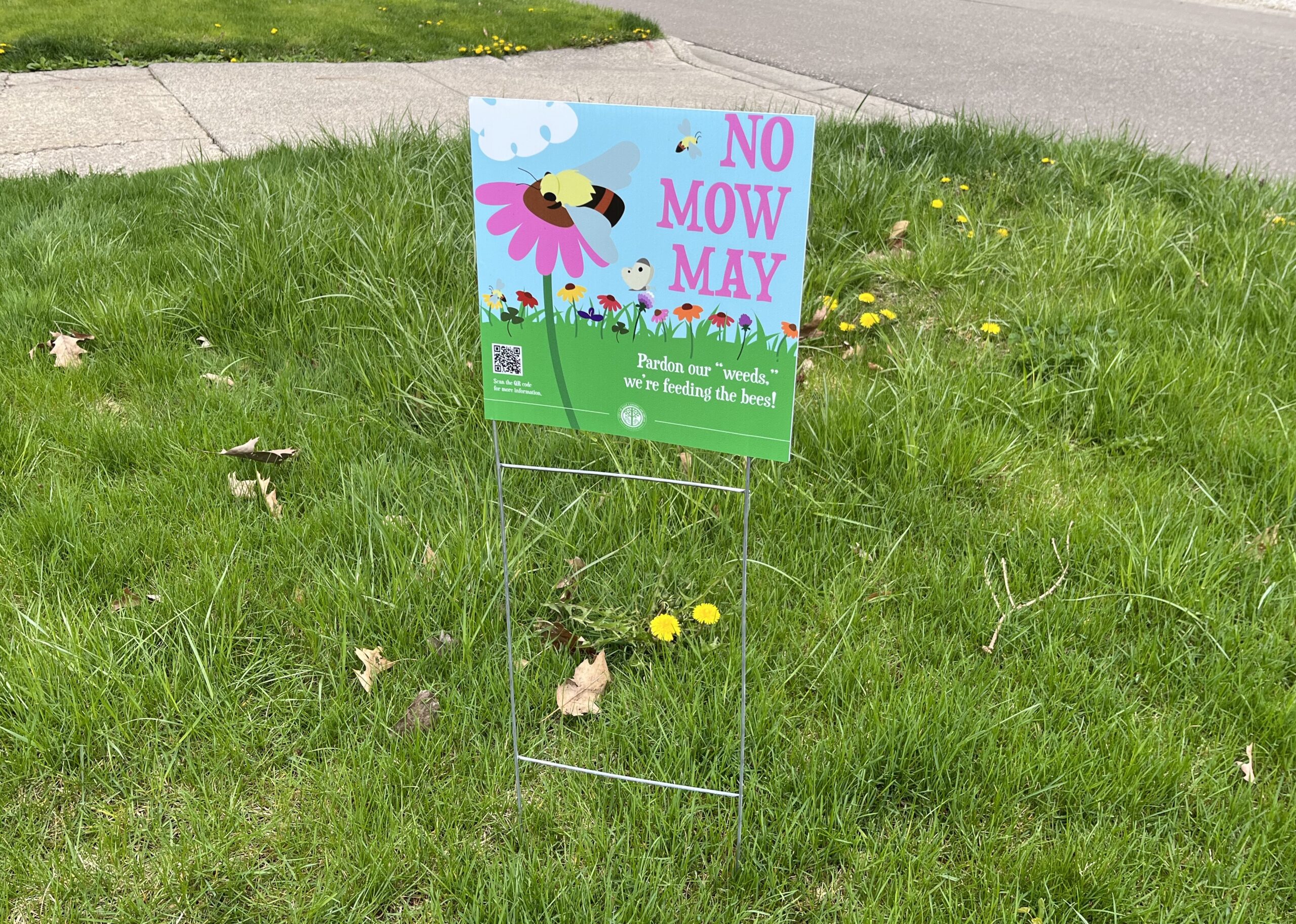
East Lansing Retires No Mow May, Will Instead Promote Native Landscapes
East Lansing will no longer promote No Mow May, a practice that for three years encouraged residents to not cut their grass until June in hopes of improving pollinator habitats. City Council voted unanimously April 7 to end the practice, instead adopting other measures that encourage maintaining native landscapes.
East Lansing Info spoke with Cliff Walls, the city’s environmental sustainability and resiliency manager, to learn about the new policy and how native plants are being promoted.

Walls said that in January, the Commission on the Environment presented and recommended modifications to what is known as the nuisance lawn ordinance, while also developing resources for property owners and city enforcement staff that explain the intent and rules behind the ordinance.
“There was also the retirement of No Mow May,” he said. “It was really important for raising awareness and getting people interested in how their decisions at their own homes can have an impact on the pollinator community. It also has a pretty moderate ecological benefit — dandelions are kind of what’s blooming at that period, so there’s moderate but still important early-season forage that they provide.”
He said there will now be clear guidance that native plants are allowed year-round, not just during the growing season. Walls said there is no longer a need for a No Mow May enforcement pause because there is now a year-round framework.
A press release sent out by the city clarifies that there are four criteria that must be met for landscaping to qualify as a native lawn area that can exceed 6 inches in height:
- The area is purposefully cultivated or intentionally managed.
- The area is clearly delimited from surrounding areas.
- The plant species are native to southern Lower Michigan.
- The area is actively maintained and not the result of neglect.
To determine if a plant is native, residents can visit the Michigan State University Native Plants Program website or the U.S. Department of Agriculture PLANTS database, according to the press release.
Walls said No Mow May received mixed reviews from residents, with some fully supportive and others believing it negatively impacted aesthetics and increased the presence of mosquitoes and ticks.
“Some rolled their eyes at it,” Walls said, “but some experts who live here had the understandable stance that it was not that meaningful in terms of ecological benefit. You’re largely talking about turf grass and dandelions.”
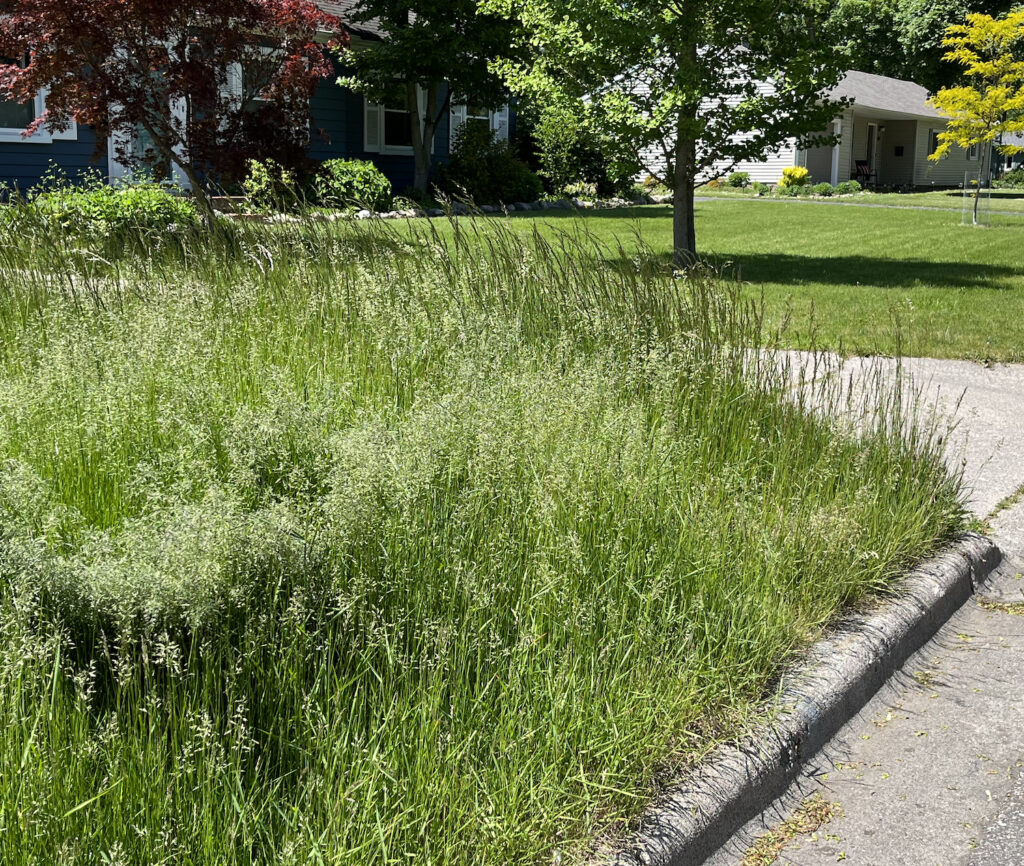
Walls said there is some momentum behind using the new policy to shape how the city maintains its green spaces.
“There’s interest in reducing mowing in areas with limited use,” he said. “If there’s an opportunity to reduce that and convert it into something more meaningful ecologically — and that also saves money and staff time — that’s a positive for everyone. So there will be forthcoming discussions about how this property maintenance standard can inform ongoing and future municipal operations.”
Residents and volunteers have already shaped some public spaces into pollinator havens.
LeRoy Harvey has led an informal group of residents who have adopted the roundabout at the intersection of Burcham and Park Lake roads, planting numerous native plants. He spent more than 17 years as Meridian’s environmental programs coordinator.
They call it the Hidden River Rain Garden.
“Native plants, gardens, community gardens, and food bring us together,” Harvey said in an email to ELi. “They’re a very social activity that supports health and well-being. They improve connections and safety. They reduce urban heat islands, clean the air, and provide access to fresh and affordable produce.”
Harvey said he consulted with master gardeners, Meridian Township, and both Ingham County and Michigan State University Extension to create the landscape, aiming to be inclusive and humble while celebrating his network of volunteers.
“[We] keep a vision alive for the unique, evolving little spot of Earth and continue to see its potential and unique features,” Harvey said.
Walls said the city’s website will add reference materials for residents who want to incorporate native plants into their homes and that he welcomes feedback from the community.
“As a staff person,” he said, “I appreciate people bringing their ideas and interests. The No Mow May initiative was very grassroots. People reached out to council, which referred it to the Commission on the Environment and parks [and rec], and then to staff. We’re seeing the long-term impact of those comments and emails. That evolved into years of public education, the No Mow May enforcement pause, and now a more durable, year-round program. It’s a good example of how public input shapes what happens here.”
The city is hosting a No Mow May retirement party at the East Lansing Public Library from 6-8 p.m. on Thursday, April 30. At that event, city staff will explain what the policy change means. Additionally, local experts will talk about native plants and give advice about how residents can grow native landscapes, a city press release said.