
Farmers Markets Offer Relief With Federal Food Assistance in Limbo
More than 40 million Americans — and about 1.4 million Michiganders — have learned that their Supplemental Nutrition Assistance Program (SNAP) funds, commonly known as food stamps, are at risk.
At different points in the last 48 hours, President Donald Trump and his administration have said that SNAP benefits would not be replenished during the federal government shutdown or only partially replenished. Today, the shutdown entered its 36th day, making it the longest federal government shutdown in U.S. history.
While it is not certain when Electronic Benefits Transfer (EBT) cards, which SNAP funds are spent through, will be next filled (partial payments have been ordered by a federal judge), funds do roll over from one month to another. If SNAP recipients still have funds in their account, they can continue to use them.
Last week, the U.S. Department of Agriculture (USDA) sent a directive to grocery stores stating they must not offer special offers or discounts to SNAP recipients during the shutdown.
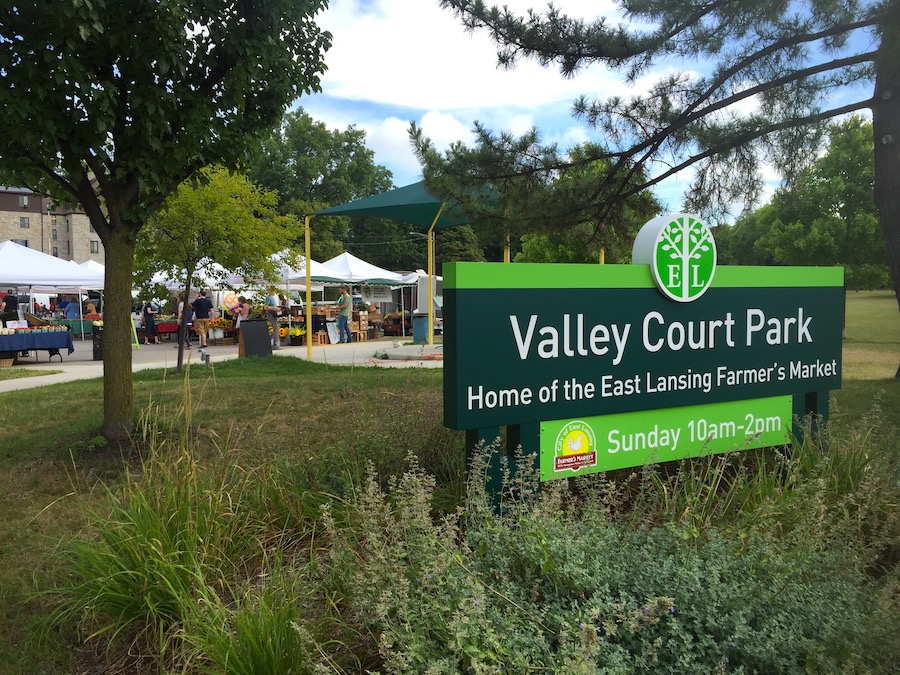
Amanda Shreve is the Executive Director of the Michigan Farmers Market Association. ELi spoke with her, learning that Michigan farmers markets support SNAP in multiple ways and exemptions for farmers markets are already in place, ensuring the USDA ban on incentive programs do not apply to them. While the East Lansing farmers market season has ended, there are still markets in Meridian Township, Holt and Lansing.
Shreve said that the COVID-19 pandemic taught everyone about how local food systems can better adapt to challenges.
“We learned it can be difficult and cumbersome and take a long time for our traditional food distribution and retail operations to shift gears in light of an emergency,” she said. “Contrary to that, our local regional food systems have much more adaptability and can more readily adapt to challenges and circumstances and get creative to be responsive to community needs.”
Shreve said that during the pandemic and again now as SNAP is threatened, she has seen farmers markets add additional days, stay open for longer hours and create opportunities to give to community members directly.
“Whether that be collecting food at their retail site to give away, collecting money to purchase food,” she said, “we’re seeing markets and farms develop their own incentive programs. We’re also seeing a lot more flexibility being brought into existing programs.”
One of those programs that has seen increased flexibility is the Double Up Food Bucks program. This farmers market initiative allows SNAP recipients to have up to $20 of their benefits matched in fruit and vegetable purchases. If a SNAP recipient chooses to use $15 at a farmers market, they really have $30 in purchasing power.
Shreve said that last week, the Fair Food Network that coordinates the Double Up Bucks program announced they would remove the $20 cap and allow SNAP recipients to use as much of their SNAP benefits as they wanted to receive the Double Up Bucks.
All SNAP recipients, whether they still have funds on their EBT cards or not, will receive an additional $40 in Double Up Bucks that can be used before the end of the year.
Colleen Armitage became the manager of the East Lansing Farmers Market in 2024. She said Double Up Bucks are very popular at her market, matching more than $1,300 during the 2025 season.
“Many times, we are the closest things to fresh fruit and veggies to many of these families,” she said, recounting that growing up, her family used food stamps for a time. “It has evolved. When I was a child, [we were given] government cheese, powdered milk…it did not include fresh veggies and fruit. The government realized people need access to this for their vitamins, their basic needs for fruits and veggies.”
A program unique to the East Lansing market is the POP Club, standing for Power of Produce. Armitage said that a $3 coupon is available weekly to anyone under the age of 18 who is part of a SNAP- holding family to be used on fresh fruits and veggies. In 2025, 913 coupons were distributed.
Shreve individuals who need direct food assistance should know they can dial 211 to find resources in their communities.