
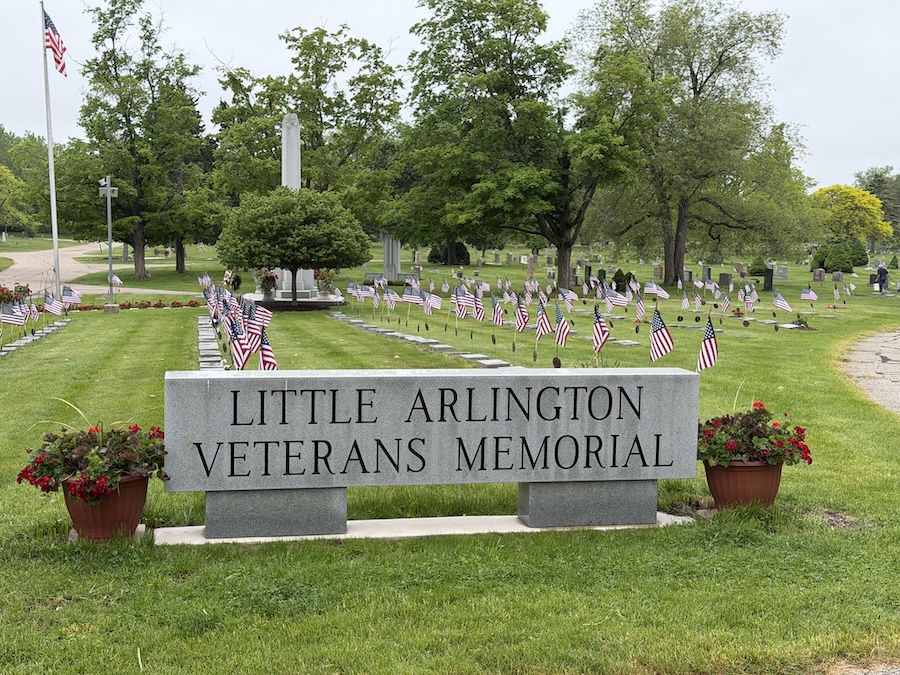
They Never Grew Old: East Lansing’s WWII Dead
In a display case at Hannah Community Center, there is an incomplete list of East Lansing men who died more than 80 years ago fighting in World War II. The people who knew them are mostly gone, and the ones that remain can no longer remember their voices.
Thirty-seven men with connections to East Lansing died during the Second World War. They fought fascism and the baseness of humanity, likely hoping to return to their communities once their duty was complete.
Two years ago on Memorial Day, East Lansing Info brought the stories of the 10 service members from our community who died in the Vietnam War, in hopes that speaking their names might inspire a stronger effort to remember their sacrifices and their stories.
In that same vein, we offer these 37 stories in varying detail and length.
Staff Sergeant Harvey Boyd Tull
Harvey Tull was born in Cambridge, Massachusetts, and lived briefly in Minnesota before his family moved to 148 Kedzie Ave. in East Lansing. He attended and graduated from East Lansing High School, playing on both the football and basketball teams. He also took classes at Michigan State College while working for Sears Roebuck.
After enlisting in October 1942, he received tank warfare training at Camps Barkley and Howze in Texas. While stationed in the South, he married Carolyn Clare of Grand Rapids in June 1943.
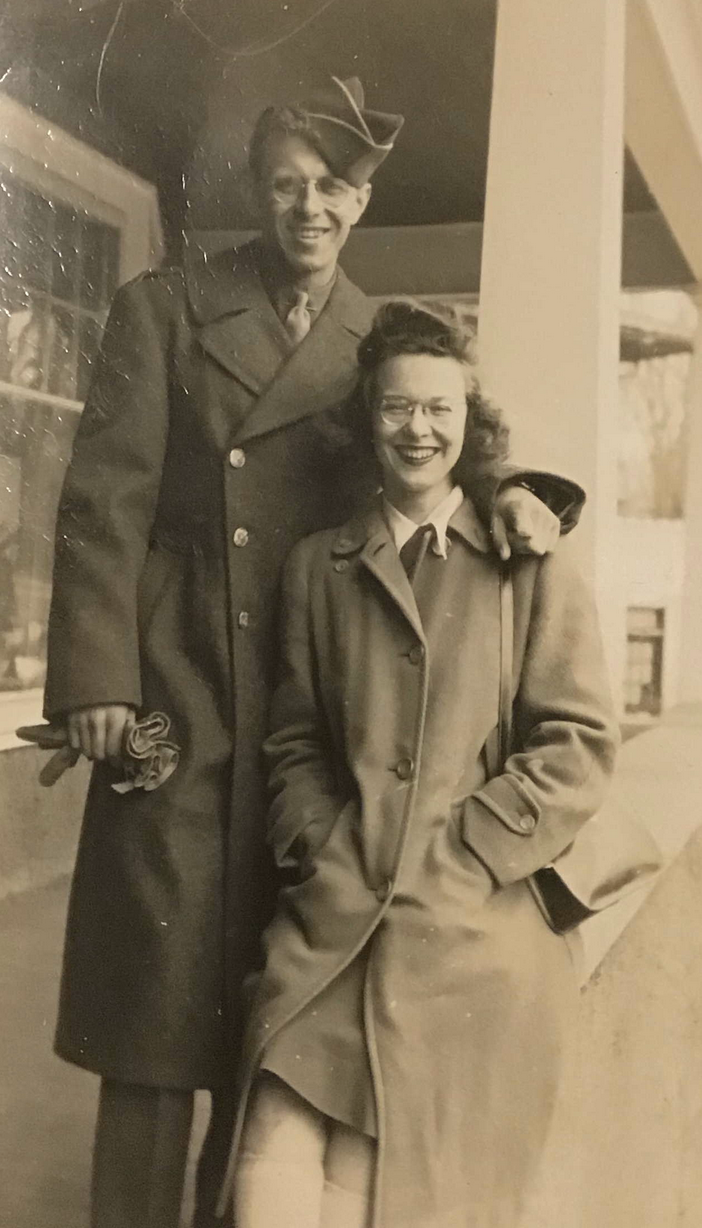
By September 1944, Harvey’s service record shows him serving overseas, eventually becoming a member of a tank battalion attached to an infantry division of the Third Army. In February 1945, he received a Bronze Star citation for his participation in the Siege of Metz.
Harvey died March 12, 1945, in Germany when his tank crashed into an embankment.
“During the assault … his tank was instrumental in the capture of a bridge across the Saar River, which greatly facilitated the American attack,” his record states.
The Lansing State Journal reported in September 1945 that Company C of Harvey’s old battalion dedicated its softball diamond at Josephthal, Czechoslovakia, as Tull Field “as tribute of the best liked and respected man in the company.”
Harvey’s body was returned to the United States in August 1948, and he was laid to rest in Evergreen Cemetery in Lansing.
Carolyn eventually remarried, but her daughter, Anne Raskey, told ELi that she remained close to the Tull family for decades after Harvey’s death.
Flight Lieutenant Arthur Jarred
Art Jarred was born in Canada but raised by Irene and Arthur at 611 Ardson Road in East Lansing. No record could be found to decisively say whether he finished high school, but his passion for flying was impossible to avoid.
In an LSJ article, Art explained that he learned to fly from Harvey M. Hughes, owner of Hughes Flying Service. He earned his private pilot’s license in 1939.
As the rest of the world marched toward war, Art was faced with a difficult decision. He told the LSJ that he wanted to put his passion to work in service to his native country and could either be an instructor or pursue active combat overseas. However, he could not pursue active combat without endangering his status as a naturalized American citizen. Thus, he joined the Royal Canadian Air Force at Camp Borden, Ontario, in September 1940.
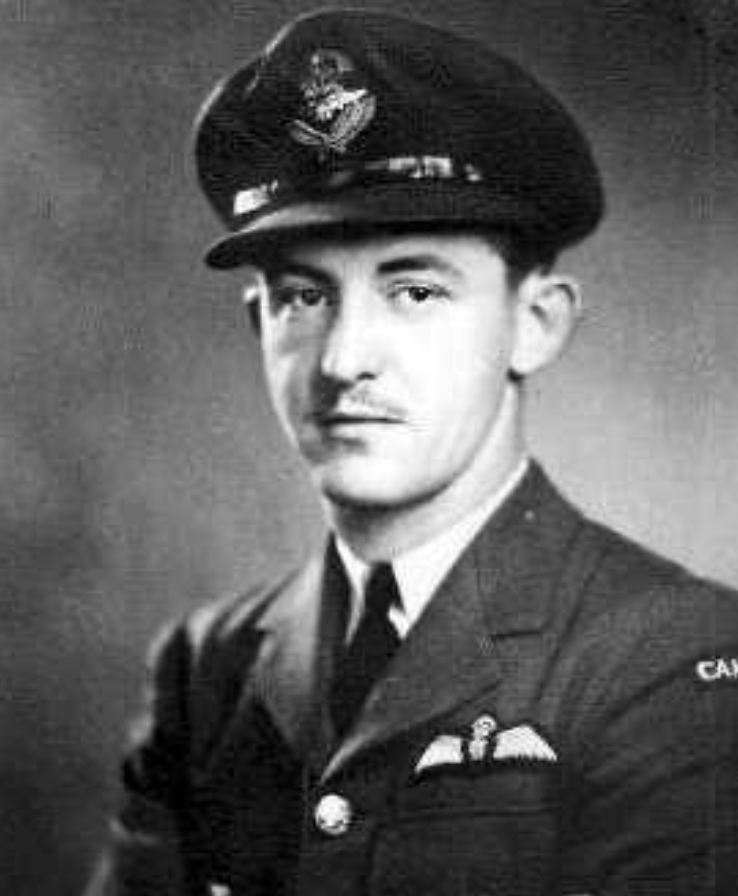
According to newspaper articles printed after his death, Art became an instructor after training in Fingal, Ontario, and took advanced courses at a bombing and gunnery school in Saskatchewan in fall 1941.
Little information concerning his service could be gleaned from his service record, but the book They Shall Grow Not Old: A Book of Remembrance explained that Art was flying a Kittyhawk aircraft when he attempted an upward roll. The plane spun, and he was killed on March 26, 1943, when he crashed one mile away from Annette Island. The roll was later deemed impossible because of a 300-pound bomb attached to the aircraft.
Art is buried in Deepdale Cemetery in Lansing.
Lieutenant (j.g.) Dano DeMoyne Skidmore
DeMoyne Skidmore lived with his wife Yona at 513 Dorothy Lane. By the time the couple welcomed their son Michael, DeMoyne had graduated from Michigan State College, where he was active in the Sigma Chi fraternity.
His brother, Joseph, now 93, remembers a brother he looked up to and how much he enjoyed visiting him in his dormitory.
“I don’t remember a whole lot,” he said in a phone interview, “but I remember being proud that he was my brother.”
According to his service record, DeMoyne worked in the New Deal’s National Youth Administration after college, an initiative to provide work and job training for young Americans.
It is unknown whether he enlisted or was drafted into the service, but he became a member of the U.S. Navy Reserve. DeMoyne was stationed at Fort Schuyler in New York when he boarded a train for East Lansing in September 1943, but he didn’t appear at the station when Yona came to pick him up.
On Saturday, Sept. 25, a body was found near the tracks near Welland, Ontario, that would eventually be identified as DeMoyne. Provincial and Navy investigations would call the incident an accident, but his widow thought foul play must have been involved. In an interview with the LSJ, Yona said her husband had been carrying a large amount of money and his hat, topcoat and briefcase had been found on the train.
DeMoyne was buried at Evergreen Cemetery in Lansing.
Captain Gordon Frederic Fischer
Gordon Fischer was a graduate of both East Lansing High School and Michigan State College and was a talented public speaker, winning a statewide speech contest in 1929 and another in 1930 as a college student. At the latter, he spoke on prison reform and won a $10 prize. He was an instructor in Michigan State College’s speech department before entering the University of Michigan and graduating with his medical degree in 1942.
He married Pauline Miller in 1940, and the two had a daughter, Phyllis. They lived at 539 Division St.
During the war, Gordon was a member of the 609th Medical Clearing Company. His service record says that on Sept. 14, 1944, he joined the 99th Infantry Battalion as an assistant surgeon. Two days later, the unit came under enemy fire and Gordon was killed by artillery shrapnel.
His death appeared to deeply affect the people of Neerharen, Belgium, where Gordon fell. In a letter to Pauline published in the LSJ after his death, an official with the 99th Battalion wrote:
“The following day sympathetic Belgian citizens, having heard of the tragic death of Captain Fischer, placed bouquets of flowers over the ground where he met his death. To my knowledge Captain Fischer was the first and only American to lose his life in Neerharen. The civilian population was deeply grieved and made immediate plans to hold a memorial service for Captain Fischer. I believe it is out of a feeling of deep gratitude to the American nation for the liberation of Belgium that this memorial at Neerharen is being erected in honor of an American officer who laid down his life for this great cause.”
Military records show the citizens did indeed build a memorial, a 9-foot-tall crucifix originally made of marble that was later updated to a steel structure.
Gordon is buried at Washtenong Memorial Park and Mausoleum in Ann Arbor.
Lieutenant Gordon Otto Kibbe
Gordon Kibbe would have graduated from Michigan State College in June 1941 but dropped out on Dec. 30, 1939, to pursue a flying career in the U.S. Army.
In college, he lived at 214 E. Michigan Ave. and excelled in wrestling, earning high honors in 1937 as a freshman.
According to an LSJ article, Gordon completed his basic training at Randolph Field in Texas and Muskogee, Oklahoma.
On Jan. 27, 1942, at 10:15 a.m., he was killed in an airplane crash about six miles southeast of Cuero. Gordon was piloting a training plane. The Fort Worth Star-Telegram reports that local farmers found the wreck.
Ensign Ezetic Paul Lauzun
“Bud” Lauzun was a graduate of East Lansing High School and Michigan State College. His service record reports that he had naval aviation training at Pensacola, Florida, and Norfolk, Virginia, and that he held the rank of first pilot.
He was killed on April 12, 1942, two days before turning 23, when two patrol bombers crashed near each other in California.
Bud is buried in Evergreen Cemetery in Lansing.
Corporal Hugo Boettcher Jr.
Hugo Boettcher was born in Saginaw, Michigan, but moved with his family to East Lansing in 1931, settling at 518 Ardson Road. Throughout high school and before joining the service, he worked for his father’s business, Liebermann Trunk Company, according to his draft registration form.
At East Lansing High School, he was the student manager of the football team. He attended Ferris Institute and Michigan State College before enlisting in December 1942.
Hugo completed infantry training at Camp Robinson in Arkansas and Camp Fannin in Texas. A soldier in Company L of the 315th Infantry Regiment, 79th Division, he was killed Nov. 19, 1944, in Sainte-Pol, France.
Bill Boettcher of East Lansing, Hugo’s nephew, was only 2 years old when his uncle died but remembers that he was still present throughout his childhood as his grandparents, father and aunt spoke about him often.
“Aunt Mary always spoke of ‘Junior,’” he said in a phone interview with ELi. “I got the impression that he was kind and gracious and looked like my grandmother. I never heard someone say a bad word about him.”
Hugo’s mother planted a memorial garden in his memory that was covered in the LSJ, and his father donated the $10,000 payment received by families of those killed in action to a local YMCA branch, Bill told ELi.
He is buried at Evergreen Cemetery in Lansing.
Corporal Verne LeRoy Sharp
Verne Sharp graduated from East Lansing High School in 1940 and took classes at Michigan State College before enlisting in the Army Air Corps in October 1942. According to his service record, he received basic training at Sheppard Field in Texas and mechanical training at Glen Martin Bomber School in Middle River, Maryland. Specialized training at Tyndall Field in Florida was setting him up to become a tail gunner.
On July 1, 1943, he was killed. Florida and Michigan newspapers at the time explained that he had been issued 200 rounds of ammunition and sent on a final training flight before graduating and advancing to a sergeant’s rating. The plane never made it back to the field.
The LSJ reported that just hours before the flight, Verne had mailed a letter to his parents’ Abbot Road home sharing news of his coming advancement.
Verne is buried at Evergreen Cemetery in Lansing.
Staff Sergeant Raymond Bosworth Smith
Ray Smith was raised at 437 M.A.C. Ave. and graduated from East Lansing High School in 1937. He joined the U.S. Marine Corps in May 1942 and according to an LSJ article went to San Diego for basic training and to Logan, Utah, and Corpus Christi, Texas, for advanced training.
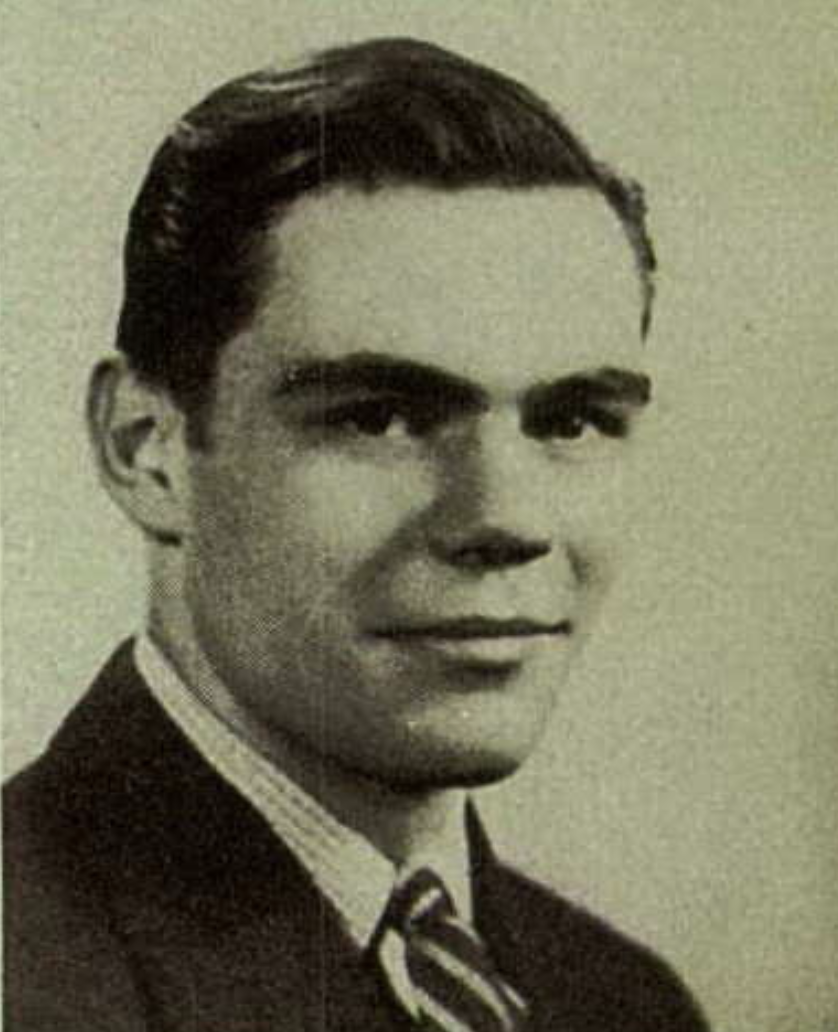
His parents in East Lansing last saw him in November 1942 when the LSJ reported he was home on a weeklong furlough.
Ray was killed on Nov. 15, 1943, in a plane crash in Cherry Hill, North Carolina. He is buried at Evergreen Cemetery in Lansing.
2nd Lieutenant William Graham MacKichan
Graham MacKichan was the son every parent wished they had.
Raised at 617 Hillcrest Ave., he was junior class president at East Lansing High School, led the grand march at his junior dance, won his varsity letter and was a yearbook feature writer. He led the football team to a 5-1 record, was third baseman on the baseball team, president of the varsity club and a star in the senior play.
He was also a hero long before he served his nation.
The LSJ reported that in February 1938, the area was experiencing heavy rains and a quick thaw that led to flooding. Graham and a fellow classmate swam to save the lives of two men who had been traveling the Red Cedar River in a canoe that capsized. The men had clung to a tree for 20 minutes before the young boys came to their rescue.
He graduated from Michigan State College and was president of the ROTC officers club and affiliated with Sigma Nu.
After basic training, he was stationed at Fort Riley in Kansas. There, he married his Michigan love, Evelyn Genevieve Pierson, in October 1942. He received primary flight training in Texas and Army Air Forces basic flying school as well.
Graham’s service record tells us that he was assigned to the 547th Bomber Squadron and piloted a B-17 Flying Fortress named Jean. He participated in 13 missions, the last of which was to hit the Dornier Aircraft Factory. His cockpit received a direct hit from anti-aircraft fire, and eight crew members, including Graham, were killed near Munich on April 24, 1944.
His remains were interred at Lorraine American Cemetery and Memorial in Saint-Avold, France.
Sergeant Philip Penn Webb
Philip Webb’s parents received a letter from him on Jan. 10, 1944, at their East Lansing home at 1210 W. Michigan Ave. It had been written on Christmas Day, according to an LSJ article from the time.
Three days later, their son died in Villa Santa Lucia, Italy.
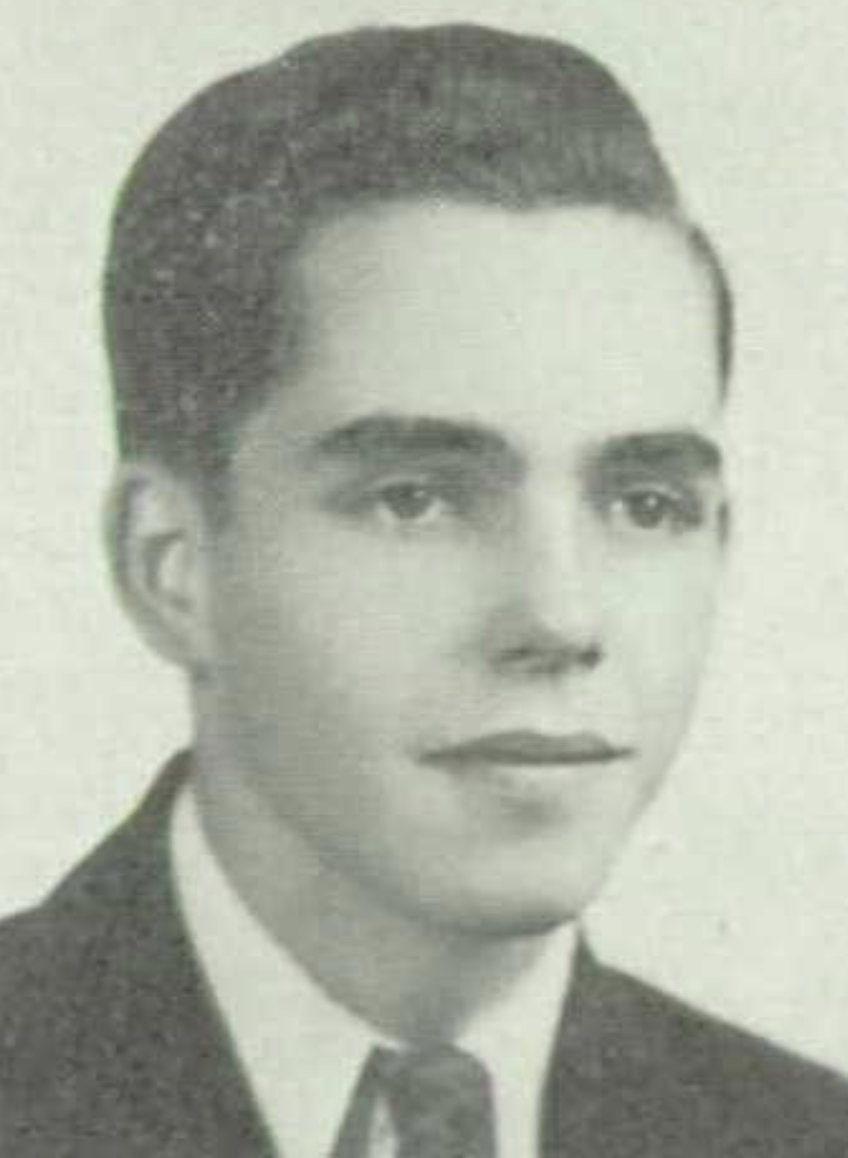
Philip had been born in Cleveland to Ambrose and Leah. He served on the stage crew for the theater program at East Lansing High School and worked for a local five-and-dime store. He graduated high school in 1942 and was drafted in March 1943.
The classification in his service record indicates he did not die in combat, but rather from an accident, illness or other injuries, but does not specify his cause of death.
He is buried at Sicily-Rome American Cemetery and Memorial in Nettuno, Italy.
Staff Sergeant James Edward Yeo
According to the veterans’ website HonorStates, James Yeo was a member of a battalion that received recognition for seizing and holding German positions in the winter of 1943, allowing the Fifth Army to drive into the Rapido River Valley.
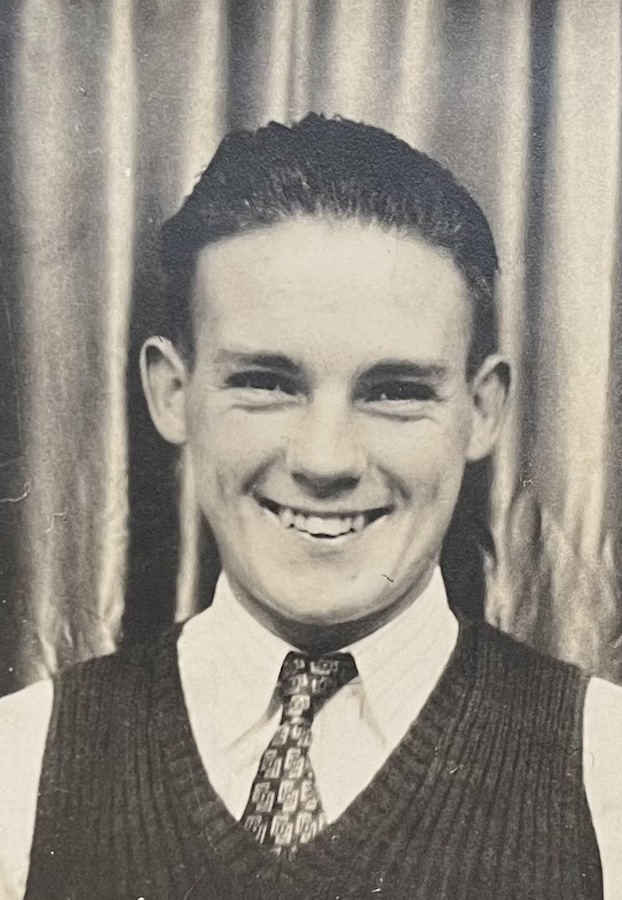
Back in East Lansing, census records indicate he lived at 334 ½ Michigan Ave. with his parents and seven siblings. James attended Lansing’s Eastern High School and worked for Hill-Diesel Engine Co.
He was killed in action in Italy on Jan. 27, 1944, and is buried at Sicily-Rome American Cemetery and Memorial in Nettuno, Italy.
Private First Class John Leo Wrzesinski
John Wrzesinski was a league bowler, rarely scoring lower than 200 in the frequent write-ups about his prowess in the LSJ. He had graduated from Lansing’s Eastern High School and was working at Lundberg Screw Co. when he married Marguerite Kudellanin in October 1942.
The couple made a home at 626 Kensington Road in East Lansing before he enlisted in May 1943. Before shipping out for the European theater that October, he trained as a pilot of Liberator bombers.
His service record reports that he was part of the ground army in Italy during the fight for the beachhead at Anzio and sustained injuries to his head and chest from an artillery shell.
Attempts by medical staff to save John failed, and he died on Feb. 4, 1944, as a result of his injuries.
Marguerite was awarded her husband’s posthumous Purple Heart. His body did not return stateside until March 1949, when he was laid to rest at Evergreen Cemetery in Lansing.
Lieutenant William Tudor Phillips
William Phillips was born in Wales in the United Kingdom. He grew up in South Lyon, Michigan, but lived with his wife’s family at 1310 Westview Ave. before the war.
We know that he enlisted in the armed forces in June 1942, but little else can be known for certain as few news articles could be found about his life.
One LSJ article said that starting in May 1943, William served in some capacity in India, with news reports saying he ferried supplies between there and China.
On Feb. 16, 1944, his wife Janet received news that her husband had died in India while in flight because of hazardous conditions over the Himalayas according to the same article. ELi could not confirm whether his body was ever recovered, but he does have a tombstone with his parents at South Lyon Cemetery.
Sergeant Kenneth James Kain
His draft registration form reports that Kenneth Kain was an Oldsmobile employee who lived with his wife, Betty Jane, in a rural area on the outskirts of East Lansing. He enlisted in August 1942 and received training in Arkansas and Colorado.
Betty received a telegram on Aug. 1, 1944 as reported by the LSJ, telling her that Kenneth was missing.
Kenneth had died on June 16 in France, shortly after the invasion of the continent. He is buried at the Normandy American Cemetery and Memorial in Colleville-sur-Mer, France.
Captain Arthur John Howland
Arthur Howland started preparing for the military years before he enlisted. In 1931, he was a student at Onarga Military School in Illinois. The LSJ reported that he received a scholarship medal two years in a row, the highest academic honor that could be bestowed upon a cadet.
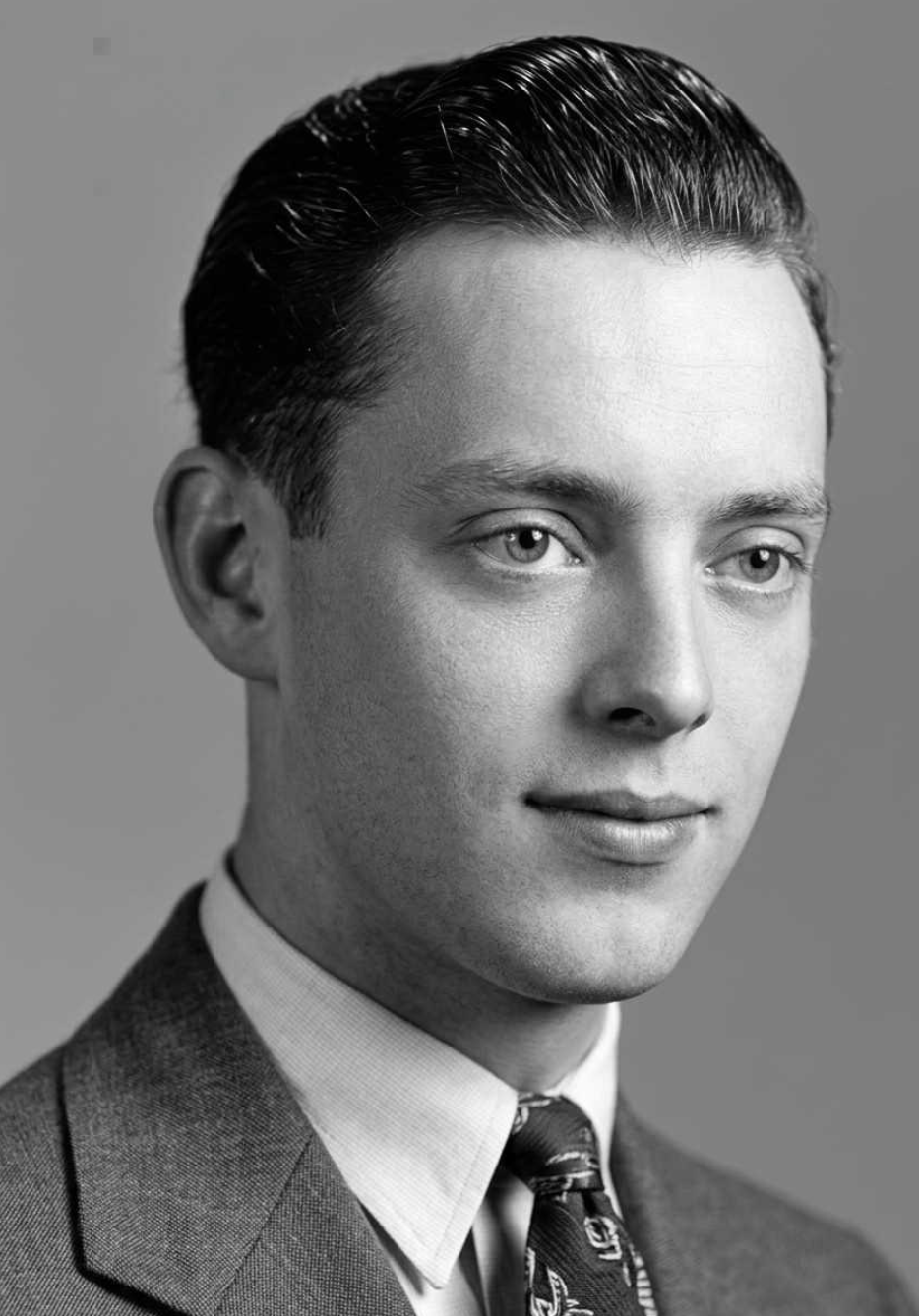
As a student at Michigan State College, he studied hotel administration and was named cadet colonel of the college’s Reserve Officers Training Corps. He enlisted in 1940, more than a year before the attack on Pearl Harbor.
Census records show that it was just Arthur and his mother, Maud, in their home at 426 Abbot Road. Maud was a divorced woman by 1930, a status shared by less than 1.5% of the American people. The family grew when Arthur married Madelon Reed Taylor in 1941.
After training at Camp Sutton in North Carolina and Camp Blanding in Florida, Arthur was a member of the 141st Field Artillery Battalion attached to the 7th Army. His service record shows that he saw action in North Africa and Italy and endured the bloody siege of the Anzio beachhead.
Arthur was killed on Aug. 17, 1944. After safely navigating the invasion of France, his battalion headquarters were hit by German artillery, and he was among the dead.
He was buried in Arlington National Cemetery on Jan. 28, 1949, after his body was returned from a French cemetery.
Captain Burton W. Benz
Born in Buffalo, New York, Burton Benz came to East Lansing in the mid-1930s to study at Michigan State College, eventually earning a degree in physical education. Here he also met his wife, Dorothy Isobel, whom he married in April 1940. His draft registration form reports that the two owned a beauty salon at 226 Abbot Road where Dorothy worked. They lived at 433 Albert Road.
Burton was drafted into the armed forces in June 1941, reporting for a three-month intensive training course at Fort Benning, Georgia.
His early service record could not be uncovered, but we know from an LSJ article that he was injured during the June 1944 invasion of Normandy, earning the Purple Heart before returning to service after healing. Burton was a member of the 32nd Armored Regiment of the 3rd Armored Division. A history of his unit reveals that he may have been an operator of a Sherman tank that struggled to break through hedgerows and brush in an attempt to reach the Seine River. He was killed during this campaign on Aug. 27, 1944.
Burton is buried at Epinal American Cemetery and Memorial in Epinal, France.
Private Jack Eugene Porter
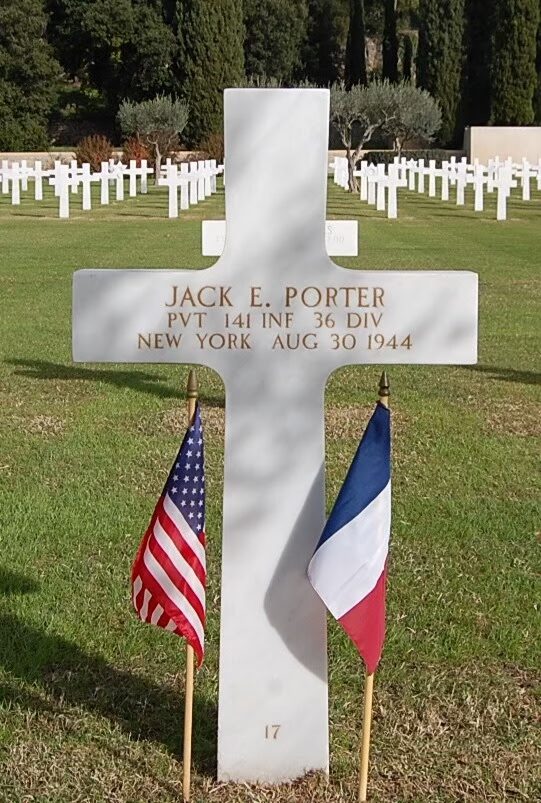
Jack Porter was from Syracuse, New York, and attended Antioch College in Yellow Springs, Ohio. There, he met his wife, Florence Jean Tansey, a resident of East Lansing.
After earning his degree, he made his way to East Lansing, and the two married in September 1941, eventually adding a daughter, Ann.
ELi spoke with Ann’s widower, Lee Lundy, who confirmed these aspects of Jack and Jean’s short life together.
Jack entered the service in September 1943 and received training at Camp Wolters in Texas and Fort George Meade in Maryland before going overseas in April 1944.
A member of the 141st Infantry Regiment, 36th Infantry Division, Jack’s service record indicates he was in North Africa and Italy before supporting the invasion of southern France. He was killed in action on Aug. 30, 1944.
Jean’s 2019 obituary reports she never remarried, became a college professor and raised the daughter who was 6 months old when Jack died.
Jack is buried at Rhone American Cemetery and Memorial in Draguignan, France.
2nd Lieutenant John Harding Garlent
John Garlent had a privileged upbringing. His family lived in a spacious home at 371 Chesterfield Parkway, and his father was president and general manager of Motor Wheel Co. After graduating from East Lansing High School, he attended Albion College, where he was voted the first “King Briton,” a title identifying him as the premier senior male leader on campus, according to an LSJ article at the time.
When he flew during the war, he painted Albion’s motto, “Io Triumphe,” on his plane.
John was working in Pittsburgh for Carnegie Steel Corp. when he joined the U.S. Army Air Forces. He was commissioned as an officer in May 1943 at Aloe Field in Victoria, Texas, and spent a year as a flight instructor at Randolph Field in the same state, according to his service record.
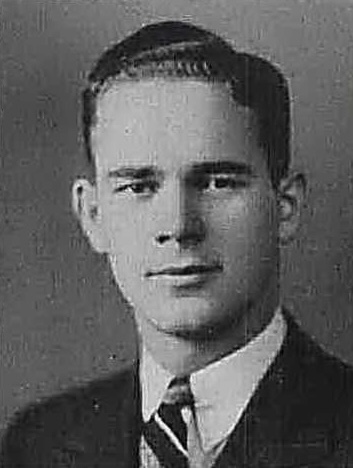
By August 1944, John was piloting a P-47 Thunderbolt in England. His parents received a letter from him that month, printed in the newspaper at the time, saying he was being sent to “rest camp” for a second time, perhaps indicating he had seen especially active service. His service record confirms that he had been decorated with the Air Medal for outstanding performance, its description applauding the “courage, coolness and skill displayed by the pilot reflect credit upon himself and the armed forces of the United States.”
John was killed Sept. 9, 1944, in what newspapers reported was a dive-bombing mission over Germany.
Albion College President Dr. W.W. Whitehouse spoke at his funeral after his body was returned to East Lansing in February 1949. The LSJ reported his eulogy.
“There was no artificiality or veneer about him, but always a ring of genuineness,” Whitehouse said. “His fellow students and faculty admired him and found within him deep experiences of friendship. He would have achieved outstanding success in life because he liked people and was trusted by them.”
John is buried at Evergreen Cemetery in Lansing.
Air Cadet Richard John Dawe
Richard Dawe’s father was a minister, causing the family to move frequently. They came to East Lansing from Cadillac, Michigan, building a home at 835 Sunset Lane.
He acclimated to his new school quickly, becoming a star on the tennis courts. Articles in the LSJ highlight his standout performances in doubles, including making the state semifinals in 1938. Between graduating from East Lansing High School and joining the Army Air Corps in August 1942, he was briefly employed by the New York Central Railroad.
In the Army, he was a gunner and completed seven missions against German installations. His service record indicates he flew over and destroyed heavily defended oil fields in Vienna, Munich and Romania. Richard was awarded the Air Medal for “meritorious achievement in aerial flight while participating in sustained operations against the enemy.”
He was declared missing in action on Oct. 7, 1944, and his body was never recovered. There is a gravestone near his parents home at Maple Hill Cemetery in Cadillac.
Lieutenant Clayton Cass Shupp
Clayton Shupp married Doris Marie Pearson in 1937 at Peoples Church. The couple made their home at 528 Bailey St. and had two young daughters. While building that life, Clayton earned an engineering degree from Michigan State College and participated in the school’s ROTC program.
Four months before Pearl Harbor, he was serving with the 91st Coastal Artillery Regiment in the Philippines. His service record states that he oversaw the placement of mines in the waters surrounding Corregidor.
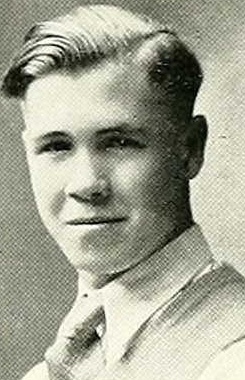
In a letter mailed Nov. 19, 1941 — three weeks before the attack on Pearl Harbor — and shared with the LSJ, Clayton told Doris that arrangements might be made to bring her and the girls to join him. But as Japanese forces spread across the Pacific, they invaded the islands, and Clayton was taken prisoner of war, remaining interned until December 1944.
Doris heard nothing until May 1943, when she was informed that Clayton was a POW.
According to articles in the LSJ, Clayton was allowed to send form letters home. Doris received one in December 1943 saying his health was good and that he hoped to return home soon. He asked her to send mail through the American Red Cross.
While her husband was imprisoned thousands of miles away, Doris worked at the Nash-Kelvinator plant on Cedar Street in Lansing. She conducted final inspections in the propeller division. Despite supporting two young children on her own, she dedicated 10% of each paycheck toward war bonds sold through the company, according to an LSJ article.
Clayton’s records show that in December 1944, he was placed aboard the Oryoku Maru for transport to Japan. On Jan. 9, 1945, he was aboard the Enoura Maru when Allied planes attacked the ship, killing 400 prisoners of war.
His remains were never recovered.
Doris never remarried.
Private Eugene E. Fitch
By all accounts, Eugene Fitch was devoted to his mother, Lena. The two lived at 837 E. Grand River Ave. while his father lived in Detroit. He worked throughout school as a carrier for the LSJ and was also employed at Carl Comden’s gas station, just one block from his home.
He graduated from East Lansing High School in 1940.
Three years later, he was inducted into the U.S. Army, receiving basic training in St. Petersburg, Florida, before being assigned to the infantry at Camp White in Oregon and Camp San Luis Obispo in California.
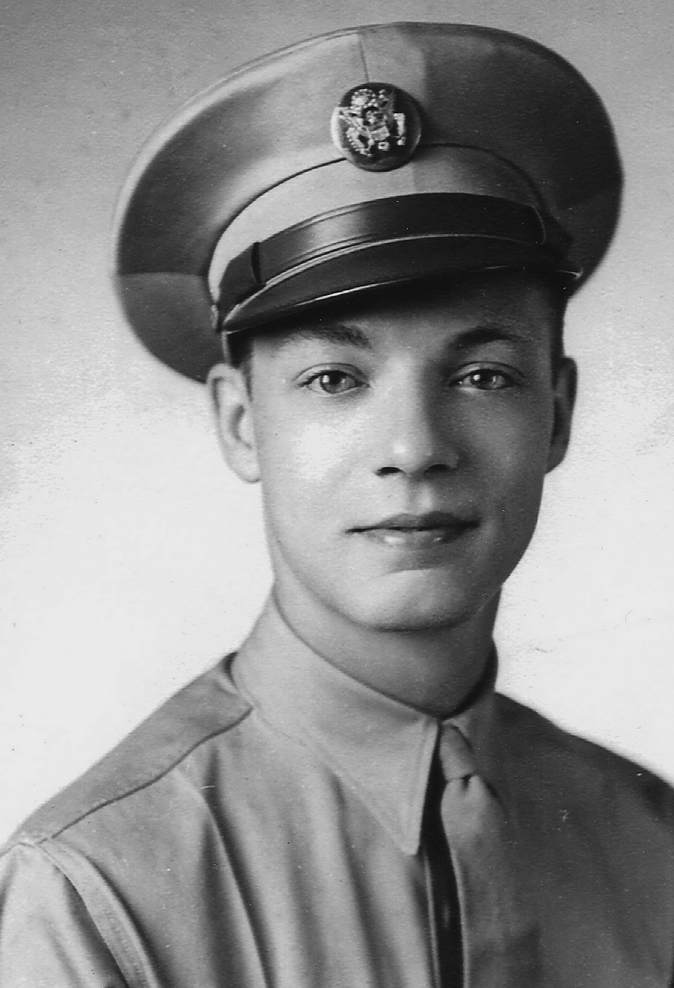
Before shipping out, he was given a 10-day furlough in October 1943 that he spent in East Lansing with his mother.
Eugene served with the 96th Infantry during the invasion of the Philippines in the Pacific theater. On Nov. 20, 1944, Lena received a telegram from the War Department informing her that her son had died Nov. 3.
His service record declares that, by “administrative decision,” he was buried at sea.
Eugene is honored at the Manila American Cemetery and Memorial in the Philippines.
Private Donald Hicks Davis
Donald Davis was slightly older than many of his fellow soldiers. He was born in 1910 in Indiana and, by the time he served in the war, he was married with two children with another on the way. He and his wife, Helen, lived at 136 Milford St.
Little could be discerned about his service from official records, but it is known that he was wounded in action in Germany and later died on Nov. 6, 1944, in a hospital in Leigh, Belgium.
A story in the LSJ explained that Helen learned of her husband’s death the same day she delivered their third child at Sparrow Hospital.
Donald is buried at Evergreen Cemetery in Lansing.
Private First Class John Patrick Hays
John Hays was one of three sons in a family that, according to census records, resided at 605 Butterfield. He was one of three boys, two of whom saw active duty during the war, while the eldest died of what was called Hodgkin’s disease in 1941 per an LSJ article at the time.
In high school, John was active in dramatics, speech and radio work, as his exploits appeared in several issues of the LSJ. He graduated from East Lansing High School in 1943 and immediately enlisted.
John received military training at Camp Croft in South Carolina, Camp Pickett in Virginia and Rhode Island State College. He was assigned to the 26th Infantry as a replacement, serving in Gen. George Patton’s army.
John was killed in France on Nov. 15, 1944. He is buried at Evergreen Cemetery in Lansing, his body having been returned to the United States in August 1948.
1st Lieutenant George Clifford Moran
George Moran was born in Detroit, raised in Dearborn and graduated from East Lansing High School in 1942. His father was an administrative and personnel officer for the state’s selective service headquarters. In other words, he worked with the state draft system and held the rank of lieutenant colonel.
The LSJ reported that George was attending Michigan State College and living with his parents at 724 Albert St. when he entered the service as an air cadet in April 1943. He received training in Nashville; Tucson, Arizona; Phoenix; Pecos, Texas; and Santa Ana, California. He graduated as a fighter pilot and was commissioned as an officer in February 1944, three months before heading overseas.
George flew P-47Ds and later a P-51D Mustang that he named Zelma after his mother.
His service record reports that he earned the Air Medal with three oak leaf clusters and the European Theater Campaign Ribbon with two combat stars. When he was shot down and killed over Germany on Nov. 27, 1944, he had logged more than 200 hours of combat flying with the Eighth Air Force.
George was buried at Evergreen Cemetery in Lansing.
Private George Knox Renno
George Renno grew up in the Army. He was born in the Philippines while his father, Lt. Col. James Goodwin Renno, was stationed there. When his father accepted a position teaching military science at Michigan State College in East Lansing, the family lived at 501 Ardson Road. They later moved again when his father was transferred to West Point military academy in New York, LSJ reported at the time.
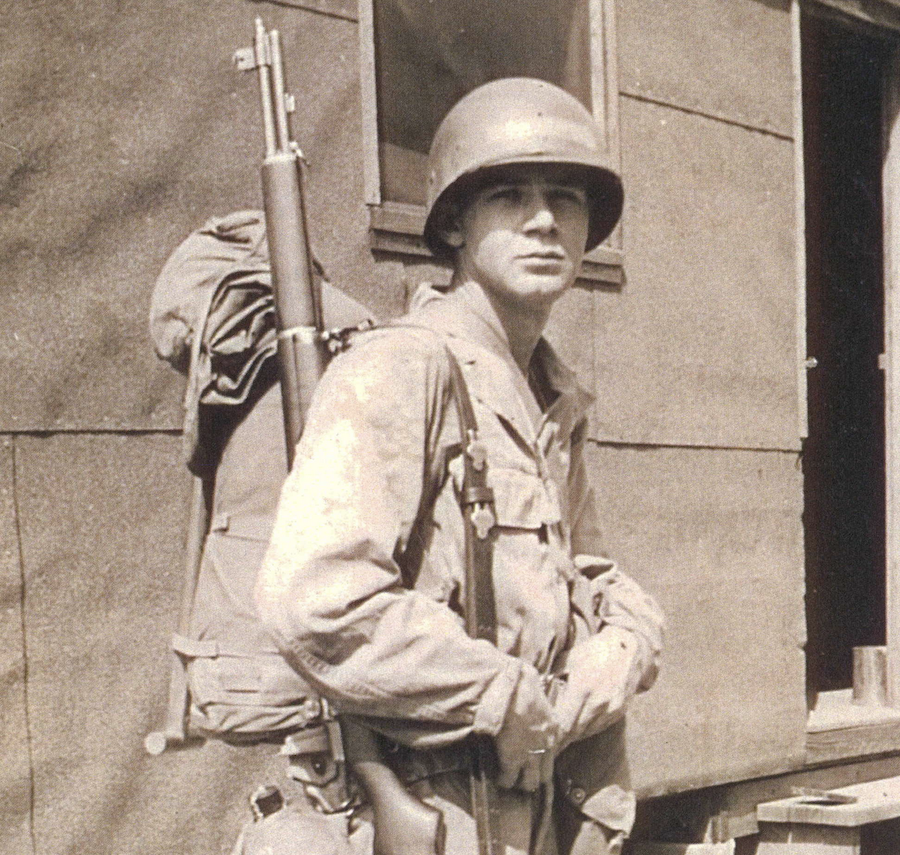
George completed three years at East Lansing High School before transferring to Highland Falls High School for his senior year. However, he later returned to East Lansing, completing one year and two terms at Michigan State College before joining the service. The LSJ reported he received military training at Fort McClellan in Alabama and specialized Army training at North Carolina State College.
A soldier in Company E of the 314th Infantry Regiment, George was killed in France on Dec. 3, 1944.
He is buried at Mountain View Memorial Park in Boulder, Colorado.
2nd Lieutenant George Patrick McKinley
George “Pat” McKinley attended Culver Military Academy in Indiana from 1937 to 1940, winning medals in map reading and marksmanship. When he returned home to East Lansing during the summers, he spent time at North Winds Farms, a horse operation owned by his mother’s family. A 1938 LSJ article reported that young Pat spent much of his time in the water so he could “make the grade as a swimmer with Culver.”
In 1941, Pat was an alternate candidate for the U.S. Naval Academy at Annapolis from his congressional district. He was a sophomore at Michigan State College when he entered the Army Air Forces in March 1942. Vital records indicate that August of that year, he married Rosann Murner, and the couple had one son, George Patrick, before he shipped overseas.
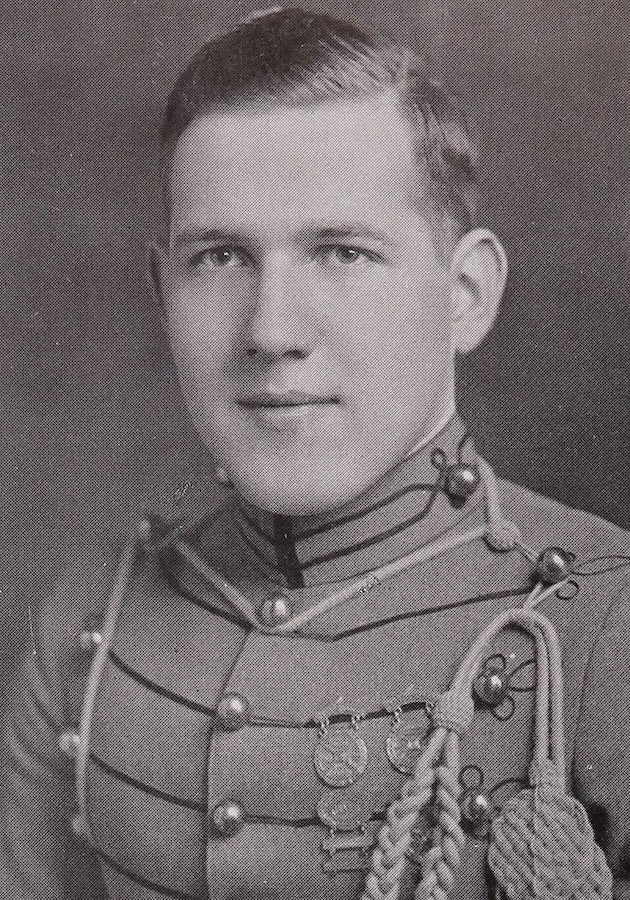
Pat completed Liberator bomber training at Pueblo Army Air Base in New Mexico and became a co-pilot of heavy bombers.
According to news reports, his plane was shot down over Vienna on Dec. 11, 1944. While seven of its occupants bailed out, Pat was never recovered. He was presumed missing in action until early 1946, when the government changed his classification to killed in action.
A cenotaph for Pat stands in Evergreen Cemetery in Lansing.
According to Pat’s grandson, Jerry, who spoke with ELi, Pat’s son followed in his footsteps by attending Culver Academy.
1st Lieutenant Lee M. Cahill
Lee Cahill was killed in Belgium on Dec. 13, 1944, in the days leading up to the Battle of the Bulge, Nazi Germany’s final major offensive of the war.
He grew up at 438 Haslett St. with his father, Lee, and cousin Jack Murphy. He graduated from East Lansing High School and attended Michigan State College before receiving training at Camp Wolters in Texas and earning his officer’s commission at Fort Benning, Georgia, in April 1944.
He was temporarily interred at Henri-Chapelle Cemetery in Belgium until his body could be safely returned to the United States. When it arrived in December 1947, more than three years after his death, his father placed a notice in the LSJ announcing that Cahill Coal Company’s offices and coal yards would close in his son’s memory.
Lee is buried at Mount Hope Cemetery in Lansing.
2nd Lieutenant William Thomas Butters
William Butters was born in Mount Pleasant, Michigan, but raised in East Lansing at 720 Grove St. He graduated from East Lansing High School in 1938 and was attending Michigan State College while working for Oldsmobile when he enlisted in 1942.
His obituary stated that he completed basic flight training at Newport Army Air Base in Arkansas before choosing single-engine training. He received his commission in Valdosta, Georgia, before leaving for the European theater in September 1944.
As co-pilot of a B-17 Flying Fortress, he flew missions over Merseburg, Germany, where, according to his service record, oil refineries were destroyed by heavy bombers, aiding “in the destruction of marshalling yards, bridges, and other lines of communication.”
William was killed during an air mission over Düsseldorf, Germany, on Jan. 23, 1945 — his ninth mission. His widow, the former Leone Shavey, later received his Air Medal for meritorious achievement.
He was buried at Evergreen Cemetery in Lansing after his body was returned in June 1949.
Sergeant John Andrew de Zeeuw
Jack de Zeeuw and his family grew accustomed to people mispronouncing their last name. His niece Anne Marie said most people pronounce it “de Zoo” instead of the correct “de-zay-YOU.”
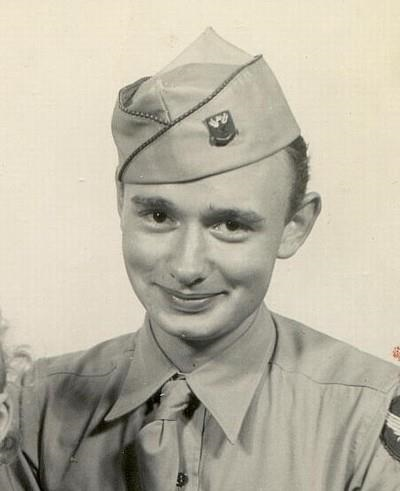
Jack was raised at 533 Evergreen Ave. and graduated from East Lansing High School in 1941. He attended Hope College for one year before, according to Anne Marie, volunteering for military service shortly after President Roosevelt asked Congress to declare war. He completed his aircraft armament course at Lowry Field in Denver, Colorado in November 1942.
While stationed overseas, he served as a member of the ground crew for the 704th Bomber Squadron.
Jack survived the war and was in England when Germany surrendered. He even had a brief reunion with his brother, who was also serving and happened to be stationed there.
“The war was ending and he was being sent home,” Anne Marie told ELi in a phone interview. “I believe the original plan was that he would be [sent home] on a ship, but he decided that since he was in the Air Corps and he had an opportunity to fly home that he would take that opportunity.
“And his plane went down in the Atlantic.”
Just days after seeing his brother, Jack died on June 17, 1945. His body was never recovered.
Lieutenant Clarence Edwin Paff
When Clarence Paff was killed in action on March 18, 1945, he left behind a wife and 14-month-old son, Gary.
Clarence hailed from Elk Mound, Wisconsin, and it is not known what brought him to Michigan. Before the war, he worked for Fisher Body Corp. in Lansing, and he and his wife, Jane, lived at 830 W. Michigan Ave.
He entered the service in January 1943 and received his pilot’s wings at Maxwell Field in Alabama. His unit was attached to the 12th Air Force, and he piloted a P-47 Thunderbolt fighter plane.
Air Cadet Max H. Nelson
At East Lansing High School, Max Nelson was president of the Biology Club, a performer in his class musical comedy and one of four cheerleaders in the all-male squad. In a February 1936 issue of the LSJ, a story was devoted to Max finding two four-leaf clovers in the same field.
He did not graduate from East Lansing High School, however. Though 143 Kensington Road may have been home, he went to California to build a life for himself.
He attended Fresno State College for two years before working for the Premier Vacuum Cleaner Company as district manager in San Francisco. According to his March 1944 enlistment records, he worked for Bethlehem Steel in munitions production.
Max completed Air Corps training at Gardner Field in Taft, California, and at Fort Russell in Marfa, Texas. He was stationed there March 13, 1945, when his Dakota KN-345 aircraft encountered light fog and poor radio reception. An investigation found that the plane struck trees not far from Santa Barbara, California. The plane and crew went missing and were not discovered until May 13, 1945 according to an LSJ article
Max is buried at Evergreen Cemetery in Lansing.
Private First Class Melvin Henry Hansens
Melvin Hansens’ grandparents immigrated to the United States from the Netherlands. He was born in Grand Rapids, but his family moved to 412 M.A.C. Ave. in East Lansing before he graduated from East Lansing High School.
Half a dozen LSJ articles from the 1930s illustrate his deep passion for scouting. After becoming an Eagle Scout, he served as an assistant scoutmaster in East Lansing while attending Michigan State College.
Service records show that Melvin enlisted in April 1943 and served in the 22nd Infantry Regiment of the Rainbow Division. His unit would later push through southern Germany and help liberate the Dachau concentration camp, though he would not live to see it.
Melvin was killed in the Hartz Mountains of France on March 17, 1945. His heroism earned him posthumous recognition with the Silver Star and Purple Heart. He was buried at Washington Park Memorial Gardens in Grand Rapids.
In eulogizing him, the LSJ reported that Rev. N. T. Keizer of North Presbyterian Church said, “We cannot change our faith in God because of the changing experiences of our world. Our faith must remain constant, even as God is constant. Therefore, though they died, they did not perish.”
Private First Class Olin Marley Grover
Olin Grover was drafted in September 1942 while living at 401 Grover St. Before the war, he worked as a machinist.
He served in the U.S. Army Ordnance Department, responsible for “maintaining weapons, munitions, vehicles, and equipment,” according to his tombstone at Chapel Hill Memorial Gardens in Watertown Township, Michigan.
He died April 25, 1945, in Germany, and his body was returned to the United States in August 1948.
Major Edwin Brownfield Crowe
Edwin “Ted” Crowe earned a varsity letter in wrestling from Michigan State College before graduating in 1940. He was a hometown boy, growing up at 137 University Drive in East Lansing.
Ted enlisted in the Army Air Corps in December 1940, a year before the United States entered the war. Before that, according to his enlistment papers, he worked at an unnamed hotel.
His first brush with death came in November 1942 when a training plane from Blackland Basic Flying School crashed near West Plains, Missouri, while he was aboard. Newspaper accounts explained that the engine failed, and in pitch darkness he and another soldier parachuted to safety. The pair landed atop a 30-foot-tall tree and fell limb by limb to the ground. The aviation cadet flying the aircraft died when the plane struck a hill.
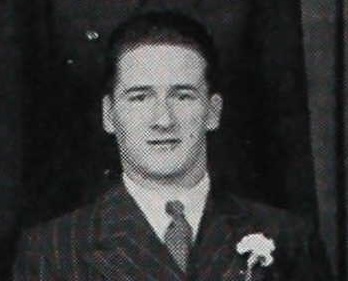
While stationed in Texas, Ted met and married Laverne Driggers and was later named senior instructor at South Plains Army Air Field in Lubbock, Texas.
A short article in the LSJ reported that Ted surprised his parents with a visit home in June 1944, the first time they had seen him in two years. Within six months, he was overseas piloting a B-29 Superfortress named “Kro’s Kids” by its crew in his honor.
On June 26, 1945, Ted was reported lost in action off the coast of Japan. Service reports explained that he had completed his mission objectives and was returning to base on Tinian Island when Japanese fighter planes attacked, igniting his aircraft.
Eight other crew members parachuted to safety and were rescued by a submarine. They later theorized that by the time Ted attempted to bail out, his parachute had been so badly burned that it could not open when he pulled the rip cord.
His body was never recovered, but he is remembered at the Honolulu Memorial Courts of the Missing in Hawaii.
Lieutenant Colonel Harold Smith Patton
Little is known about Harold Patton.
Born in Manitoba, according to his draft registration card, he was an academic who came to Michigan State College in April 1929 to become chair of the economics department. He and his wife settled at 968 University Drive.
Newspaper articles from the time indicate that he had a close relationship with the Roosevelt administration. In 1937, he was granted a year’s leave to accept a position as an international economics adviser in the State Department.
After serving on a regional war labor board, Harold was granted another leave — this time open-ended — to serve as chief of the Foreign Fiscal Affairs Division of the Army Services Forces in Washington, D.C.
The position carried the rank of lieutenant colonel in the U.S. Army.
Harold was killed Sept. 1, 1945, in a traffic accident at the Pentagon. He is buried at Arlington National Cemetery.
Ensign John Harold Wheeler
The final East Lansing casualty of the war was 1942 East Lansing High School graduate John Wheeler, the son of Percy and Gertrude Wheeler. He grew up at 208 Oxford Road.
John was an engineering student at Michigan State College before entering military service in March 1943. In November of that year, the LSJ reported that he had been recognized in the U.S. Navy pre-flight school honor roll for scholastic achievement. He received his pilot’s wings at Corpus Christi, Texas, in December 1944.
According to his service record, John was killed Sept. 10, 1945, in an airplane crash in Hawaii.