
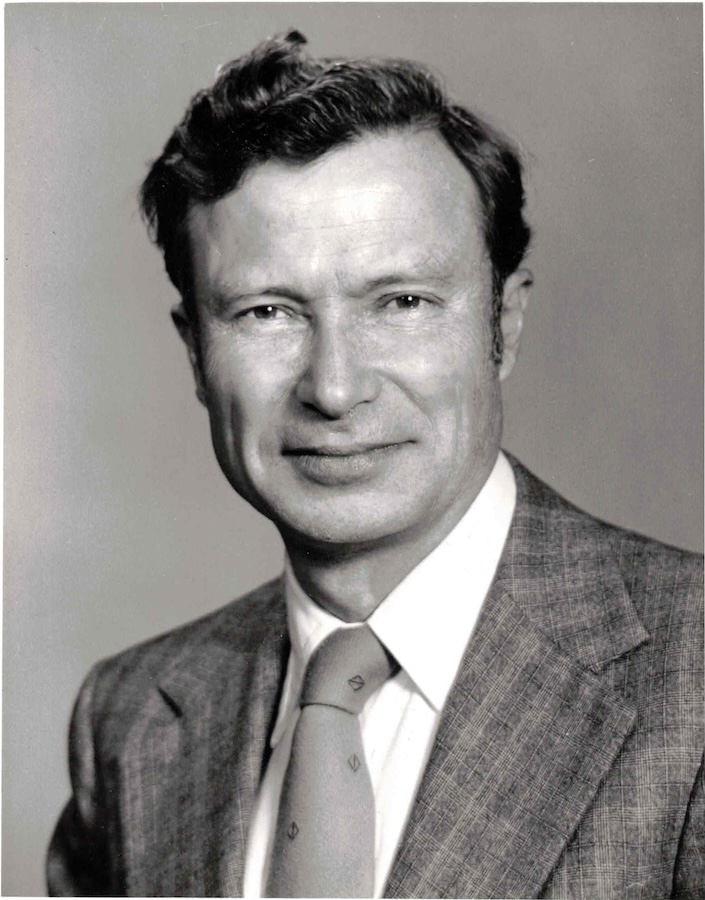
From WWII to Vietnam Dissent, Bill Root’s Century of Service Ends at 102
A more than century-long life shaped by war, diplomacy and an unshakable commitment to peace came to a close last month when East Lansing resident Bill Root died at 102.
Bill departed this world after three acts, serving his country and its people in each: in the Pacific theater of World War II, more than three decades in the U.S. State Department, and more than 40 years as a champion for peace. He helped usher the U.S. through the Cold War and was the only American diplomat serving in Vietnam to protest the war’s expansion into neighboring Cambodia at the time.
East Lansing Info spoke with his daughter, Chris Root, a peace activist in her own right.
“Growing up, he was at work a lot,” Chris said when asked about her childhood with her dad. “He just worked.”
Even with Bill’s busy schedule, Chris remembers her parents always took time for dancing, particularly square dancing and round dancing.
“One of my dad’s favorite stories about being in foreign countries was about learning the language. As a Foreign Service officer, you’re supposed to try to learn the language of the country where you’re posted, and he always tried to do that.
“In folk dancing, you often move from one partner to another, so he was dancing with a Danish woman [while stationed in Denmark]. At the end of the dance, she said, ‘Your accent is a little unusual. Are you from Greenland?’
“He thought that was a marvelous compliment — that she had found another part of the world where people speak Danish rather than saying, ‘You must be an American and you just don’t quite have the accent right yet.’”
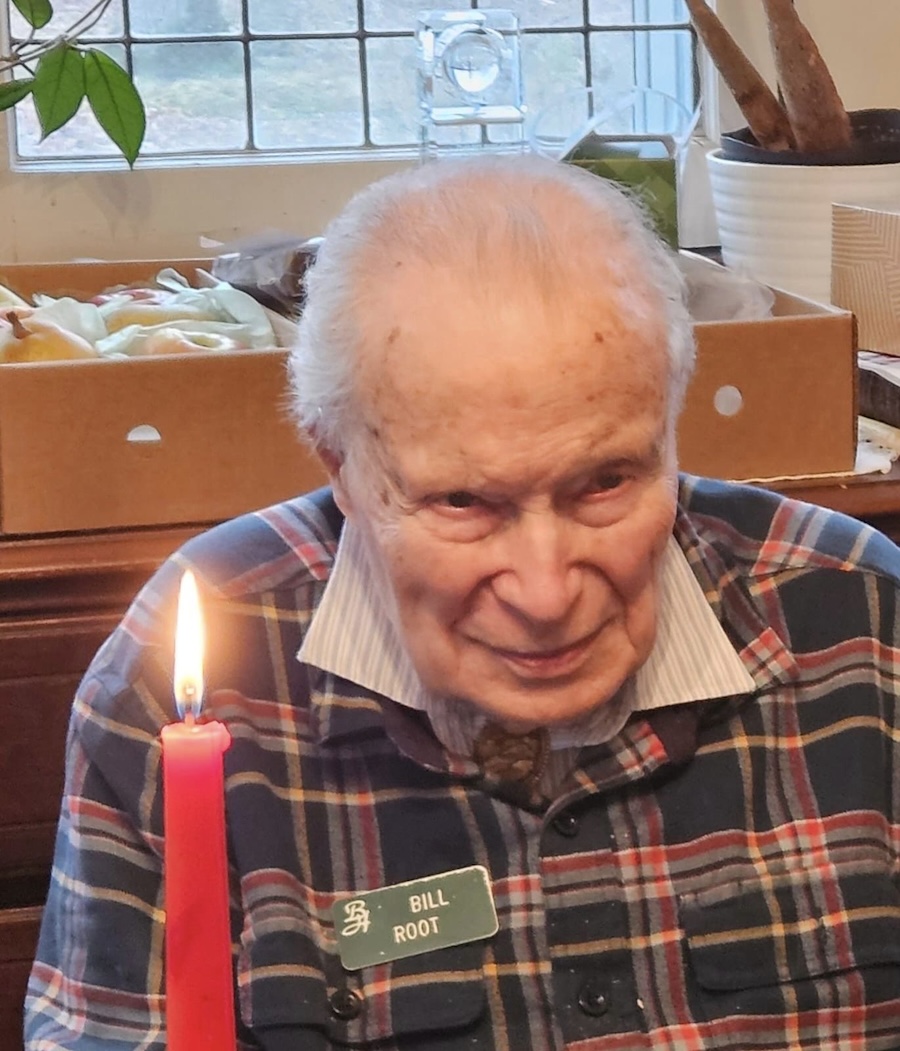
Bill had an older brother he idolized. Chris shared a story her father told many times about his brother coming home from first grade and sitting down little Bill to show him everything he had learned that day.
“When my dad got to first grade,” Chris said, “they figured out pretty soon that he already knew the things they were going to teach him because his brother had taught them to him.”
His grandmother had witnessed “Bleeding Kansas,” a series of violent outbursts over slavery in the Kansas Territory before the Civil War.
“To my grandmother,” Bill said during a local lecture celebrating his 100th birthday, “there were no good wars where the good guys wore white hats and the bad guys wore black hats. To her, all were bad.”
Despite this inherited ethos, Bill looked to Europe and saw a war was coming. When Japan bombed Pearl Harbor in 1941, Bill was in college majoring in political science.
“[That] wasn’t exactly going to keep me out of the trenches,” Bill said in a lengthy 2002 interview with the Association for Diplomatic Studies and Training Foreign Affairs Oral History Project. He changed his major to math and physics so he could learn about radar technology and earn a spot in the Navy.
“He used to say people say, ‘Join the Navy and see the world,’” Chris remembered, “but his experience was that you join the Navy and see a lot of water.”
Bill’s time at war vacillated between tedium and high pressure. There was a shortage of radar officers, so he was charged with maintaining radar technology for a network of six ships. He witnessed the capriciousness of the ocean.
“My ship rocked 45 degrees in one direction,” he remembered in the aforementioned interview. “Other ships rocked 46 degrees, did not recover, capsized, and all on board died.”
On the other side of the world, his brother was serving in the European theater as a weatherman in the armed forces. In the days after the D-Day invasion, he was declared missing in action. Chris said that it would be nearly 70 years before her father learned that his brother’s plane had been shot down over France, exploding before it hit the ground.
When Bill returned to the United States after the war, he foresaw the coming Cold War with the Soviet Union and enrolled at Columbia University to study Russian.
“I persuaded myself that what the world needed most was for [these countries] to learn how to live peacefully,” he said during the lecture celebrating his 100th birthday. Many of his Columbia classmates, however, refused to work for the U.S. government because of its Cold War policies.“The other half, including me — naively, I emphasize that word — decided to join the government in order to change its policy from within.”
For the next 33 years, Bill served as a Foreign Service officer. He saw the rebuilding efforts of the Marshall Plan in West Germany, worked through a “chicken war” with Denmark (the U.S. hoped to sell chickens to the Danes, but they wanted to raise their own), and eventually returned stateside to work in the East-West Trade Office in the Bureau of Economic, Energy and Business Affairs in the State Department.
In the 2002 interview, he remembered one moment of determinate obstinacy from his career.
“When it came time for my efficiency rating, the boss said that I was stubborn,” he said. “I said, ‘Would you mind changing that to persistent?’ He said, ‘I’ll change it to persistent, but you are stubborn.’ I thought that I should be stubborn about something like that.”
In 1969, he was sent to Saigon, the capital of South Vietnam, to work with transportation and communication infrastructure. He said in later interviews that he encountered both competent Vietnamese officials and corruption in the system built around nearly two decades of war.
In spring 1970, the Nixon administration expanded the war into neighboring Cambodia. Bill said later that in the Foreign Service, one is expected to “get along.” But he had reached a breaking point.
“The next morning, when we had our usual staff meeting,” he recalled in the 2002 interview, “and we were still talking about rice and balance of payments, I piped up and said, ‘I don’t know about the rest of you, but it seems that maybe we ought to have some discussion about what happened yesterday.’ One of my colleagues said, ‘There goes Root with his Nuremberg defense,’ which wasn’t exactly my idea. Eventually I did write a dissent about what we were up to in Vietnam, and I was amazed when I got back to Washington to learn that I was the only one in Vietnam who wrote such a memo. I was amazed because the vast majority of people I talked with every day felt the same way I did.”
Bill later learned that in 1968, President Lyndon Johnson and North Vietnam discussed terms for a peace agreement and the departure of the U.S. military from Vietnam, but the talks collapsed.
“When you visit the Vietnam War Memorial in Washington,” he said, “about half of the names on that wall came after Johnson had negotiated that withdrawal.”
Through all of this, Bill’s wife, Connie, was by his side.
“I think she was proud of her husband,” Chris said of her mother. “She thought he was doing things that were worth doing and doing them well, and she wanted to be supportive.”
The two had met in Chicago while Connie was an undergraduate student at Northwestern University. Bill and Connie Root would be married for 72 years and have four children.
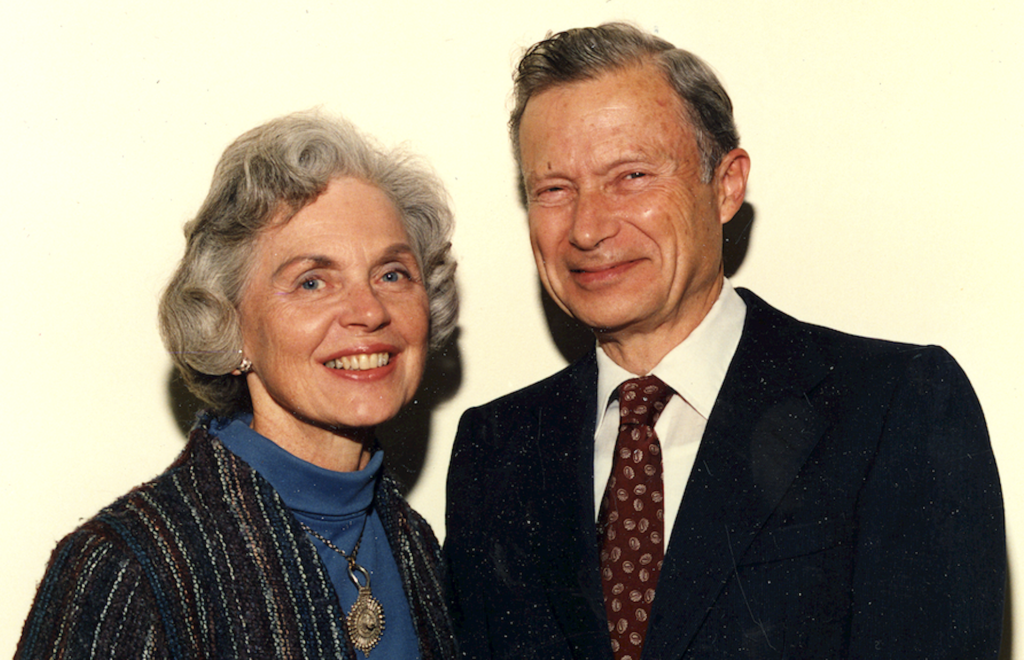
They were living in the Washington, D.C., suburbs when Connie came to a point where she needed assisted living or memory care support.
About a decade ago, they moved to East Lansing’s Burcham Hills onto the memory care floor. Bill had no need for memory support, and he had no training in helping someone with dementia, but Chris said he loved his wife very much and wanted to be of whatever support he could.
Alesha Williams, the director of East Lansing’s Prime Time Seniors program, worked at Burcham Hills at that time and remembers the Roots fondly.
“I hope someday I have a man as dedicated to me,” she said. “Bill was a really prominent and active resident. He was very active in talking about his work with peace, and he did a presentation for his 100th birthday. That was something that I was actively involved in, with those interviews and things like that.”
Bill was eventually advised by staff that he should move out of memory care, being told that Connie would grow to need more and more support, and as long as he was there she wouldn’t develop relationships with the staff.
“Even after moving out,” Chris said, “he spent hours and hours every day with her.
“I was glad I got to see him with my mom in the last years of her life. They were a traditional couple who married in the 1940s when gender roles were structured very differently. I was really grateful to see how much he cared about his wife.”
Connie died in 2017.
In his final years, Chris said that her father was attempting to tackle a problem that was likely insurmountable: trying to create a single export control list of international and U.S. export regulations.
“He decided he was the person to try to do that and worked on it day in and day out,” she said. “I can attest to it because I was his computer consultant if things went wrong.”
Chris remembered an interaction her dad had with a social worker at Burcham Hills.
“[They] came by to ask questions like, ‘Do you like to watch television? Do puzzles? Play card games?’” she said. “He answered no to all of them. It didn’t surprise me … what he liked to do was work.”
Williams thinks Bill’s passion for learning helped keep his mental acuity intact.
“Bill was very interested in continuing to learn and expand his mind as much as he could,” she said. “He was always open to trying something new and learning new things, and teaching other people what he knew.”
Bill called on humanity to take big steps to create a more peaceful world for all citizens, including eliminating the burning of fossil fuels and renewing efforts toward nuclear disarmament. He also argued that intellectual property rules were slowing the world’s COVID-19 response, saying that 2 billion people were left waiting for their first dose of the vaccine because poorer countries couldn’t afford the prices set by patent holders.
Despite all the crises Bill witnessed in his 102 years, his daughter said he believed in goodness and hope.
“[He believed] people should aspire to that and that there is a source of goodness that people can try to understand and reflect,” she said. “I think he believed one should be optimistic, that it’s the best way to deal with the world, but that didn’t mean he believed things would get significantly better soon.”
Bill believed that each individual was responsible for doing some of the work. In the lecture he gave in East Lansing after his 100th birthday, he said that younger generations shouldn’t lose sight of the big issues but should find something specific to “hang your hat on.” He said that compassion was one of the most important virtues.
“Anyone who is lovingly trying to care for another person is doing a wonderful thing,” he said.
Correction: This story was corrected to clarify Root was the only diplomat serving in Vietnam at the time to oppose the war’s expansion.