

‘Slippery Slope’ or Needed Fix? East Lansing Will Consider Rental Overlay Changes
Jeff Hank is surrounded by partying, raucous undergraduates with no easy escape.
While many East Lansing residents might occasionally feel the same, Hank and his family live near the city’s downtown in a house he purchased 22 years ago. He cannot obtain a rental license for his home because he lives in a rental restriction overlay district.
“I bought a property here as a single young man, before the overlay came into effect,” he told East Lansing Info. “Over 22 years, a lot has changed. I have a family and two little kids now. Circumstances change.”
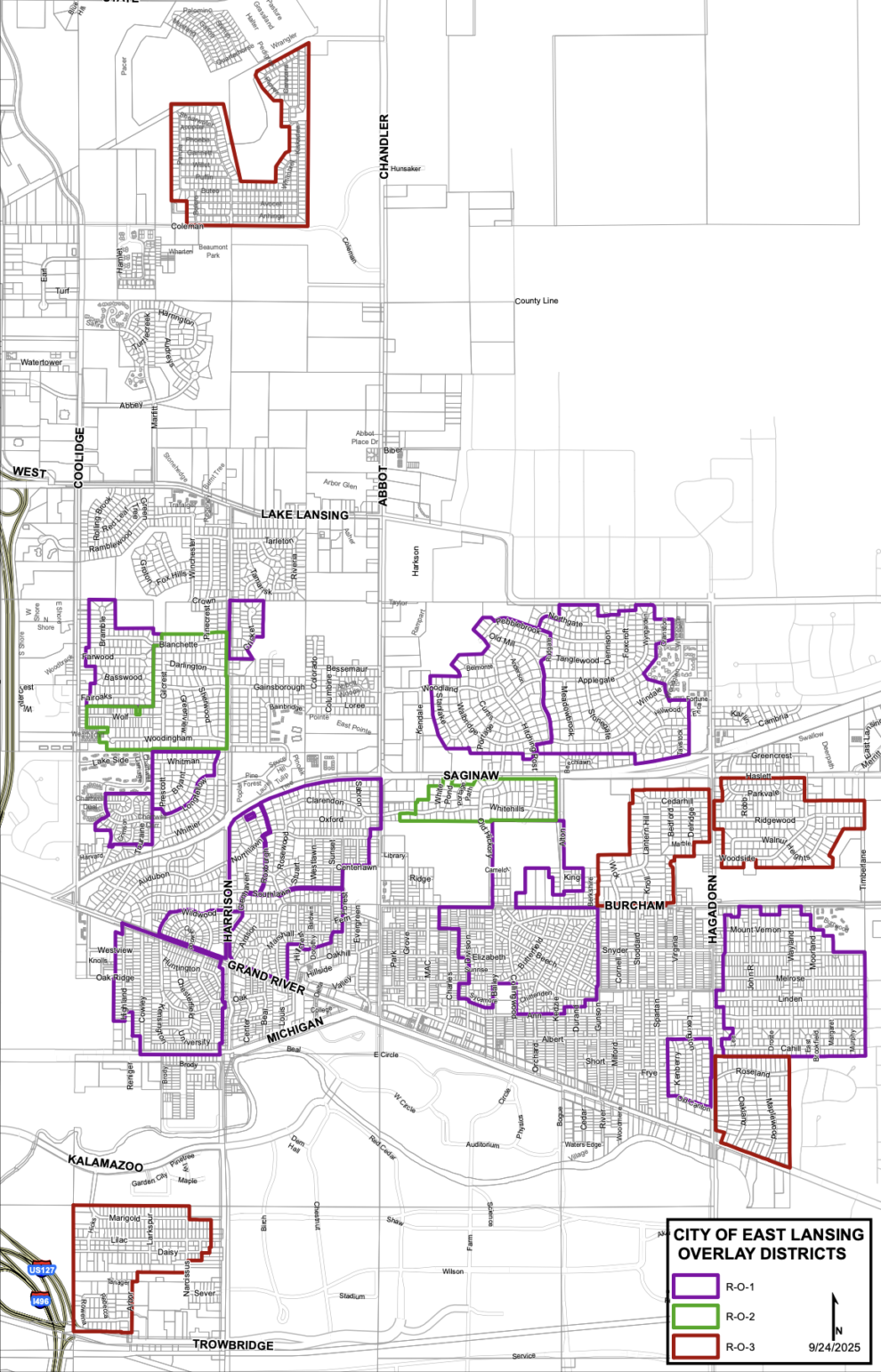
Rental restriction overlay districts are created when residents petition the City Council to install them. Two-thirds of homeowner signatures are needed in an overlay district for council to consider the request. About half of the parcels in East Lansing residential areas are in rental restriction overlay districts, and the most popular type of district essentially prevents new rental licenses from being issued.
The rental restriction districts have been popular among residents looking to keep their neighborhoods isolated from the commotion that often accompanies student rentals and protect areas from outside investors.
Hank was one of four parties who inspired and support an ordinance amendment that would allow for certain properties to be taken out of existing overlay districts. Hank and others said there should be an out for homes on rental-heavy blocks.
Others, however, worry allowing some properties to be excluded from districts could create a “slippery slope” where more properties would be eligible to leave the district.
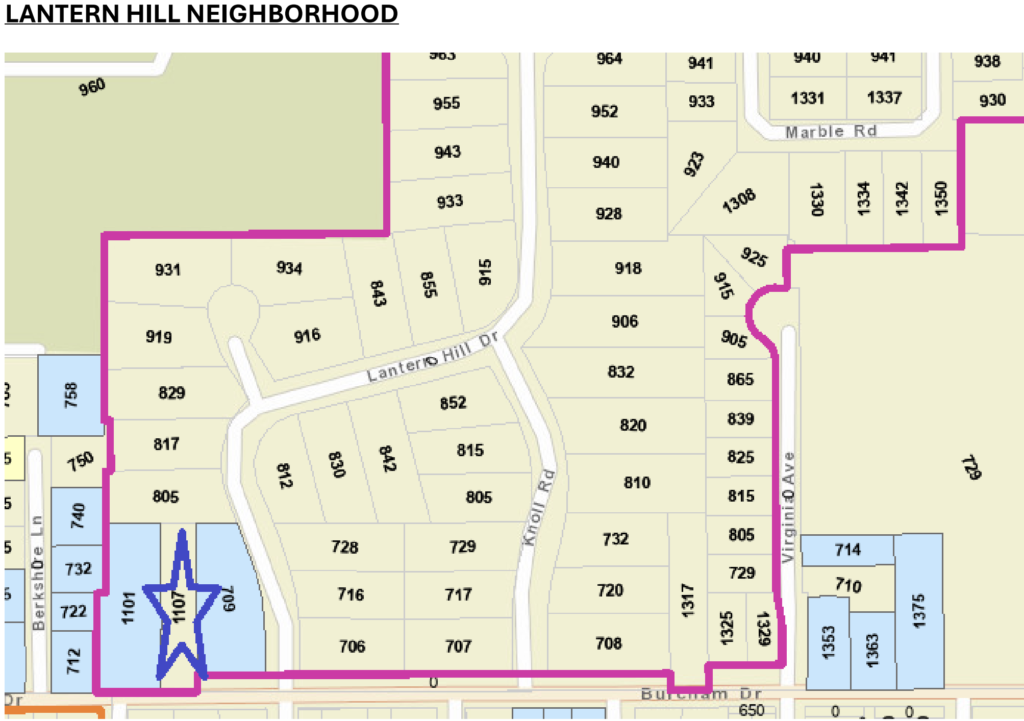
In Hank’s case, there are seven parcels included in the restriction district on his block. Five have rental licenses that were grandfathered in.
Those hoping to amend the overlay districts would need to meet three criteria under the proposed amendment: The property must be on one side of a city block opposite homes not subject to the rental overlay district, must be owner-occupied and not currently rented, and must be one of no more than two unrented properties on its block.
According to a memo prepared by city staff, up to 10 to 15 homes could be eligible to opt-out of an overlay if the ordinance eventually passes.
“I think [Councilmembers Mark Meadows and Kerry Ebersole Singh] came up with a really narrow, reasonable solution to continue to protect the neighborhoods and the overlays,” Hank said, “while providing for a handful of people who are in pretty bad circumstances and giving them some options.”
He said that he and those in similar situations have spoken to council members and city attorneys — current and past — about the issue.
Meadows was on council when the overlay policies were adopted in 2004 and when Ordinance 900 was approved in 1997, restricting single-family homes to owner-occupied households or rentals with no more than two unrelated people.
“With the passage of Ordinance 900,” he said, “we did slow down the spread of rental properties into the close-in neighborhoods. But when we passed that, we had done sort of an economic analysis of how much a house would have to cost a landlord in order to make it work for two unrelated individuals. Within a few years, property values had gone up so much that, combined with rent levels, we started to see the spread again.
“So we decided to pass something that would allow neighborhoods themselves to petition council for an overlay district. We left it within the council’s discretion to determine the size and scope of that overlay district. In other words, the neighborhood may propose boundaries, but it’s up to council to decide them.”
Amy Gload is in a situation similar to Hank. She purchased her Bailey neighborhood home in 2016. Her home is surrounded by rental properties.
“Right now, you can cross the street and see a clear difference,” she told ELi in a phone interview. “On one side, owner-occupied homes that look maintained, and on the other, rentals that look different. And then you have houses like mine, Jeff’s, and another neighbor who ended up selling.”
Gload works in Ann Arbor and said that when she has to spend stretches of time out of town, she would like the option to have a renter.
She wants council to update its overlay policies to “make sense for today.”
“This is about having control over our own homes and trusting owners, whether they’re investors or owner-occupants,” she said. “In my case, I’m just an owner. I’m not trying to become a landlord, but I also don’t want to give up my house.”
Hank said that current overlay district boundaries are not rationally based.
“The block north of me,” he said, “which you’d think would be more of a permanent-resident block, is all rentals, and it’s not even in the overlay district.
“There’s no sensible explanation for it being this way.”
When asked what he would say to those who claim that he and others in similar situations knew what they were getting into when they bought homes near a bustling university-adjacent community, he said that, knowing what he knows now, he might have made different decisions — but that those people are missing the point.
“If me or anyone here wants to move out of these houses,” he said, “most normal people won’t move in. The only people who want to buy these houses, for the most part, do so with the assumption that someday they could get a rental license.”
Meadows said the language of his proposal provides a method to remove a property from the overlay district under limited circumstances while keeping it within the discretion of the council.
It also provides what he called an “out” to the current system.
“I’ve come to the conclusion that this creates a legal problem,” Meadows said. “In a situation where an owner like Jeff could argue in court that there’s no reason for their property to be included — that it doesn’t promote the objectives of the overlay zone — but they have no way to get out, then we risk a court making that decision for us.
“And that could impact more properties than just this limited case.”
The proposed amendment fills a gap, he said, establishing a process to petition council and helping defend overlays in the future.
Mayor Erik Altmann disagrees, saying at a recent City Council meeting that the amendment could create a “slippery slope.”
In a statement to ELi, he said that a staff report the April 2 Housing Commission meeting indicated that the ordinance amendment could affect up to 10 to 15 properties.
“If those homeowners opt out of their overlays,” he said, “the new properties could lead to more properties being eligible to opt out. When you allow one opt-out, you create a precedent for the next one, creating a process that will be difficult to stop and that defeats the purpose of overlays.”
He said that if parties want to change overlay boundaries, there is a simple fix: The city can create an opt-out provision similar to the current process for creating an overlay district, which requires signatures from two-thirds of homeowners in the district. He said the City Council needs to amend the provision to allow for an opt-out option.
Altmann believes this would preserve neighborhood self-determination.
“Overlay districts have been critical to stabilizing our neighborhoods, and we need to be careful to avoid inadvertently undercutting them,” he said.
Hank told ELi that no matter what happens, he is not going to sell his house. He does not want to take a loss on the property, and he wants to live there in the future — but maybe not while he and his wife are raising their two young children.
“For anyone opposing this,” he said, “just ask yourselves: Would you want to live there? Even someone like a visiting professor might look at it and say, ‘No, I’ll go somewhere else.’ I’ve got two little kids. Would you want your kids growing up next to this?
“Anyone reasonable and fair would understand.”
At its March 17 meeting, City Council approved sending Ordinance 1572 to the Housing and Planning commissions for review, asking those bodies to make recommendations to council.