
After the Encampments Clear
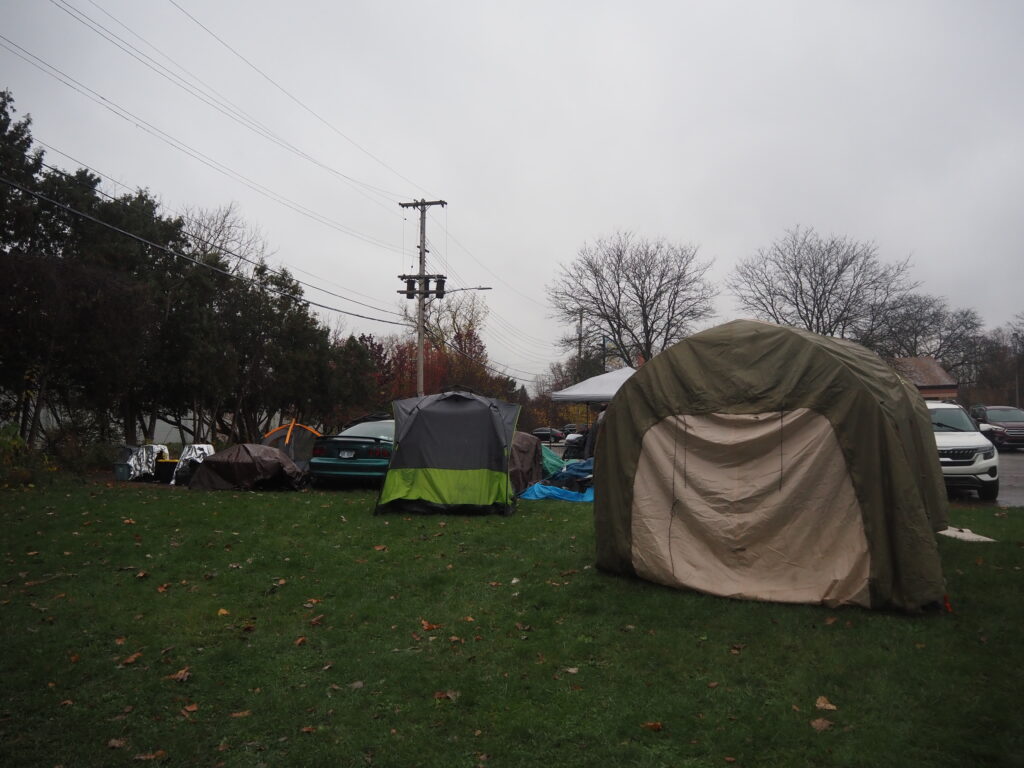
None of the 15 unhoused individuals who were ordered by police officers to leave an encampment along Lansing’s River Trail early Thursday morning spent the night in a shelter, according to Khadja Erickson, executive director of the Mid-Michigan Tenant Resource Center.
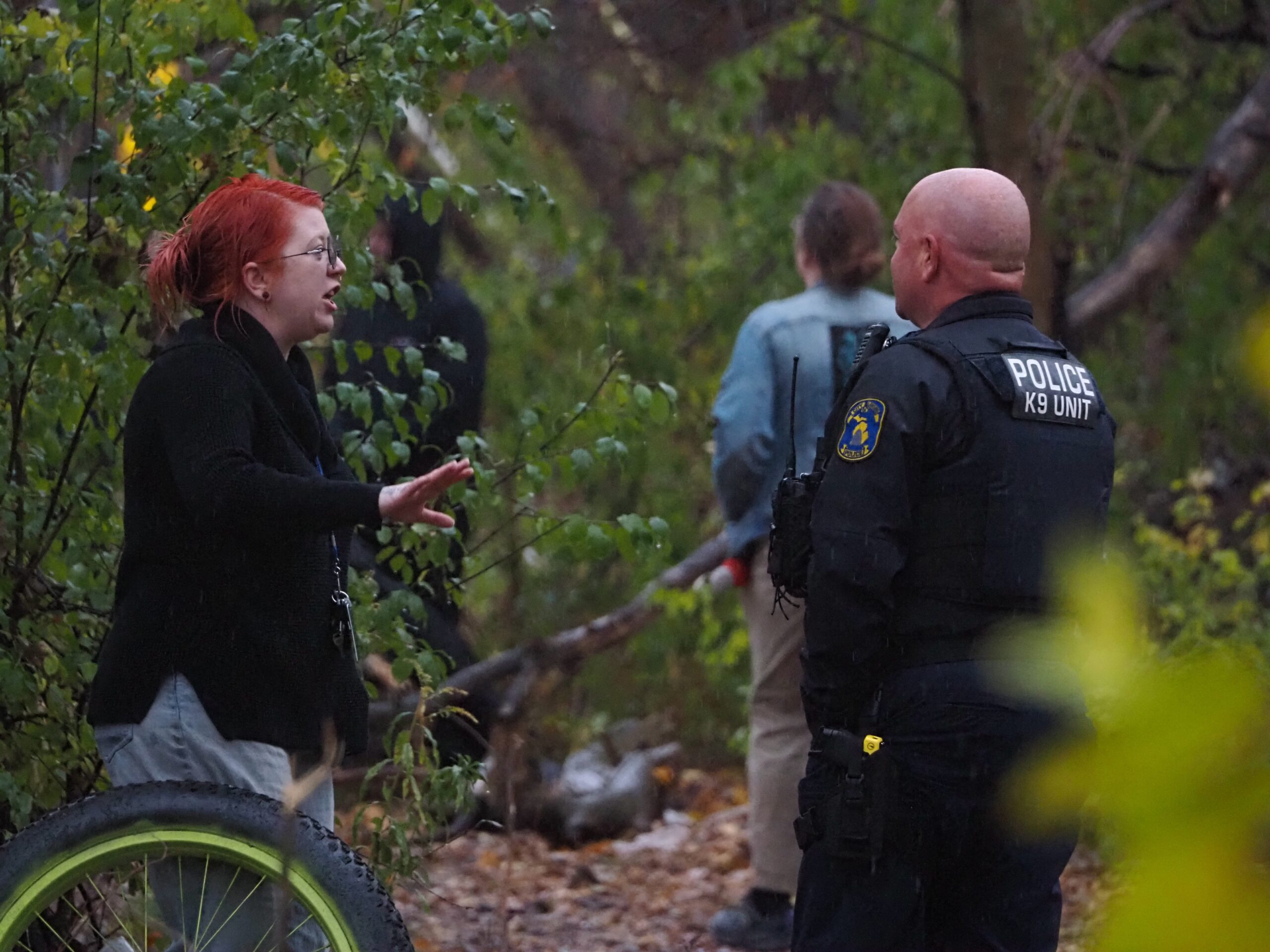
Erickson, along with a team of other housing advocates on the rainy Thursday morning gathered the tents, sleeping bags, clothes and other personal belongings of those who had been living in the encampment. Advocates piling items behind the nearby building for Punks with Lunch, a nonprofit providing services for unhoused residents, said officers arrived before the sun rose demanding the people living there vacate.
Initially police were blocking advocates from helping unhoused residents from gathering their things, informing people present that they needed to vacate the property in order to avoid arrest, Erickson said. However, advocates eventually got permission to help gather items in an effort to reunite people with the supplies they use for survival.

“That took the vast majority of the morning, maybe like a couple hours of taking apart the camp, trying to keep everybody’s things as together as possible. Then we were able to do some laundry so their things that got muddy, wet, rained on wouldn’t get mildewy and have to be thrown away, Erickson said.
Since Thursday, Erickson said she knows street teams have connected with five of the 15 residents as they found new places to stay, but she’s hoping advocates can connect with all the former inhabitants to ensure they can access resources for their health and safety.
The encampment removal came after a legal trespass order had been filed with the Lansing Police Department, City Spokesperson Scott Bean told East Lansing Info in a written statement Tuesday.
It was the city’s legal duty to uphold the trespass order for the private property where the encampment was located, Bean said.
“The City of Lansing has also received numerous complaints about the trash and conditions of this property, in addition to many complaints about personal property destruction, theft, and crime from surrounding businesses, organizations, and crimes against each other – including a very recent assault and robbery at the site,” Bean said in the statement.
The encampment occupants were given a one week notice to vacate, Bean said, and upon the request of two advocacy groups, the city gave the individuals at the encampment an extra week to remove their things.
With the extra week they were given, Executive Director of Punks with Lunch Kelsea Hector said she and other advocates tried to find shelter space or other housing solutions for the 15 inhabitants.

Bean said in his statement that people in Lansing-area encampments are “very strongly” encouraged to connect with organizations working to support the unhoused community to access shelter space, pointing out that within the past few days the City Rescue Mission has had 22 available beds for women and 18 beds for men, while The Nest offers dedicated shelter space for unhoused veterans.
The City of Lansing is also working on a plan to open a low-barrier emergency overnight center in the coming weeks, Bean said.
Though various ideas for housing solutions have been thrown around in the Greater Lansing Area, what it seems to always boil down to is either people move around constantly before the city can remove them from a location or they are told to go to the City Rescue Mission shelter, Hector said. But the crowded communal sleeping arrangements offered at the Rescue Mission shelter aren’t a viable option for many unhoused individuals in Lansing, especially the area’s unhoused veterans who live with PTSD.
“If someone is so against using a service that they would rather be outside, the question is not why are they choosing this. The question is what is happening in that space to make them feel unsafe? What is happening in that space to make them not want to utilize those services?” Hector said.
As winter weather inches closer, Hector said she’s concerned Lansing leaders will not address the lack of accessible shelter options before the situation turns even more dire.
Encampment sweeps like the one last Thursday are playing out at the same time the Lansing Police Department leadership has spoken about a series of violent deaths of unhoused men along the River Trail. The possibility of a serial killer targeting unhoused individuals in the city has not been ruled out by law enforcement.
Since last October, five men law enforcement believes to have been unhoused have died along River Trail, with three being ruled as homicides. All the victims sustained injuries that indicate they were lying down, potentially sleeping, when they sustained injuries, with four of the victims showing blunt force trauma to the head, according to the Lansing Police Department.
Communication between local housing advocates and unhoused residents that may see something that helps law enforcement with their investigation into the deaths will be key in keeping people safe, Lansing Police Chief Robert Backus said during a news conference at the start of October.
Hector said communication between housing groups and the city has been greatly improved and she was even able to contact Lansing Mayor Andy Schor during last week’s encampment sweep to get more time from police officers to remove residents’ items.
But at a certain point, Hector said no matter how good communication between the city and housing advocates is, the encampment sweeps create a cyclical problem of moving people around. This makes it harder to keep track of them and get them into more permanent housing or other programming.
“I have been an avid pusher of a moratorium on camp sweeps, especially right now … We still have this emergency issue right now. We still have people on the streets; they still have nowhere to go… the communication has increased exponentially, but the solutions are still not there,” Hector said.