
East Lansing Makers: Do You Know the Mushroom Man?
Matt Stata spends his days in a Michigan State University plant biology laboratory. His passion for growing, however, doesn’t end when he hangs up his lab coat. When the postdoctoral student goes home in the evenings, he is greeted by colonies of culinary mushrooms he has been cultivating for several years.
“I’ve always been interested in mushrooms and mycology,” he told ELi. “I did an undergraduate research project in a fungi lab back at the University of Toronto on basidiomycete phylogenetics.”
(I looked it up — basically, he made family trees of mushrooms using DNA and genetics.)

While getting his PhD in Toronto, he taught units on fungi and led mushroom hunts, collecting demonstration material to show students fungal diversity while also looking for edible mushrooms to forage. Stata’s passion as a naturalist originated in his youth.
“I was lucky enough to grow up in a small town and had a yard with a garden, and I was super into that,” he said. “I was the kid with the bug net and the bug jars and terrariums and everything growing up, so yes, very much so.”
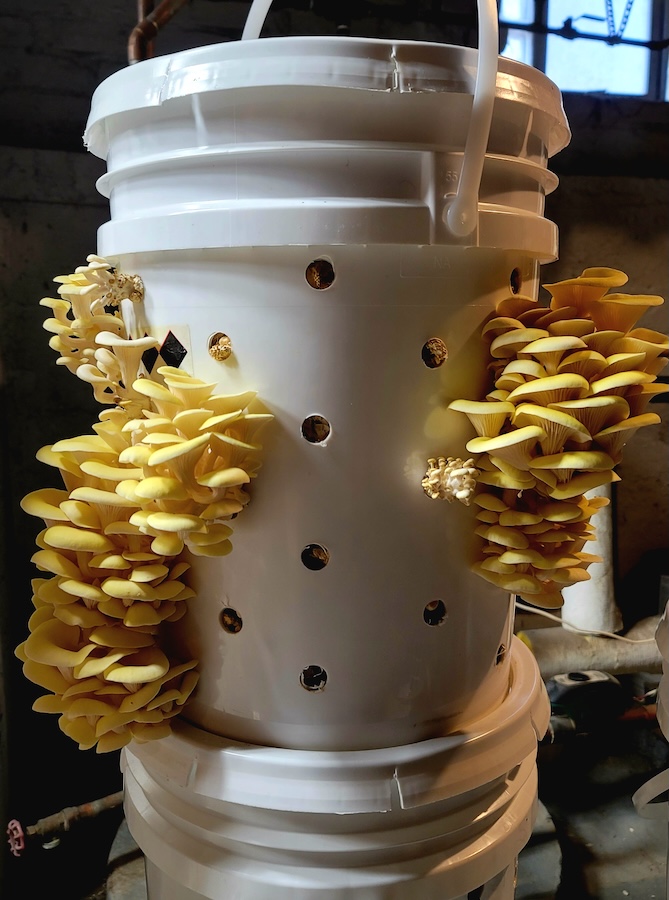
Stata began cultivating mushrooms with ten 20-liter buckets filled with a layer of wood chips he got from sterile spawn bags filled with nutrients to feed the growing mushrooms. He drilled holes throughout the buckets and stacked them into two columns in his basement.
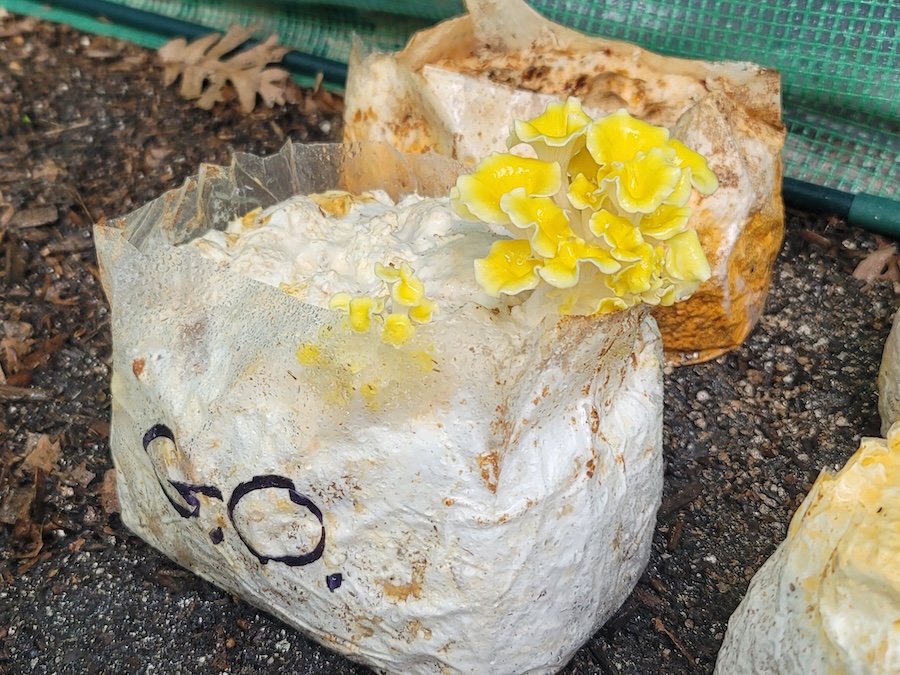
He also constructed a small plastic greenhouse, about 3-by-10 feet, with a metal frame and plastic sheeting for his backyard. The structure keeps humidity up, which Stata said is critical.
“You can buy a colonized bag of substrate and then just fruit [mushrooms] from that,” he said, “and that cuts about 95% of the specialized equipment out. Basically all you need for that is some kind of chamber you can keep the humidity up in, like an aquarium or something like that.
“The issue is that certain kinds of mushrooms don’t fruit very well in enclosed spaces like that, but others do. The issue is primarily that, because they’re heterotrophic organisms, they’re respiring and emitting CO₂ [carbon dioxide]. In an enclosed space they elevate the CO₂, and they also use the CO₂ as an indication of whether they’ve made it out of the substrate yet — whether they’ve encountered fresh air.”
Stata said buying a colonized bag (various kinds are available online) doesn’t require much work, just patience while you wait for it to become fully colonized. Once this occurs, you open it fully or poke holes in it and it will fruit.
For those who want to make their own spawn bags, a sterile technique is required. He said a stovetop pressure cooker can be used to sterilize instruments, including tweezers and syringes.
“The reason you need to do this is that mushroom-forming fungi are primarily in the clade Basidiomycota, but the other big sister clade, Ascomycota, contains your typical molds and contaminants,” he said. “Basidiomycetes are specialists for growing on hard-to-digest things like cellulose and lignin — woody plant materials that not a lot of things can digest.
“Ascomycetes are generalists that grow on easy-to-digest food sources, and when you’re starting a mushroom culture you’re using something easy to digest. If contamination gets in, it will massively outcompete the thing you’re actually trying to grow.”
The ideal setup is a laminar flow hood, Stata said. These can range from something shoebox-sized to the large cabinets seen in professional labs. These hoods provide filtered sterile air through a HEPA filter. A small hood usually costs a few hundred dollars, and a decent-sized pressure cooker is about $100.
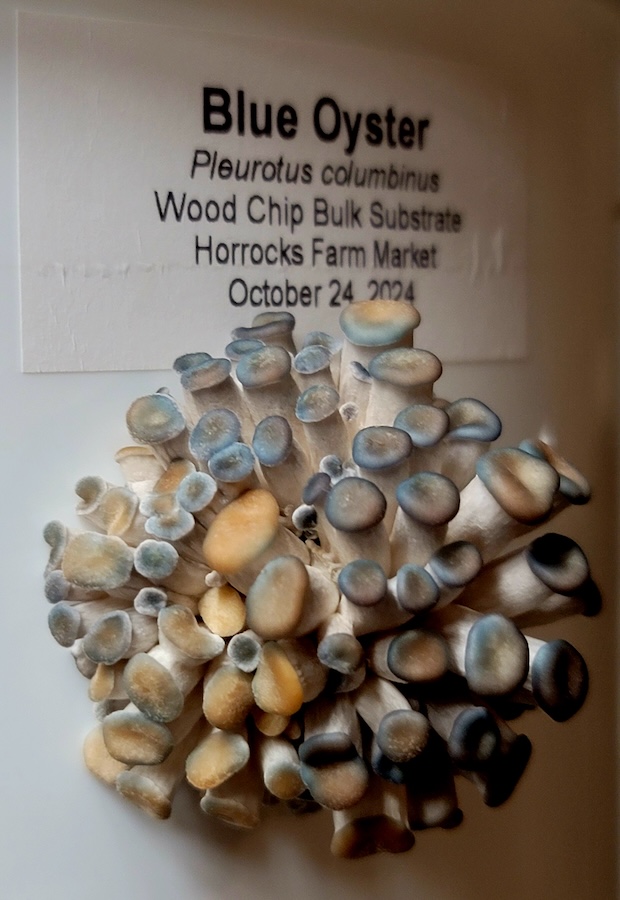
Stata has tried cultivating several varieties of mushrooms, but even with his sterile setup and lab-like precision, he hasn’t managed to get each to fruit. He’s had success with golden oyster, blue oyster, king oyster, lion’s mane and chestnut mushrooms.
“I’ve also attempted shimeji mushrooms, hen of the woods and chicken of the woods,” he said. “I haven’t succeeded in fruiting those yet. Chicken of the woods is one that’s not widely cultivated. I actually cloned it from ones I foraged in the woods, so that was kind of a Hail Mary attempt.”
Since he started cultivating culinary mushrooms, Stata estimates that he’s grown 20 to 30 pounds.
“Considering gourmet mushrooms can sell for $20 to $30 a pound, that’s not too bad,” he said.
But Stata doesn’t sell his mushrooms to restaurants or personal chefs. He frequently dehydrates them before grinding them in a coffee grinder to use the powder in sauces and soups.
He’s also inspired his lab mates to try cultivating mushrooms themselves. He’s given out several spawn bags; one lab colleague successfully fruited oysters from their bag.
“Patience is important,” Stata said. “But sterile technique is really the most important skill — understanding where contamination comes from and how to avoid it.”