
Parents Raise Concerns About Chromebook Impact on Student Learning
Parents of East Lansing Public Schools students are pressing district leaders to tighten security and increase restrictions on school-issued Chromebook laptops, saying students are accessing and sharing inappropriate content through district systems.
Chromebooks are used to access assignments and other class materials given by teachers. However, some parents have said their children are using the devices primarily for non-educational purposes, like playing games and streaming videos. They worry that over-reliance on technology is harming educational outcomes.
Additionally, parents said students have had documents shared with them from Google accounts not associated with ELPS, raising safety concerns about the possibility of harmful content being shared with students.
A petition circulated by parents outlines seven requests for the school district, including adopting a tech-restricted approach for early elementary grades, consistent acceptable-use policies in each district school and balancing digital instruction with offline learning using books and paper.
School-issued devices are not new in East Lansing, students have been using Chromebooks and iPads to do their school work for years. Concerns raised by parents reflect a broader national tension: While digital tools can enhance learning, their benefits can be offset by the downsides of increased screen time and distractions from games and videos.
“I’ve had concerns for the last couple of months because [my son] seemed to be using his home Chromebook a lot,” Brianna Egan said. “His grades started slipping, even though he had access to everything he needed through Google Classroom and all the shared documents.”
Egan said she noticed a document her middle school son and his friends were sharing that wasn’t school-related, including a Google Doc with links to websites where students could watch free movies on sites that “potentially steal your data in the background,” she said. Egan didn’t investigate further but told her son it likely wasn’t safe to visit those sites and that he should stop sharing non-academic documents.
Some of the online documents shared with her son were owned by Google accounts not associated with ELPS and could still be edited by the owners.
“What happens is after I get out of Google Classroom,” Egan said, “I’m technically still in it for a while, so I get alerts when things are shared. On my phone, I have his email connected, so I can see when docs or spreadsheets are shared and what related emails come through.
“I got an alert on my phone that something had been shared. I clicked it open, and it linked into his ELPS account so I could see the docs shared with him. There were a huge number of documents shared to him that were owned by Gmail accounts that were clearly not real accounts. The file names and folder names were very clearly aimed at getting children’s attention. Some of them may have originally been taken over by students and then reshared, but the original owners had never relinquished ownership, so they were still able to update things.”
In an email sent to a parent that was shared with East Lansing Info, MacDonald Middle School Assistant Principal John Atkinson said it felt like “whack-a-mole” taking down shared documents after hearing about them.
Some school districts have looked to restrict access to non-educational content by banning sites like YouTube. However, some teachers include videos on YouTube in curriculum which presents a dilemma.
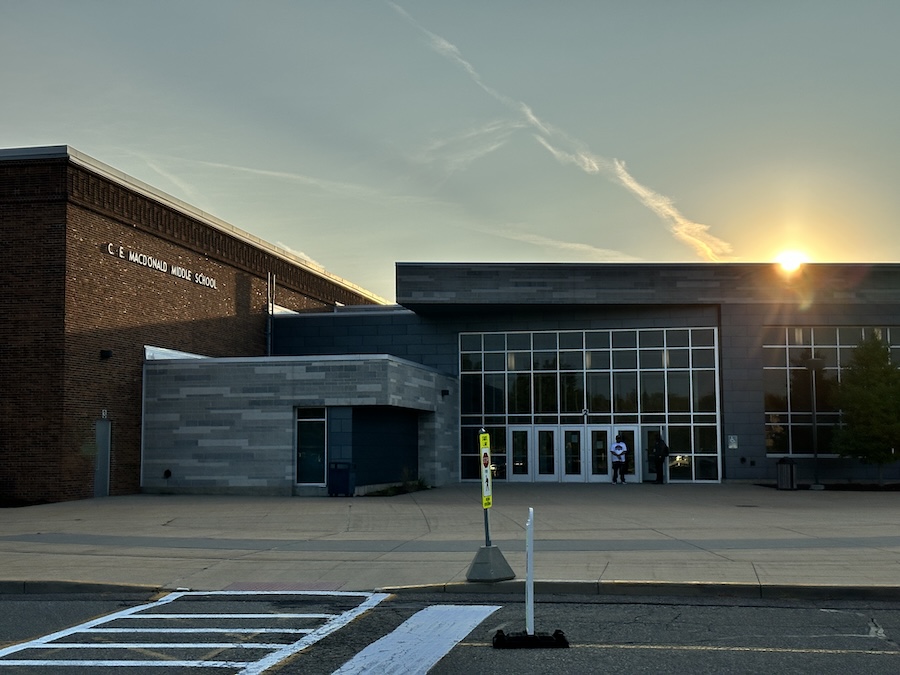
Molly Szpunar, another parent of a MacDonald Middle School student, said she tried to set parameters by emailing Christian Palasty, ELPS director of technology and communications, and requesting that her child be opted out of using YouTube and the Minecraft Education program.
“I have received both requests, and we will discuss how best to accomplish the Minecraft restriction,” Palasty responded. “The YouTube request is more of a curricular matter, so I have shared that with Mark Dobson, our assistant superintendent, and we’ll discuss the issue.”
Unsatisfied with Palasty’s response, Szpunar’s next step was to reach out to school and district administration, including the school board. She said her child’s Chromebook usage showed the student was using “educational technology” only 15% of the time over the last seven days.
“ELPS should lead here,” Szpunar wrote in an email to Palasty. “Have any of our leaders reviewed the Securly data for a view across MMS and ELHS? I posit that our students are spending far too much time on screen. Please opt my children out of: YouTube, Apple Music, Spotify, Pandora, ‘neil.fun,’ Fortnite, Roblox and the other completely noneducational sites they access. Blocking explicit content alone isn’t protecting them from the addictive poison that is delivered through mind-numbing technology scrolling.”
The Securly data Szpunar references comes from an app that allows parents to “monitor and manage your student’s online experience” on school-issued devices, including viewing sites visited, blocking specific sites, receiving weekly reports on usage and getting alerts about material related to bullying or self-harm.
Egan said she was frustrated about parents’ concerns being redirected to teachers.
“That was one of the responses parents kept getting from administration and tech staff: They needed to consult teachers to make sure blocking tools wouldn’t interfere with curriculum. That’s inappropriate,” Egan said. “Teachers don’t control document ownership and already have enough responsibilities.
“If the choice is between modifying curriculum next year or exposing my child to unsafe content, the safety issue comes first. We need to seriously examine what we’re giving up for whatever educational benefit this technology supposedly provides.”
East Lansing Board of Education member Chris Martin told ELi he agrees with the goals of the petition and finds the requests reasonable.
“I would like to see the District respond to the petition in a manner that establishes a coherent plan for thoughtful, instruction-based technology use,” he said, “but also provides a greater level of transparency so families can see how their children are using technology during the school day. If we need additional guardrails, now is the time to put those in place.”
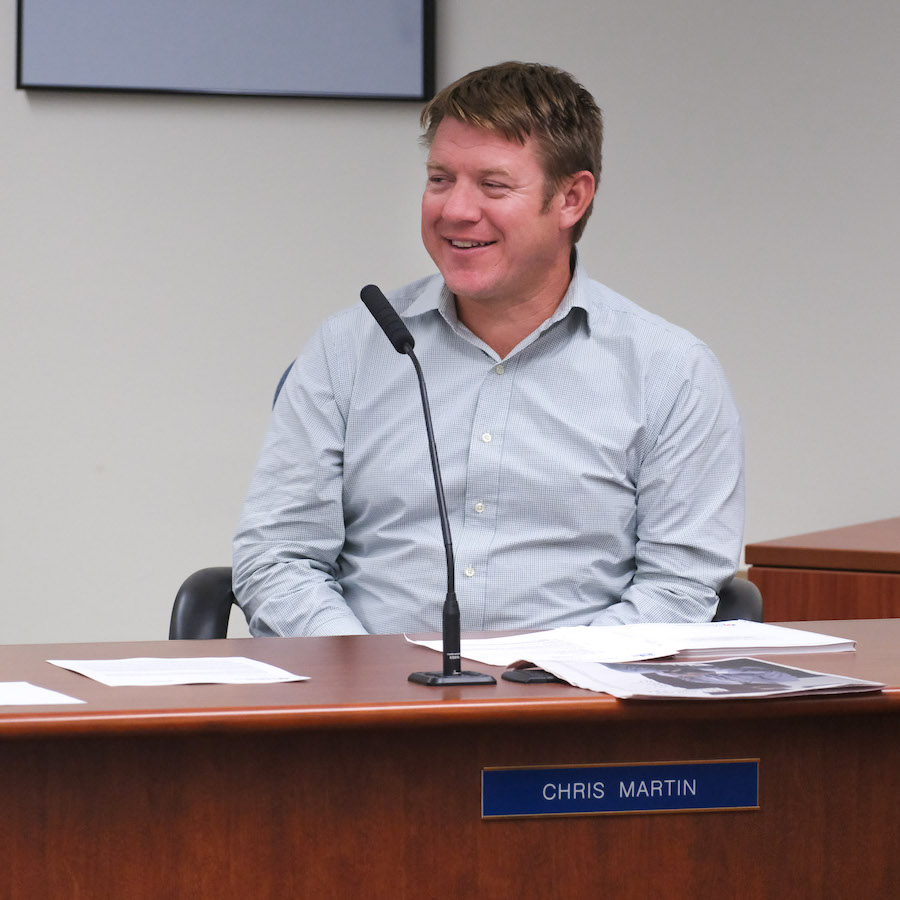
Martin added that he has particular concerns about YouTube and social media sites, believing they are intentionally designed to create addictive habits among young people.
“I’m not interested in serving up children in schools to help big tech platforms make a profit,” he said.
ELi spoke with Aman Yadav, a professor of computing education in the College of Education and College of Natural Science at Michigan State University. His research focuses on supporting educators to understand, apply and critically evaluate the use of technology in K-12 classrooms.
Yadav reviewed the petition but had no prior knowledge of ELPS parents’ concerns or district technology policy.
“Parents’ concerns about the use of technology that doesn’t engage kids actively in learning,” he said, “that’s a legitimate concern. We should always think about using technology in ways that shift practices to be more student-centered and make students active learners.”
Yadav referenced a book by Justin Reich — Failure to Disrupt: Why Technology Alone Won’t Transform Education — when asked about the efficacy of some of the technology students are using. He said some of these apps are designed without educators having a seat at the table, meaning the technology itself doesn’t support teachers’ goals.
“It’s also sometimes a challenge because teachers don’t have adequate support in how to leverage technologies to shift their practices,” he said. “When a school district buys technology, teachers typically get short-term training — a few hours or maybe a couple-day workshop on how to use it.
“But that professional learning rarely focuses on how teachers can actually use the technology in ways that shift their instructional practices. When teachers don’t have that support or knowledge, they tend to ‘hug the middle,’ as Larry Cuban describes in Oversold and Underused. They use technology in traditional ways that support existing pedagogy.”
Minecraft, for example, is a game that can be a distraction from classwork. However, Yadav said it can also be a tool for teachers if used properly.
“[It] is often used to engage students in learning computer science and even AI,” he said. “It is just not a video game.“
Yadav also said that as long as barriers designed to protect students from access to certain sites and features exist, students will likely always find a way around them.
“We shouldn’t just be blocking things in schools and classrooms; we should be educating students about the potential harms of using certain tools,” he said. “We should be making students computationally and digitally literate rather than just banning tools.”
Banning tools is a short-term solution rather than educating and providing support to teachers and students to have agency over their classrooms and digital lives, Yadav said.
When asked whether he had identified any districts in his research that were getting the balance right, Yadav could not name one, saying most school leaders he’s interviewed are still developing their policies.
This story was updated to correct the language in a quote.